


Is a Mobile Asphalt Drum Mix Plant a Better Investment for Contractors Handling Short Road Contracts Across Several Provinces?
For road contractors handling short-term projects across several provinces, asphalt production can become a major challenge. One project may require several hundred tons of hot mix asphalt, while another may demand frequent production over a short construction window. Transporting hot mix from a distant supplier can increase costs, create delivery delays, and reduce control over paving quality. However, purchasing a permanent asphalt plant may also create unnecessary expenses when projects move frequently.
A compact mobile asphalt drum mix plant offers a practical alternative for contractors who need to move equipment between job sites and produce asphalt close to the paving area. Its continuous production process can support road maintenance, provincial road rehabilitation, access road construction, and other projects with relatively straightforward mix requirements. Still, mobility alone does not guarantee a profitable investment. Contractors must evaluate project volume, relocation costs, fuel consumption, mix specifications, and the availability of future contracts before making a decision.
This guide explains when a mobile asphalt drum mix plant makes financial and operational sense, how it compares with other production options, and what contractors should check before investing.

1. Why Contractors Handling Short Road Contracts Need a Different Investment Strategy
Before selecting equipment, contractors should understand how short contracts differ from long-term highway projects. The challenge is not simply producing asphalt. It is matching production capacity, mobilization time, and operating costs to a changing project schedule.
Frequent Project Changes Can Increase Asphalt Costs
Contractors working across several provinces may face different road lengths, traffic conditions, aggregate sources, transport distances, and construction deadlines. A plant that performs well on one large project may become inefficient when the next contract requires only a small quantity of asphalt.
Short construction windows: Rain, traffic restrictions, and local work schedules can reduce the number of productive working days.
Long asphalt delivery routes: Hot mix loses heat during transport. Excessive travel time can complicate temperature control and paving operations.
Repeated mobilization: Contractors may need to move equipment, personnel, and materials whenever a project changes location.
Uncertain contract pipelines: A plant that remains idle between projects can create financing, maintenance, and depreciation costs without generating revenue.
Different local requirements: Each project may specify its own aggregate gradation, binder grade, mix design, production records, and environmental controls.
Therefore, the best investment is not necessarily the plant with the highest rated output. Instead, contractors should choose equipment that matches their expected workload and can operate economically across multiple project locations.
2. How a Mobile Asphalt Drum Mix Plant Supports Multi-Province Projects
Once contractors understand these challenges, the next step is to examine how a mobile drum mix plant can address them. Its main advantages come from continuous production, a transport-oriented layout, and the ability to establish temporary production facilities near suitable job sites.
Continuous Production for Consistent Paving Operations
A drum mix plant dries aggregates, heats them, and mixes them with asphalt binder through a continuous production process. Depending on the design, the system integrates cold aggregate feeders, a drying and mixing drum, a burner, binder supply equipment, dust collection, conveying equipment, and a control system.
Unlike a batch plant, which produces asphalt in separate batches, a drum mix plant produces material continuously while the feed system and production conditions remain stable. This arrangement can suit contractors who need a steady supply of a consistent mix for road resurfacing, access roads, and provincial road rehabilitation.
However, continuous production also requires careful coordination. Contractors must balance aggregate feeding, moisture levels, binder supply, and paving demand. If trucks cannot collect material quickly enough, the plant may need to reduce production or stop temporarily. Consequently, rated capacity should never replace a realistic assessment of actual site demand.
Mobility Can Reduce Repeated Relocation Difficulties
A mobile asphalt drum mix plant for sale can simplify transportation and site setup compared with some permanent plant arrangements. Depending on the model, major components may use trailer-mounted or modular structures that support relocation between projects.
Nevertheless, mobile does not mean that the plant can move without preparation. Contractors still need to arrange transport permits, suitable access roads, lifting equipment where required, a stable installation area, electrical or generator power, fuel storage, aggregate stockpiles, and environmental protection measures.
For projects spread across several provinces, contractors should compare the full relocation cost rather than focus only on the advertised installation time. A plant that moves easily between nearby sites may offer a different financial result from one that must travel long distances over difficult terrain.
Local Production Can Improve Control Over Asphalt Delivery
Producing asphalt closer to the work area can reduce dependence on external hot mix suppliers and long-distance deliveries. This matters when road crews work in locations where supplier coverage is limited or transport schedules are unreliable.
For example, a contractor resurfacing several provincial roads may arrange aggregate deliveries and binder storage near each project cluster. The plant can then supply paving crews according to an agreed production schedule. This approach can improve coordination between mixing, trucking, and paving, although the savings depend on site preparation and material logistics.

3. Is a Mobile Drum Mix Plant More Profitable Than Buying Hot Mix Asphalt?
Mobility and production efficiency are valuable, but contractors ultimately need to understand their financial impact. The most useful comparison includes the cost of purchasing asphalt from a supplier and the full cost of producing it independently.
Calculate the Break-Even Production Volume
Start by separating fixed costs from variable costs. Fixed costs include plant financing or depreciation, insurance, mobilization planning, and other expenses that do not change directly with each ton produced. Variable costs include aggregate handling, binder, fuel, electricity, labor, maintenance, and production-related consumables.
External supply cost per ton: Supplier price plus delivery, waiting time, and other costs charged to the contractor.
In-house production cost per ton: Aggregate, binder, fuel, electricity, labor, maintenance, and other variable production costs.
Fixed investment costs: Plant purchase or financing, setup, storage facilities, compliance, insurance, and depreciation.
Relocation costs: Disassembly where necessary, transportation, reinstallation, commissioning, and downtime between projects.
When external supply costs more per ton than in-house production, the difference represents the potential saving before fixed costs. Contractors can estimate their break-even volume by dividing relevant fixed costs by the net saving per ton.
Break-Even Volume = Annual Fixed Costs ÷ Net Saving Per Ton
For example, assume a contractor faces $180,000 in annual fixed costs and estimates a net saving of $6 per ton from in-house production. The break-even volume would be 30,000 tons. These figures are illustrative, not a market quotation. Actual results depend on local material prices, plant utilization, fuel costs, logistics, financing, and maintenance.
If the contractor expects to produce less than the break-even volume, purchasing hot mix may remain the safer option. If confirmed contracts support production above that threshold, owning a plant may become more attractive.
Include the Cost of Idle Time
Short contracts rarely provide a perfectly continuous workload. A contractor may produce asphalt intensively for three weeks, then wait for the next project award. During that interval, the plant may generate no production revenue while financing and other ownership costs continue.
To avoid overstating profitability, prepare at least three scenarios:
Conservative scenario: Only confirmed contracts generate production volume. Include realistic weather delays and relocation periods.
Expected scenario: Use the most likely contract schedule, estimated daily output, and planned working days.
Growth scenario: Include additional contracts only when there is a reasonable basis for expecting them. Do not treat unawarded tenders as guaranteed demand.
This method helps contractors assess whether the investment remains viable when project awards arrive later than expected.
4. What Capacity Is Suitable for Short Road Contracts?
After estimating the required production volume, contractors can select a suitable capacity. The objective is to meet peak paving demand without creating excessive idle capacity during smaller jobs.
Estimate Demand From Daily Asphalt Requirements
Consider a road project that requires 600 tons of asphalt over six working days. The average daily requirement is 100 tons. If the contractor plans to operate an eight-hour production shift, the theoretical average output requirement is 12.5 tons per hour.
However, the contractor should not select a plant solely from this division. Actual production must also account for startup, shutdown, maintenance, aggregate moisture, truck availability, paving interruptions, and changes in mix specifications. A plant with a higher rated capacity can provide useful flexibility, but it may also increase investment and operating costs.
For a contractor handling several projects, calculate the demand for each project and identify the highest realistic production requirement. Then compare that demand with the plant's effective output under local operating conditions.
Match Plant Capacity to Project Patterns
Small maintenance contracts: Focus on low mobilization costs, manageable production volumes, and the ability to supply short paving runs without excessive waste.
Medium provincial road projects: Consider a capacity that can supply daily paving demand while leaving room for weather delays and schedule changes.
Several overlapping contracts: Evaluate whether one plant can serve multiple sites without excessive transport distances or delivery conflicts.
Large projects with sustained demand: Compare higher-capacity drum plants with batch plants and other production configurations before deciding.
Always distinguish rated capacity from actual output. Aggregate moisture, mix design, fuel quality, operating discipline, and environmental conditions can affect production. Ask suppliers to explain the conditions behind their capacity ratings and provide the technical data needed for a fair comparison.

5. Mobile Drum Mix Plant vs. Batch Plant vs. Purchased Hot Mix
Although a mobile drum mix plant may fit many short-term contracts, it is not the best solution for every contractor. Comparing the alternatives clarifies where its advantages are strongest.
Choose the Production Method That Fits Your Workload
Mobile asphalt drum mix plant: Suits contractors who need continuous production and expect to relocate between projects. It can simplify operations for relatively consistent mix requirements, subject to the plant's specifications.
Batch asphalt mixing plant: Suits contractors who need batch-by-batch control, frequent mix changes, or specific production flexibility. Its configuration, cost, and relocation requirements vary by model.
Purchased hot mix asphalt: Suits contractors with limited annual demand, insufficient capital, or access to reliable suppliers close to their projects.
Stationary asphalt plant: May suit businesses with sustained production demand at a central location. Its economics become less attractive when frequent relocation is essential.
The key distinction is operational fit. A drum mix plant emphasizes continuous production, while a batch plant separates production into controlled batches. Neither method automatically guarantees better quality or lower costs. The appropriate choice depends on the required mix specifications, quality control arrangements, contract volume, and operating conditions.
6. Hidden Costs Contractors Should Check Before Investing
A plant purchase price rarely represents the full cost of establishing asphalt production. Contractors should build a complete budget before signing a purchase agreement, particularly when they intend to operate across different provinces.
Transportation, Installation, and Site Preparation
Request a detailed list of components, transport dimensions, lifting requirements, installation work, and commissioning procedures. Check whether the proposed plant can reach the intended sites using available roads and bridges. Confirm the local requirements for foundations or support structures rather than assuming that every mobile plant needs no foundation.
Fuel, Aggregate Moisture, and Energy Consumption
Fuel can significantly affect production costs. Wet aggregates require more energy to remove moisture before mixing. In regions with heavy rainfall, contractors should consider covered aggregate storage, drainage, stockpile management, and realistic fuel consumption estimates.
Ask the supplier to state the assumptions behind fuel consumption figures. The result may change with aggregate moisture, production rate, fuel type, ambient conditions, and the required mix temperature. A theoretical consumption figure without operating conditions is not enough for a reliable cost forecast.
Maintenance, Spare Parts, and Technical Support
Frequent relocation can increase wear on components and create additional maintenance requirements. Contractors should check the availability of critical spare parts, recommended maintenance intervals, remote troubleshooting, and technician support.
For projects spread across several provinces, delayed repairs can disrupt both plant production and paving schedules. A slightly lower purchase price may not compensate for extended downtime if technical support and replacement parts are difficult to obtain.
Permits, Emissions, and Environmental Controls
Before selecting a site, confirm the applicable environmental approvals, air-emission requirements, dust collection standards, noise restrictions, land-use permissions, and fuel-storage rules. Requirements vary by jurisdiction and project location, so contractors should verify them with the relevant local authorities.
A suitable dust collection system, controlled material handling, and responsible site management support compliance and help reduce disruption to nearby communities. These costs should form part of the original investment calculation rather than appear as unexpected expenses after installation.

7. How to Use One Mobile Plant Across Several Provinces
Once the investment appears financially viable, a clear operating plan can help contractors capture its potential advantages. Moving a plant between projects requires more than choosing the next job on a map.
Group Projects by Location and Schedule
Where possible, arrange contracts into geographic clusters. Complete nearby projects in sequence before moving the plant to a distant province. This approach can reduce repeated transportation, installation work, and unproductive days.
However, the schedule must also consider contract deadlines, weather, road access, and material availability. Moving the plant too early may interrupt a profitable production run, while moving it too late may delay the next contract.
Secure Aggregates and Asphalt Binder Before Mobilization
Confirm the quality, price, quantity, and delivery schedule of aggregates and binder before production begins. Check whether local aggregate sources meet the project's grading and material requirements. Also confirm that the proposed binder grade and mix design comply with the contract specifications.
Reliable suppliers can reduce the risk of production interruptions. Nevertheless, contractors should maintain a contingency plan for delivery delays, changing material quality, and unexpected increases in input costs.
Coordinate Plant Output With Paving Crews
A plant should produce according to the paving team's actual demand, not merely its maximum rated capacity. Coordinate truck dispatch, delivery distance, paving speed, rolling operations, and temperature requirements. This can reduce truck queues, unnecessary holding time, and the risk of asphalt arriving in unsuitable condition.
For projects with multiple paving fronts, define who controls production changes and delivery priorities. Clear communication between the plant operator, transport team, quality control staff, and paving supervisor helps maintain a stable workflow.
8. Questions to Ask a Mobile Asphalt Plant Supplier
A reliable supplier asphalt mixing plant should help you assess the complete application rather than recommend a machine based only on its nominal capacity. Use the following questions when comparing quotations.
What is the rated capacity, and under what aggregate moisture and operating conditions does the plant achieve it?
Which asphalt mix types can the proposed configuration produce, and what mix-design limitations apply?
What are the transport dimensions, total shipping weight, installation requirements, and estimated relocation procedures?
What fuel consumption data can you provide for comparable production conditions?
Which dust collection, emissions control, and safety systems are included in the quotation?
What electrical supply, generator capacity, aggregate storage, binder storage, and site infrastructure will the plant require?
Which spare parts should the contractor keep on site, and how quickly can replacements reach remote projects?
What commissioning, operator training, warranty, and after-sales support do you provide?
Can you provide technical references or documented project examples involving similar materials, capacities, and operating conditions?
Which costs are excluded from the quoted price, including freight, installation, commissioning, taxes, and local compliance work?
Compare supplier responses using the same operating assumptions. This makes it easier to identify differences in equipment scope, service support, and long-term operating costs.
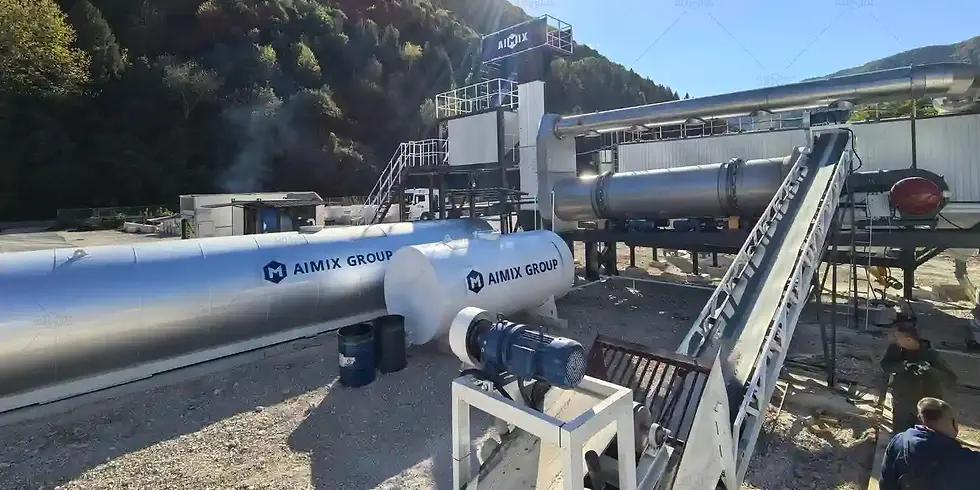
9. When Is a Mobile Asphalt Drum Mix Plant the Better Investment?
After reviewing the operational and financial factors, contractors can make a more confident decision by matching the equipment to their actual business model.
It May Be a Strong Choice When:
You have several confirmed or highly probable road contracts across different locations.
Your combined annual asphalt demand can support the plant's break-even production volume.
Your projects benefit from continuous production and do not require frequent mix changes beyond the plant's capabilities.
External hot mix suppliers are distant, unreliable, or expensive relative to local production.
You can organize aggregate and binder supply, installation, transport, and technical support efficiently.
Your team can coordinate production with truck dispatch and paving operations.
It May Not Be the Best Choice When:
Your annual asphalt demand is low or highly unpredictable.
Most projects have nearby suppliers offering competitive delivered prices.
You frequently need different mix designs that favor a batch production process.
Relocation, site preparation, and compliance costs are high relative to the volume produced.
You lack experienced operators, maintenance resources, or a dependable supply chain.
In these circumstances, outsourcing asphalt production or considering another plant configuration may reduce financial exposure. Contractors should compare alternatives using the same project forecasts and cost assumptions rather than rely on general claims about equipment performance.
10. Make Your Asphalt Plant Investment Decision With Real Project Data
A mobile asphalt drum mix plant can be a practical investment for contractors handling short road contracts across several provinces, especially when mobility, continuous production, and local asphalt supply align with a stable pipeline of work. However, its profitability depends on more than the plant itself. Contract volume, actual output, fuel consumption, relocation costs, maintenance, environmental compliance, and supplier support all influence the final result.
Before purchasing, prepare a project-by-project demand forecast, calculate your break-even volume, compare in-house production with delivered hot mix prices, and verify the technical requirements for each operating location. Use conservative assumptions for idle time and future contracts. This process helps you avoid buying more capacity than your business can use.
Planning to invest in a mobile asphalt drum mix plant? Contact the AIMIX team to discuss your expected asphalt demand, project locations, required output, aggregate conditions, and relocation plans. With these details, our team can help you evaluate suitable plant configurations, clarify technical requirements, and prepare a quotation based on your project needs.


Comments