


Can a 160 TPH Asphalt Mixing Plant Handle High RAP Content for Road Reconstruction in Europe?
cross Europe, road reconstruction projects are changing. Governments, municipalities, and private contractors now focus strongly on sustainability, cost control, and carbon reduction. As a result, reclaimed asphalt pavement (RAP) has become an important material in modern road rehabilitation projects.
Many contractors therefore ask an important question before investing in new equipment: Can a 160 TPH asphalt mixing plant handle high RAP content for road reconstruction in Europe? The short answer is yes—if the plant is designed with the right configuration, heating system, and RAP feeding technology.
However, not every asphalt plant can handle high RAP ratios efficiently. Contractors must consider plant design, RAP moisture control, material flow stability, and European environmental regulations. In this article, we will explore how a 160 TPH asphalt concrete mixing plant can support high RAP usage while maintaining stable production, consistent asphalt quality, and strong economic returns.

Why High RAP Content Is Becoming Essential For European Road Reconstruction
Before discussing plant capabilities, it helps to understand why RAP has become so important in Europe’s road sector.
Across the European Union, infrastructure authorities encourage recycling in road construction. Contractors face strict environmental policies and increasing material costs. Because of this, using RAP offers both economic and environmental benefits.
For example, many reconstruction projects now aim to use 30% to 50% RAP. Some advanced projects even target 60% or higher RAP content when technology allows it.
This trend creates several practical advantages:
Lower Raw Material Costs
Virgin aggregates and bitumen continue to become more expensive. RAP already contains aggregates and aged bitumen. Therefore, contractors reduce material purchasing costs when they reuse milled asphalt.
Reduced Carbon Emissions
Producing virgin asphalt requires significant energy. RAP recycling reduces aggregate mining, transportation, and bitumen consumption. As a result, contractors can lower the overall carbon footprint of the project.
Compliance With European Sustainability Policies
Many European road authorities now require contractors to meet sustainability targets. Using RAP helps companies meet these requirements and increases their competitiveness in public tenders.
Because of these advantages, asphalt plants that support higher RAP ratios have become very attractive for European road contractors.
Is A 160 TPH Asphalt Mixing Plant Suitable For Road Reconstruction Projects?
After understanding the demand for RAP recycling, the next question becomes capacity. Many contractors consider a 160 TPH asphalt mixing plant because it offers a balanced production scale for medium to large road reconstruction projects.
A 160-ton-per-hour asphalt batch plant typically works well for several common European project scenarios.
Municipal Road Rehabilitation Projects
Cities across Europe regularly repair worn pavement layers. Daily asphalt demand for these projects often ranges between 800 and 1,500 tons. A 160 TPH plant can easily support this production schedule.
Highway Resurfacing Contracts
Highway maintenance projects often require continuous asphalt supply for milling and paving operations. A 160 TPH plant can produce around 1,200–1,400 tons of asphalt per 8-hour shift, depending on the mix type.
Regional Asphalt Supply Plants
Many contractors operate commercial asphalt plants that supply multiple job sites. In this case, a 160 TPH plant provides enough capacity to support several paving teams without excessive investment.
Therefore, this capacity level fits many reconstruction projects across Europe. But production capacity alone does not guarantee high RAP performance. The plant design must also support efficient RAP processing.
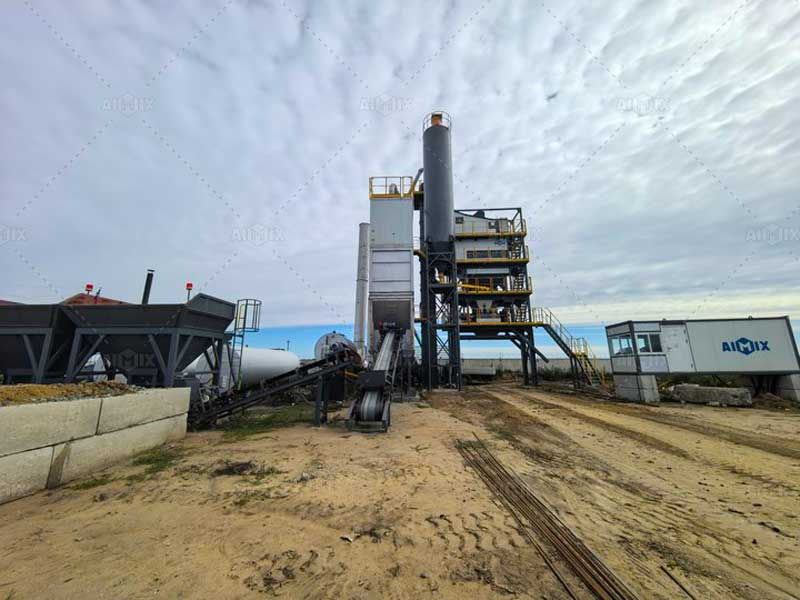
How A 160 TPH Asphalt Mixing Plant Handles High RAP Content
Now let us look at the key technical factors that allow a modern asphalt mixing plant to process high RAP ratios while maintaining asphalt quality.
Several systems work together to achieve stable RAP production.
Dedicated RAP Feeding System
First, the plant requires a precise RAP feeding system. This usually includes a separate RAP hopper, conveyor belt, and weighing unit.
The system controls the RAP flow accurately. As a result, the plant can maintain a consistent RAP percentage in the final asphalt mix.
Stable material flow also prevents sudden temperature drops or mixing imbalance during production.
RAP Drying And Heating Technology
Next, proper RAP heating technology becomes critical. RAP contains aged bitumen, which can burn if heated directly at high temperatures.
Modern asphalt plants often use indirect heating systems. For example, a parallel drum or double drum system allows RAP to heat gradually using hot aggregates instead of direct flame contact.
This process protects the aged binder while ensuring proper mixing temperature.
High-Efficiency Mixing System
High RAP mixes require strong and uniform mixing. A twin-shaft paddle mixer usually performs best for this task.
The mixer quickly blends virgin aggregates, RAP materials, and fresh bitumen. Because of this, the plant produces a consistent asphalt mixture even when RAP ratios increase.
Moisture Control And Material Screening
RAP often contains moisture and variable particle sizes. Therefore, contractors should install screening systems and proper stockpile management.
Good RAP preparation ensures stable plant operation and prevents production interruptions.
When these systems work together, a 160 TPH asphalt plant can handle substantial RAP content effectively.
Typical RAP Ratios Achievable With A 160 TPH Asphalt Plant
After reviewing the technology, many contractors want to know the practical limits of RAP usage.
The achievable RAP ratio depends on plant configuration and project requirements. However, the following ranges are common in Europe.
20%–30% RAP (Standard Recycling)
Most conventional asphalt plants can handle this level easily. It requires minimal modification and maintains very stable asphalt quality.
30%–40% RAP (Optimized Production)
Many modern batch plants with RAP systems operate efficiently in this range. Contractors often choose this ratio for large road rehabilitation projects.
40%–60% RAP (Advanced Recycling Technology)
Plants with specialized RAP dryers, double drums, or hot recycling systems can achieve these levels. However, proper mix design and material control become essential.
Therefore, a well-equipped 160 TPH asphalt mixing plant can typically support 30–50% RAP content for most reconstruction projects.

Operational Considerations For High RAP Production
Even with the right equipment, contractors must manage operations carefully. Proper planning ensures that RAP production remains stable and profitable.
Several operational factors deserve attention.
RAP Stockpile Management
Contractors should store RAP materials in dry and organized piles. Segregation or excessive moisture can disrupt plant feeding and mix consistency.
Mix Design Adjustment
High RAP mixes require adjustments to bitumen content and rejuvenators. Engineers must design the asphalt mix carefully to maintain pavement performance.
Temperature Control
Operators must monitor aggregate and RAP temperatures closely. Proper temperature balance ensures good coating and prevents binder damage.
Environmental Compliance
European environmental regulations require strict dust and emission control. Modern asphalt plants often include baghouse filters, noise reduction systems, and energy-efficient burners to meet these standards.
When contractors manage these factors well, RAP production becomes both economical and sustainable.
Economic Benefits Of Using High RAP With A 160 TPH Plant
Finally, contractors often evaluate whether the investment truly improves profitability. In most cases, the financial benefits are significant.
Lower Bitumen Consumption
Bitumen represents one of the largest costs in asphalt production. RAP already contains aged binder, which reduces the need for new bitumen.
Reduced Aggregate Purchase
Recycled aggregates replace a portion of virgin aggregates. This reduces material procurement and transportation costs.
Improved Project Competitiveness
Many European tenders reward sustainable construction methods. Contractors who use high RAP ratios often gain an advantage when bidding for infrastructure projects.
Because of these benefits, many road contractors now prioritize asphalt plants that support efficient recycling.

Conclusion: A 160 TPH Asphalt Mixing Plant Is A Practical Choice For High RAP Road Reconstruction
In summary, a modern 160 TPH asphalt mixing plant can successfully handle high RAP content for road reconstruction in Europe. With the right RAP feeding system, heating technology, and mixing design, contractors can achieve RAP ratios of 30–50% while maintaining asphalt quality and production stability.
At the same time, this capacity level matches many European road rehabilitation projects. It offers a balanced solution between production efficiency, asphalt plant investment cost, and operational flexibility.
As European infrastructure programs continue to promote recycling and sustainability, asphalt plants that support high RAP content will become even more valuable.
If you are planning a road reconstruction project or considering upgrading your asphalt plant, choosing the right configuration is critical. Our engineering team can help analyze your project requirements, RAP targets, and production goals to recommend a suitable asphalt mixing plant solution.
Contact us today to discuss how a 160 TPH asphalt mixing plant can support your next sustainable road construction project.


Comments