


Can a 40 TPH Asphalt Batch Plant Support Continuous Production For A Small Island Road Project In Fiji?
For many contractors working in island regions like Fiji, one of the biggest challenges is not just building roads, but maintaining continuous production under limited logistics, remote supply chains, and unpredictable weather conditions. When planning a small to medium road construction project, a common question arises: can a 40 TPH asphalt batching and mixing plant truly support continuous production in such an environment?
This article breaks down that question from a practical construction perspective. We will look at real production capacity, island logistics, project demand patterns, and operational strategies. More importantly, we will connect these factors to what contractors actually experience on site in Fiji and similar Pacific island regions.

Understanding The Role Of A 40 TPH Asphalt Batch Plant
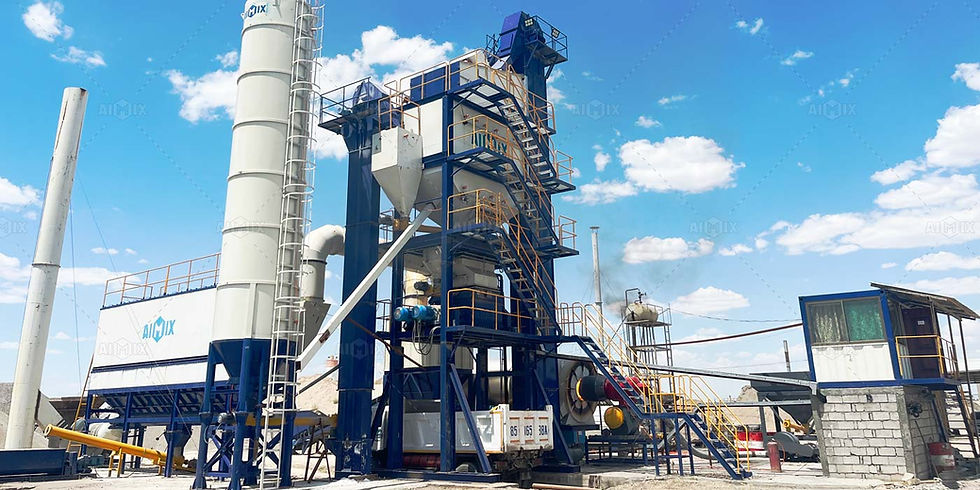
A 40 TPH asphalt batch plant is generally considered a small-capacity production unit. It can produce around 40 tons of asphalt mix per hour under stable working conditions. At first glance, this may seem limited compared to large highway projects. However, for island road construction, the scale of demand is often very different.
To understand its real value, we must connect production output with actual project consumption. On small islands like Fiji, most road works include municipal roads, coastal access roads, airport maintenance zones, and community road upgrades. These projects usually require controlled, steady production rather than extremely high-volume output.
So the key question is not only “how much can it produce,” but also “how well does it match the daily construction rhythm?” This is where a 40 TPH mini asphalt batching plant becomes more relevant than many expect.
Road Construction Demand Patterns In Fiji Island Projects
Before judging plant capacity, we need to understand the demand structure of island road projects. In Fiji, road construction typically follows phased scheduling due to weather cycles, logistics constraints, and material availability.
Most projects do not require 24/7 continuous asphalt output. Instead, they rely on daily or semi-daily paving windows. For example, coastal road rehabilitation often runs in segments of 200–800 meters per phase. This naturally limits peak asphalt demand.
Moreover, transport distances are usually short, but supply chain delays for bitumen or aggregates can interrupt production. Therefore, contractors often prefer a flexible production system rather than oversized industrial plants.
As we move forward, this demand pattern becomes important when evaluating whether 40 TPH is sufficient or not.

Can A 40 TPH Plant Support Continuous Production?
The answer depends on how “continuous production” is defined in a real island construction environment. If continuous production means nonstop industrial-scale output, then a 40 TPH plant is not designed for that purpose.
However, if continuous production means stable daily paving support without interruption during working hours, then the answer becomes much more realistic and practical.
In most Fiji road projects, daily asphalt consumption often ranges between 200 to 400 tons per day for small contractors. Let’s break it down logically:
Production Calculation Example
If a 40 TPH plant operates for:
• 6 hours/day → 240 tons/day
• 8 hours/day → 320 tons/day
• 10 hours/day → 400 tons/day
This means the small asphalt plant for sale can fully cover typical small island road project requirements without overloading the system. In fact, it often matches the paving crew’s actual working speed.
As a result, the plant does not need to run continuously 24 hours. Instead, it aligns with practical construction cycles, which increases fuel efficiency and reduces maintenance pressure.
Logistics And Operational Reality In Fiji
Even though production capacity is important, island logistics often decide the real success of asphalt production.
In Fiji, material transportation can be affected by ferry schedules, port unloading delays, and weather disruptions. Therefore, a smaller but stable plant often performs better than a large but complex system.
This is where a 40 TPH asphalt batch plant shows strong adaptability. It requires less raw material stockpiling, and it reduces the risk of material waste caused by humidity or storage limitations.
In addition, fuel supply and spare parts replacement are easier to manage for smaller systems. Contractors can maintain operations without depending heavily on international logistics every few days.
So when we consider island conditions, “continuous production” is more about reliability than sheer volume.
Production Stability And Equipment Efficiency
Another key factor is production stability. A plant that produces 80 TPH but stops frequently is less efficient than a stable 40 TPH unit that runs consistently every working day.
For island projects, downtime has a higher cost impact. Once asphalt production stops, paving teams, transport trucks, and site preparation crews all become idle. This creates cascading delays.
A properly configured 40 TPH plant helps reduce this risk because it is easier to operate, maintain, and restart. It also consumes less energy and requires simpler operator training.
Therefore, efficiency is not only about output speed. It is also about how smoothly the entire construction chain stays active.
Ideal Project Types For A 40 TPH Asphalt Batch Plant
To better evaluate suitability, we should match equipment type with project type. In Fiji and similar island regions, a 40 TPH asphalt plant is best suited for:
• Municipal road resurfacing projects• Rural road maintenance and upgrades• Small coastal road rehabilitation• Airport runway patching and repair work• Tourism infrastructure roads (resorts, ports, access roads)
These projects share one common feature: moderate daily demand with high importance on consistency rather than scale. This makes 40 TPH an efficient match.
As project size increases, contractors can either extend operating hours or add supplementary mobile units rather than immediately upgrading to a large fixed plant.

Key Advantages For Island Contractors
From a contractor’s perspective, equipment choice directly affects profit margins and project execution risk. A 40 TPH asphalt batch plant offers several practical advantages in island environments.
Lower Operational Pressure
Operators can manage production without complex coordination. This reduces human error and improves consistency.
Better Fuel And Maintenance Control
Smaller plants consume less fuel and require simpler maintenance schedules. This is especially important where spare parts must be imported.
Flexible Deployment
The plant can be relocated or adjusted for different project sites more easily than large-scale systems. This flexibility supports multi-site island contractors.
When combined, these advantages create a system that is aligned with real-world island construction conditions.
Limitations You Should Honestly Consider
To maintain EEAT-level transparency, we must also acknowledge limitations. A 40 TPH plant is not ideal for high-speed highway megaprojects or continuous large-scale urban expressway construction.
If a project demands more than 500–800 tons per day consistently, the plant will struggle unless multiple units are deployed or working hours are extended significantly.
Therefore, contractors should always match equipment selection with project scope and long-term development plans.
In simple terms, the plant is highly efficient for small island infrastructure, but not designed for industrial-scale highway networks.
Final Decision: Is It Suitable For Fiji Island Projects?
After analyzing production capacity, logistics conditions, and real project demand patterns, the conclusion becomes clear.
A 40 TPH asphalt batch plant can support continuous production in Fiji, as long as “continuous” is understood in a practical construction sense—meaning stable daily output aligned with small to medium road project demand.
It performs especially well in island environments where flexibility, reliability, and operational simplicity matter more than extreme production capacity.

Conclusion And Call To Action
If you are planning a road construction project in Fiji or similar island regions, the key is not just choosing a powerful plant, but selecting the right balance between capacity, logistics, and project scale.
A 40 TPH asphalt batch plant offers a practical and cost-efficient solution for contractors who want stable production without excessive operational complexity.
If you want to evaluate your specific project requirements, production schedule, or site conditions, professional technical guidance can help you avoid costly mismatches.
Contact us today to get a tailored asphalt plant solution for your island road construction project and ensure your production stays stable from the first meter to the final layer.


Comments