


Can Owning An Asphalt Batch Plant Reduce Cost When Inflation Rises In Indonesia?
In Indonesia’s fast-growing construction market, inflation is not just a financial term. It is something contractors feel every day on fuel bills, material prices, and project margins. When asphalt, diesel, and logistics costs increase, road projects quickly become more expensive than planned. Because of this, many contractors begin to ask a practical question: can owning an asphalt batch mix plant actually reduce overall costs during inflation?
The answer is not simple. However, when we look at real project conditions, cash flow pressure, and long-term construction demand, owning an asphalt batch plant often becomes a strategic cost-control decision rather than just an equipment purchase. In this article, we will break down how ownership affects cost structure, efficiency, and profitability in Indonesia’s inflation-sensitive environment.
Understanding Inflation Pressure In Indonesia’s Road Construction Industry
Before discussing equipment ownership, we need to understand how inflation impacts asphalt production and road projects. In Indonesia, inflation directly influences three major cost drivers: bitumen price, fuel cost, and logistics transportation fees. These three elements form the core of asphalt production cost.
When inflation rises, contractors usually face unpredictable price fluctuations. As a result, project budgeting becomes more difficult. For example, a project that was profitable at the bidding stage can turn into a low-margin or even loss-making project within a few months.
Because of this volatility, many contractors begin searching for more stable production control methods. This is where owning an asphalt batch plant becomes relevant.
Why Asphalt Production Cost Becomes Unstable During Inflation
To understand the value of ownership, we need to look deeper into cost instability. Asphalt production depends heavily on external suppliers. When contractors rely on third-party mixing plants, they face several cost risks.
First, material price adjustments are passed directly to buyers. Second, transportation costs increase when fuel prices rise. Third, production scheduling is not always flexible, which leads to downtime and inefficiency.
Therefore, inflation does not only increase direct costs. It also reduces operational control. This combination makes project cost prediction difficult and increases financial risk for contractors.
As we move forward, it becomes clearer why many companies in Indonesia consider bringing production in-house.

How Owning An Asphalt Batch Plant Changes The Cost Structure
Owning an aspal mixing plant Indonesia changes the cost structure from variable to more controllable fixed investment. Instead of paying fluctuating per-ton production prices, contractors shift toward managing their own production costs.
This shift creates several important advantages. First, contractors can control raw material sourcing more effectively. Second, they can reduce dependency on external plant pricing policies. Third, they can optimize production timing based on project demand rather than supplier availability.
However, ownership is not only about control. It is also about long-term cost efficiency. To understand this better, we need to look at the comparison between outsourcing and owning equipment.
Owning Vs Outsourcing Asphalt Production In Inflation Conditions
Outsourcing Production
Outsourcing asphalt production is common in small or short-term projects. It requires lower initial investment. However, during inflation, outsourcing costs tend to rise quickly. Contractors also face limited control over production schedules and delivery timing.
As a result, project delays and price increases can reduce profit margins significantly. This becomes more obvious in large-scale or multi-phase road construction projects.
Owning A Batch Asphalt Plant
Owning an asphalt batch plant requires higher upfront investment. However, it provides long-term cost stability. Contractors can purchase materials in bulk, optimize fuel usage, and schedule production based on real project needs.
More importantly, ownership allows better cost forecasting. Even when inflation rises, internal production cost remains relatively stable compared to market-driven outsourcing prices.
Therefore, the decision is not only about cost today. It is about financial stability over the entire project cycle.
Now that we understand the comparison, let’s look deeper into how ownership actually reduces cost in practical terms.

Key Ways An Asphalt Batch Plant Reduces Cost During Inflation
1. Material Cost Control
When contractors own a batch plant, they can directly source bitumen, aggregates, and fillers. This allows bulk purchasing, which often reduces unit cost. In inflation periods, bulk buying also helps lock prices before further increases.
2. Fuel Efficiency Optimization
Modern asphalt batch plants are designed for fuel efficiency. Contractors can optimize burner settings, production cycles, and temperature control. Even small efficiency improvements can reduce cost per ton significantly over time.
3. Reduced Transportation Dependency
Owning a plant near the project site reduces transport distance. This directly lowers logistics costs, which are highly sensitive to inflation in Indonesia due to fuel price fluctuations and traffic conditions.
4. Production Flexibility
Ownership allows contractors to produce asphalt only when needed. This reduces storage losses and avoids unnecessary production costs. It also helps match supply with real project demand more accurately.
As we move further, it becomes important to evaluate whether these savings can justify the investment cost.
Return On Investment In Inflationary Market Conditions
Return on investment (ROI) is the key factor for most contractors. In Indonesia, asphalt projects are often continuous, especially in infrastructure development, toll roads, and regional road expansion.
When inflation is high, outsourcing costs increase faster than equipment depreciation. This creates a situation where owning an asphalt mixing plant for sale becomes more cost-effective over time.
In many medium and large contractors, the break-even point for an asphalt batch plant can be reached faster during inflation periods because savings accumulate from every ton of asphalt produced internally.
However, ROI still depends on project volume, utilization rate, and management efficiency.

When Owning An Asphalt Batch Plant Makes The Most Sense
Ownership is not suitable for every contractor. It works best under specific conditions. If a company has continuous road projects, government contracts, or multi-year infrastructure work, then owning a plant brings strong advantages.
On the other hand, for very small or one-time projects, outsourcing may still be more practical. Therefore, the decision should always align with project pipeline and long-term business strategy.
Transitioning from outsourcing to ownership is not only a financial decision. It is also a strategic move toward operational independence.
Practical Considerations Before Investing In A Batch Plant
Before making an investment decision, contractors should evaluate several practical factors. First, they need to analyze project volume over the next 2–5 years. Second, they should consider site location and logistics planning. Third, they must assess maintenance capability and operator training.
Additionally, choosing the right equipment supplier is important. Reliable asphalt plant manufacturers can provide technical support, spare parts, and production optimization guidance, which directly affects long-term cost performance.
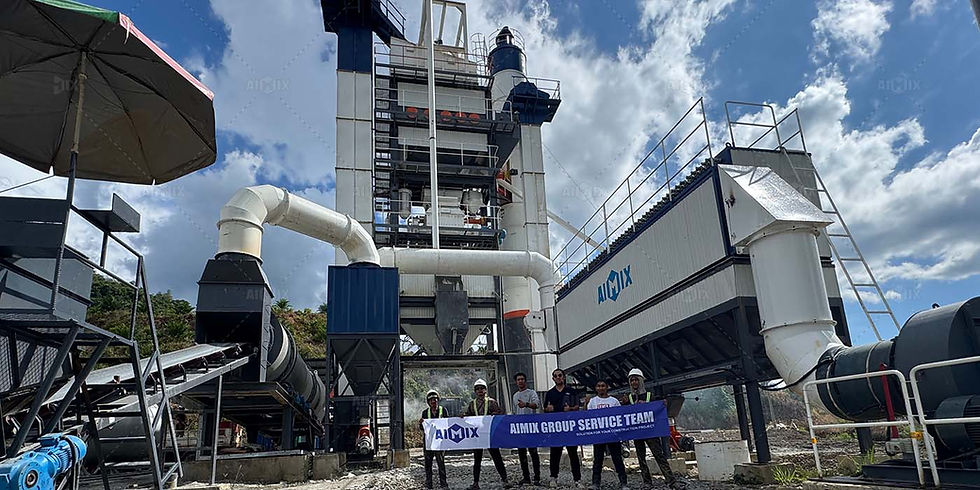
Companies such as AIMIX asphalt mixing plant solutions are often used in Indonesia’s construction market because they provide different capacity options and support for local project conditions.

Conclusion: Is Ownership A Smart Strategy During Inflation?
In conclusion, owning an asphalt batch plant can significantly reduce long-term construction costs during inflation in Indonesia. It improves cost control, stabilizes production, and reduces dependency on fluctuating market prices.
However, it is not just about buying equipment. It is about ensuring project consistency, maximizing utilization, and building a long-term production strategy that aligns with infrastructure demand.
If your company is facing rising asphalt prices, unstable outsourcing costs, or growing project demand, then owning a batch asphalt mixing plant may become a strong financial and operational advantage.
Call to Action: If you are planning upcoming road projects in Indonesia and want to stabilize production costs during inflation, now is the right time to evaluate your own asphalt batch plant solution. A well-planned investment today can protect your project margins for years ahead.


Comments