


How Government Infrastructure Spending Influences the Concrete Paving Equipment Market
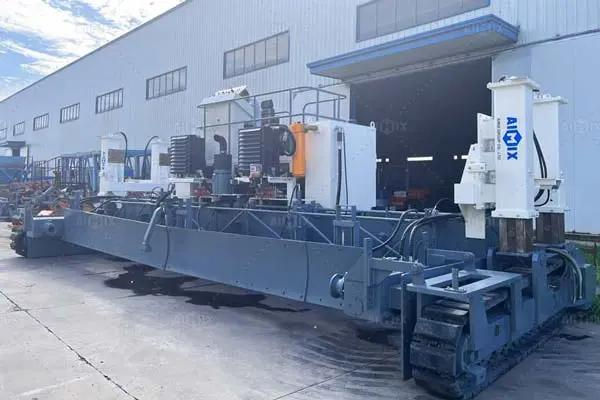
Government infrastructure spending plays a decisive role in shaping the demand, growth, and technological direction of the concrete paving equipment market. From highways and airports to urban transit systems, public investment directly drives construction activity, which in turn determines the need for paving machinery such as slipform pavers, concrete spreaders, and finishing equipment. Understanding this relationship is essential for contractors, equipment manufacturers, and investors aiming to navigate the evolving construction landscape.

The Direct Link Between Infrastructure Spending and Equipment Demand
Infrastructure investment is a form of government capital expenditure focused on long-term economic benefits, including transportation networks, utilities, and public facilities . When governments allocate budgets to road construction, bridge rehabilitation, or airport expansion, these projects immediately generate demand for construction machinery.
Concrete paving equipment is particularly sensitive to this spending because:
Road and highway construction requires continuous, large-scale paving operations
Urban development projects demand high-precision concrete surfaces
Public works programs often prioritize durable materials like concrete
As a result, increases in infrastructure budgets typically lead to higher orders for paving equipment, while funding cuts can quickly reduce demand. Industry reports confirm that declines or delays in government-funded projects can significantly impact equipment manufacturers’ revenues .
The Multiplier Effect on the Construction Ecosystem
Government infrastructure spending has a well-known multiplier effect, meaning that each dollar invested generates additional economic activity across related industries . In the context of the concrete paving equipment market, this effect operates in several ways:
Job creation: Infrastructure projects employ engineers, operators, and laborers, increasing demand for equipment operation
Material demand: Higher consumption of cement and aggregates drives the need for efficient paving solutions
Private sector participation: Public investment often stimulates private construction projects, further expanding equipment usage
For example, large-scale national programs—such as multi-billion-dollar transportation plans—can trigger sustained demand not only for paving equipment but also for batching plants, crushers, and logistics systems.
Impact on Market Cycles and Equipment Sales
The concrete paving equipment market is highly cyclical and closely tied to government funding patterns. When governments increase infrastructure spending, the market experiences growth; when budgets tighten, demand declines.
Recent examples highlight this dynamic:
Countries like India have significantly increased infrastructure budgets to stimulate economic growth, boosting demand for construction equipment and capital goods
Conversely, reduced or delayed government spending can lead to lower equipment sales and reduced industry profitability
This cyclical nature means that manufacturers and contractors must closely monitor public investment trends when planning production, inventory, and expansion strategies.

Influence on Technology Adoption and Innovation
Government spending not only affects demand volume but also shapes technology trends in the concrete paving equipment market. Public projects increasingly require higher efficiency, sustainability, and precision, pushing manufacturers to innovate.
Key areas influenced by government policies include:
Automation and digitalization: Governments promoting smart infrastructure encourage the adoption of GPS-controlled and automated paving systems
Sustainability: Environmental regulations tied to public projects drive the development of low-emission and energy-efficient equipment
Quality standards: Strict specifications for highways and airports require advanced paving technologies to ensure durability and performance
In many cases, government procurement standards act as a catalyst for industry-wide technological upgrades.
Regional Variations in Market Growth
The impact of infrastructure spending varies significantly by region, depending on economic development levels and policy priorities.
Developed markets (e.g., North America, Europe):
Focus on maintenance, rehabilitation, and smart infrastructure upgrades
Emerging markets (e.g., Asia, Africa):
Emphasize new construction, leading to strong demand for paving equipment
Urbanizing regions:
Require large-scale road networks, increasing equipment utilization rates
Globally, governments are investing heavily in infrastructure to support population growth and urbanization, which is expected to drive long-term demand for concrete and related equipment .
The Role of Procurement and Project Planning
Government procurement strategies significantly influence how and when concrete paving equipment is used. Inefficient planning or inconsistent funding can disrupt the market.
Common challenges include:
Project delays due to regulatory approvals or budget reallocations
Stop-start investment cycles, which create uncertainty for contractors and equipment suppliers
Complex bidding processes, which may limit participation and slow project execution
Studies show that poor planning and fragmented supply chains can increase infrastructure costs and reduce efficiency . For equipment suppliers, this means fluctuating demand and difficulty in forecasting sales.
Long-Term Effects on Industry Structure
Sustained government investment can reshape the competitive landscape of the concrete paving equipment market:
Encouraging consolidation among manufacturers like AIMIX to meet large project demands
Strengthening global supply chains for equipment and spare parts
Promoting public-private partnerships (PPP), which increase private sector involvement in infrastructure development
Additionally, consistent funding enables companies to invest in research and development, improving equipment performance and expanding product portfolios.
Challenges and Risks
While government infrastructure spending creates opportunities, it also introduces risks:
Political influence: Funding decisions may be driven by political priorities rather than market needs
Implementation delays: Large projects often take years to start, delaying equipment demand
Economic constraints: High public debt or economic downturns can lead to reduced spending
Moreover, if infrastructure investment is not well-targeted, it may fail to deliver the expected economic benefits, limiting its impact on the equipment market.

Conclusion
Government infrastructure spending is a primary driver of the concrete paving equipment market, influencing everything from demand and pricing to technology adoption and industry structure. Through direct investment in roads, bridges, and public works, governments create a steady pipeline of projects that require advanced paving solutions.
At the same time, the market remains sensitive to policy changes, budget cycles, and economic conditions. Companies that closely track infrastructure spending trends, adapt to regulatory requirements, and invest in innovation will be best positioned to capitalize on emerging opportunities.
Ultimately, as global infrastructure needs continue to grow, government investment will remain a critical force shaping the future of the concrete paving equipment industry.

Comments