


Is It Better to Choose One 160 TPH Asphalt Plant or Two 80 TPH Asphalt Plants for Large Road Projects?
- aimixglobal5
- Feb 14
- 5 min read
For large road construction projects, asphalt production capacity is never just a number on paper. It affects construction speed, cost control, manpower planning, and even project risk. Many contractors face the same question before investing: should we install one 160 TPH asphalt plant equipment, or is it smarter to run two 80 TPH asphalt plants?
At first glance, both options offer the same total output. However, experienced contractors know that production decisions rarely stay that simple. To make a sound choice, you must look deeper into site conditions, project timelines, logistics, and long-term operation goals.
This article breaks down the comparison from a practical construction perspective. We focus on real project scenarios, not brochures. By the end, you will know which solution fits your road project better and why.

Understanding the Real Needs of Large Road Projects
Before comparing plant configurations, it helps to clarify what “large road projects” actually demand in practice. These projects often involve highways, expressways, national roads, or airport access roads.
Such projects usually require:
• Continuous asphalt supply for long paving hours
• Stable quality across thousands of tons
• Tight deadlines driven by government or investors
• High penalties for delays or quality issues
Because of these pressures, asphalt plants must work reliably every day. Any production interruption can stop paving crews, waste labor costs, and delay completion.
With this context in mind, let us examine both options step by step.
Option One: One 160 TPH Asphalt Plant
Choosing one 160 TPH asphalt plant looks straightforward. You get high output from a single system. Many contractors prefer this approach for its simplicity.
However, simplicity also comes with trade-offs.
Advantages of a Single 160 TPH Asphalt Plant
First, one plant means one control system. Operators manage a single production line. This reduces coordination errors.
Second, a 160 TPH hma plant usually occupies less total space than two separate plants. This matters when the site has limited land or strict layout rules.
Third, maintenance planning stays centralized. Technicians focus on one burner, one dryer, and one mixing system.
As a result, daily management often feels easier.
Limitations Contractors Should Not Ignore
Despite these benefits, a single large plant creates a single point of risk.
If a key component fails, production stops completely. Even short downtime can delay paving for hours. In large projects, this risk matters.
Moreover, a 160 TPH plant often needs stronger power supply and higher fuel stability. Remote sites may struggle to support this demand.
Finally, transportation logistics must match the full output. If trucks cannot haul asphalt fast enough, production efficiency drops.
These challenges push many contractors to consider another approach.
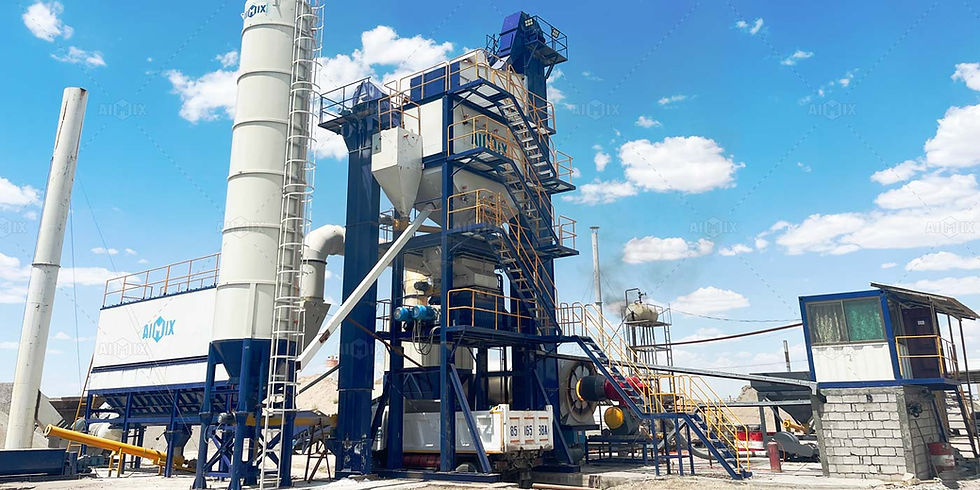
Option Two: Two 80 TPH Asphalt Plants
At the same total capacity, two 80 TPH asphalt plants create a different operational model. Instead of one large system, you run two medium-sized units.
This setup introduces flexibility, but it also increases complexity.
Key Advantages of Running Two 80 TPH Plants
The biggest advantage is redundancy.
If one plant stops, the other can still produce asphalt. Even partial production helps keep paving crews active.
Next, two plants allow phased operation. Contractors can run one plant during low-demand periods and both during peak hours. This saves fuel and labor.
In addition, smaller plants adapt better to difficult sites. Mountain roads, urban areas, and segmented projects benefit from distributed production.
Some contractors even place plants closer to different paving sections. This reduces hauling distance and mix temperature loss.
Challenges That Come With Dual Plants
However, two plants also mean two sets of operators. Labor costs increase.
Maintenance planning becomes more complex. Spare parts management must cover two systems.
Furthermore, quality control requires discipline. Both plants must follow the same mix design and calibration standards.
Without strong management, inconsistency can appear.
Cost Comparison: Initial Investment vs Long-Term Operation
Cost often drives final decisions. However, many buyers focus too much on upfront price.
A single 160 TPH asphalt plant usually costs less than two 80 TPH plants combined. This appeals to budget-conscious contractors.
Yet long-term operating cost tells a different story.
Two smaller plants can reduce fuel waste during low production periods. They also lower the risk of total shutdown losses.
Therefore, the real cost difference depends on how you operate the plants over several years.

Project Schedule and Risk Management
Next, consider schedule pressure.
If your project timeline is tight and penalties are high, reliability becomes more important than simplicity.
Two 80 TPH plants reduce schedule risk. Even during maintenance or breakdowns, production continues.
On the other hand, if your project site offers stable power, fuel, and logistics, one 160 TPH plant can perform very well.
The key question is not capacity, but tolerance for downtime.
Logistics and Asphalt Transport Distance
Asphalt quality depends heavily on transport time and temperature.
With one central 160 TPH plant, trucks may travel longer distances. This increases fuel use and heat loss.
Two smaller plants allow more flexible placement. Contractors can shorten haul routes and protect mix quality.
This advantage becomes critical for large or geographically spread projects.
Environmental and Regulatory Considerations
Environmental rules increasingly affect plant selection.
Some regions limit maximum plant capacity or emissions at a single site.
Two 80 TPH plants may pass approval more easily than one large unit.
Noise control, dust management, and traffic flow also become easier to manage with distributed production.

Which Solution Fits Your Project Best?
To summarize, there is no universal answer.
Choose one 160 TPH asphalt plant if:
• The site has stable infrastructure
• Logistics can handle high output
• You prefer simple management
• Downtime risk is acceptable
Choose two 80 TPH asphalt plants if:
• Project reliability matters most
• The site is large or segmented
• Transport distance is long
• You need flexible production planning
Smart contractors align plant configuration with real construction conditions, not just nominal capacity.
Why More Contractors Are Reconsidering Their Asphalt Plant Strategy
Across global markets, road builders face rising costs, stricter deadlines, and higher quality demands.
As a result, many contractors rethink how they produce asphalt.
They no longer ask, “How big should the plant be?”
Instead, they ask, “How stable, flexible, and efficient should my production system be?”
This mindset shift explains why both configurations remain popular today.

AIMIX: Supporting Smarter Asphalt Plant Decisions
At AIMIX, we work closely with road contractors, government project owners, and asphalt producers worldwide.
We understand that choosing between one 160 TPH asphalt plant and two 80 TPH asphalt plants is not just a technical choice. It is a business decision.
That is why we focus on project-specific solutions. We analyze site conditions, production goals, logistics, and future expansion plans.
Whether you need a high-capacity central plant or a flexible multi-plant setup, AIMIX provides reliable equipment, practical engineering support, and long-term service.
If you are planning a large road project and want a solution that truly fits your needs, now is the right time to talk with AIMIX.
Because the right asphalt plant is not the biggest one. It is the one that works best for your project. Learn about the overall asphalt plant cost at right!


Comments