


What Asphalt Plant Configuration Is Suitable For Long-Distance Road Projects Connecting Saudi Mining Areas With Processing Facilities?
Long-distance mining roads in Saudi Arabia face a different challenge from ordinary urban roads. A road may connect a remote mine, a material handling area, a processing facility, and a major transport corridor. The project can therefore cover a large distance and operate far from established infrastructure.
For contractors, the asphalt plant is not simply a production machine. It affects haulage distance, paving continuity, fuel consumption, material quality, labor requirements, and the overall construction schedule. Therefore, selecting the right configuration should start with the road project rather than the plant catalogue.
Saudi Arabia is also placing greater emphasis on mining, mineral processing, infrastructure, and industrial supply chains. The Ministry of Industry and Mineral Resources has highlighted mining as an important part of economic diversification. Official development documents also identify road connections to mines and infrastructure in remote mining areas as important requirements.
So, what configuration makes sense for a long-distance road connecting mining areas with processing facilities? In many cases, a stationary batch asphalt plant with sufficient storage and material handling capacity is the strongest choice for a large, continuous project. However, a mobile batch plant or a combination of production sites may provide better logistics when the road corridor is exceptionally long or the construction phases move significantly.

Why Long-Distance Mining Roads Need A Different Asphalt Plant Strategy
Before choosing the plant type, contractors should understand the operating conditions. Mining road construction usually involves more than one paving location. The road may cross remote terrain, temporary access routes, industrial zones, and connections to existing highways.
As a result, the main issue is not only how many tons of asphalt the plant can produce per hour. The real question is whether the complete production-and-paving system can maintain a stable supply to the paving front.
Long Haul Distances Can Reduce Paving Efficiency
Hot mix asphalt must reach the paving site within a practical temperature range. A long distance between the plant and paver increases transport time. Traffic conditions, road conditions, loading delays, and site access can make the problem worse.
Therefore, a contractor should calculate the complete cycle time of each truck. This includes loading, outbound travel, unloading, return travel, and waiting time.
If the batch mix asphalt plant produces 160 tons per hour but the available trucks cannot continuously remove the material, the theoretical plant capacity does not translate into actual paving output.
Remote Locations Increase The Importance Of Reliability
Mining projects can operate far from major cities and established industrial services. A plant failure can therefore cause more than a production delay. It can interrupt the paving crew, increase truck waiting costs, and affect the entire construction sequence.
For this reason, contractors should evaluate spare parts availability, maintenance access, burner reliability, dust collection, electrical systems, and control-system support before purchasing the plant.
What Asphalt Plant Type Fits A Long Mining Road Project?
Once the project conditions are clear, the next step is to compare plant configurations. There is no single plant type that fits every Saudi mining road project.
Project Condition | Recommended Configuration | Main Reason |
Large project with a stable central work zone | Stationary batch asphalt plant | High production stability and centralized operation |
Long corridor with several construction phases | Mobile batch asphalt plant | Better relocation flexibility |
Large and continuous asphalt demand | High-capacity stationary batch plant | Supports sustained production and better utilization |
Shorter temporary access road | Compact mobile plant | Lower relocation requirements and faster deployment |
Multiple paving zones | Strategically located plant or multiple production points | Reduces average asphalt transport distance |
These choices should not be made from capacity alone. Instead, production volume, road length, daily paving target, transport distance, project duration, and relocation requirements should be evaluated together.
Why A Stationary Batch Asphalt Plant Can Be A Strong Choice
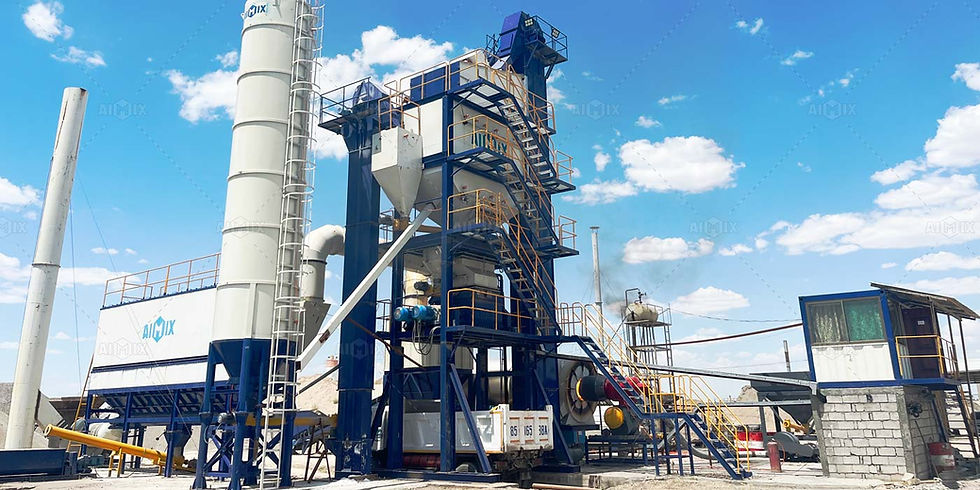
For a large mining-to-processing road with a relatively stable construction base, a stationary batch asphalt plant can offer several advantages.
Stable Production For Continuous Paving
A stationary asphalt batch plant is suitable when the project requires consistent asphalt production over many months or years. A configuration such as an 80 TPH, 120 TPH, 160 TPH, or larger plant can be considered according to the actual paving schedule.
For example, a contractor targeting 800 tons of asphalt mix per working day should not automatically purchase an 80 TPH plant. The contractor must also consider working hours, plant utilization, truck availability, maintenance, and weather-related interruptions.
If the plant operates effectively for eight hours, an 80 TPH nominal capacity represents 640 tons of theoretical production. Actual output will normally be lower than the theoretical maximum because production does not run at full capacity continuously.
Therefore, the plant should have enough capacity margin to support the daily target without forcing the system to operate at its limit.
Better Centralized Material Management
A stationary plant can also support larger aggregate stockpiles, bitumen storage, filler systems, and finished-material logistics.
This matters when the road project consumes large quantities of asphalt over an extended period. Contractors can establish a more organized material supply area instead of repeatedly moving the entire production system.
Better Fit For Long-Term Infrastructure Work
Mining roads can remain under construction for a long period. Some sections may also require rehabilitation after initial construction.
Consequently, a stationary plant can make sense when the contractor expects sustained asphalt demand from the same general area.
When A Mobile Batch Asphalt Plant May Be Better
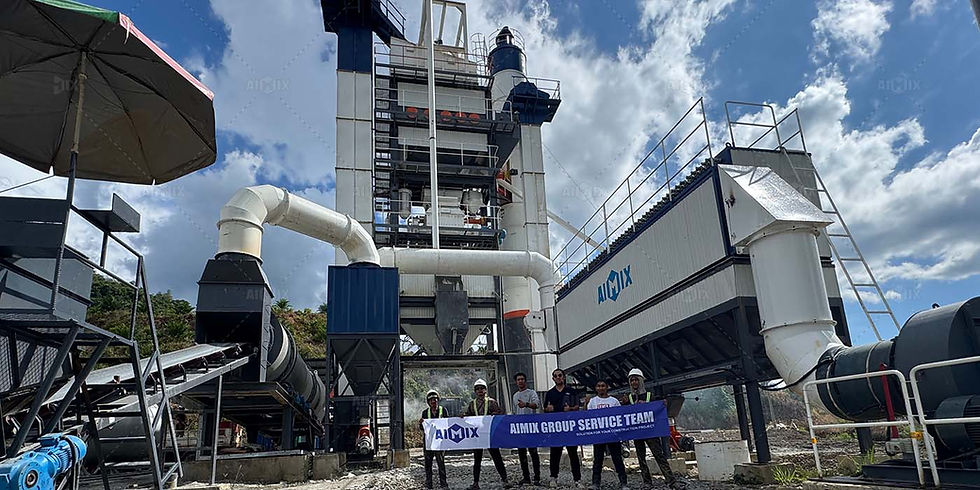
However, a stationary plant is not automatically the best solution. The situation changes when the road construction front moves substantially.
For example, consider a project with a mine at one end and a processing facility many kilometers away. The contractor may construct different sections in sequence rather than paving the entire corridor at once.
Reduce The Distance Between Production And Paving
A mobile batch asphalt plant can move closer to the active construction zone. This can reduce truck travel time and help maintain a more stable asphalt supply.
This approach becomes more attractive when the paving front changes location significantly during the project.
Support Phased Mining Infrastructure Development
Mining infrastructure rarely consists of one road section alone. Contractors may also construct haul roads, access roads, plant roads, loading areas, parking areas, and internal industrial roads.
A mobile configuration can therefore serve multiple work zones when relocation is practical.
Consider Relocation Cost Before Choosing Mobile Equipment
Mobility has a cost. Relocation requires transportation, setup, dismantling, commissioning, and coordination.
Therefore, contractors should not choose a mobile plant simply because it can move. The expected number of relocations should be compared with the savings from shorter asphalt haul distances.

How Much Asphalt Plant Capacity Does A Mining Road Need?
Capacity should come from the paving plan, not from the road length alone.
A practical calculation starts with the daily asphalt requirement. The contractor can estimate the required tonnage from paving width, layer thickness, road length, asphalt density, and daily progress.
Example: Estimating Daily Asphalt Demand
Suppose a project places a 7.5-meter-wide asphalt layer at an average compacted thickness of 60 millimeters.
If the paving crew completes 2 kilometers per day, the approximate compacted volume is:
7.5 m × 2,000 m × 0.06 m = 900 m³ per day.
Using an assumed compacted asphalt density of approximately 2.35 tons per cubic meter, the requirement would be about 2,115 tons per day.
This is only a planning example. Actual density, mix design, compaction, wastage, layer structure, and project specifications can change the result.
The example shows why capacity selection needs project-specific engineering. A contractor with a target above 2,000 tons per day may need a significantly different configuration from a project placing 500 tons per day.
What Configuration Should Be Included Besides Production Capacity?
Production capacity is only one part of the plant. For a remote Saudi project, several supporting systems can directly affect operating performance.
Cold Aggregate Feeding System
The number and volume of cold aggregate bins should match the mix design and required aggregate fractions. Larger bins can reduce frequent loading interruptions when the site has sufficient stockpile space.
Dryer And Burner System
Aggregate moisture has a direct effect on heating energy and production stability. The dryer and burner should therefore match the expected aggregate characteristics and required output.
Fuel selection also deserves attention. Contractors should evaluate local fuel availability, operating cost, burner compatibility, and maintenance requirements.
Dust Collection System
Remote mining locations do not eliminate environmental responsibilities. Dust control remains an important part of responsible plant operation.
The dust collection system should match the plant capacity and local environmental requirements. Proper maintenance also helps protect equipment and maintain stable production.
Bitumen Storage And Heating
Long-distance road projects can consume large quantities of binder. Sufficient bitumen storage can reduce supply interruptions when deliveries arrive from distant suppliers.
The storage and heating system should also maintain the required binder temperature without unnecessary energy consumption.
Filler And Powder Supply
Some asphalt mixes require controlled mineral filler addition. A reliable filler system helps maintain mix consistency and reduces manual handling.
Control System
Automatic control can improve batching consistency and make production data easier to monitor. For remote projects, operators should also consider whether technical support can diagnose common problems quickly.

How Should Contractors Position The Asphalt Plant?
Plant location can be just as important as plant capacity.
For a long road corridor, the contractor should map the mine, processing facility, aggregate source, bitumen supply route, major paving sections, and existing transport roads.
Then, compare the expected truck cycle time from different plant locations.
Place The Plant Near Reliable Aggregate Supply
Aggregate represents a major component of asphalt mix volume. A plant near a suitable and legally available aggregate source can reduce inbound transport requirements.
Saudi Arabia's mining investment framework also recognizes the use of rocks, gravel, sand, and similar materials available at a licensed site for mining operations, subject to applicable requirements.
However, contractors should verify the specific material source, permits, quality, and haulage conditions before relying on local materials.
Balance Aggregate And Asphalt Haulage
The closest location to the mine is not always the best plant location. The contractor should balance inbound aggregate logistics with outbound asphalt delivery.
For example, a slightly more central location may reduce the average asphalt haul distance across several paving sections. That can be more valuable than locating the plant directly beside the quarry.
What About A 120 TPH Or 160 TPH Plant?
For medium-to-large mining road projects, 120 TPH and 160 TPH configurations can be practical starting points for evaluation.
A 120 TPH plant can theoretically produce 960 tons during eight hours of continuous full-rate production. A 160 TPH plant can theoretically produce 1,280 tons during the same period.
These figures are theoretical. Real production depends on aggregate moisture, mix design, loading efficiency, maintenance, material supply, and operating conditions.
Therefore, a 160 TPH plant does not automatically deliver twice the project value of an 80 TPH plant. The contractor should compare the additional capital cost with the expected utilization and the reduction in project duration.
When Should Contractors Consider Multiple Asphalt Production Points?
Extremely long corridors can create a different problem. One central plant may have enough production capacity but still create excessive trucking distances.
In that case, contractors can evaluate multiple production points or a phased production strategy.
This approach can be useful when:
The road corridor is exceptionally long.
Construction progresses from both ends.
Several independent paving teams operate simultaneously.
Transport infrastructure changes significantly along the route.
The project contains separate mining and processing zones.
However, multiple plants also increase capital expenditure, staffing, maintenance, spare parts, and quality-control requirements. Therefore, this solution requires a detailed logistics and cost comparison.

How Can Contractors Control Total Asphalt Road Construction Cost?
The lowest equipment purchase price does not necessarily create the lowest project cost.
For long-distance mining roads, contractors should calculate total cost across the complete production chain.
Consider These Cost Drivers
Asphalt plant purchase and installation cost.
Aggregate transport cost.
Bitumen transportation and storage cost.
Fuel consumption.
Truck fleet size and utilization.
Plant relocation cost.
Operator and maintenance requirements.
Spare parts and service availability.
Downtime risk.
Project completion time.
Most importantly, the contractor should calculate the cost per usable ton delivered to the paving front. This metric provides a better comparison than plant purchase price alone.
What Is A Practical Configuration For A Large Saudi Mining Road?
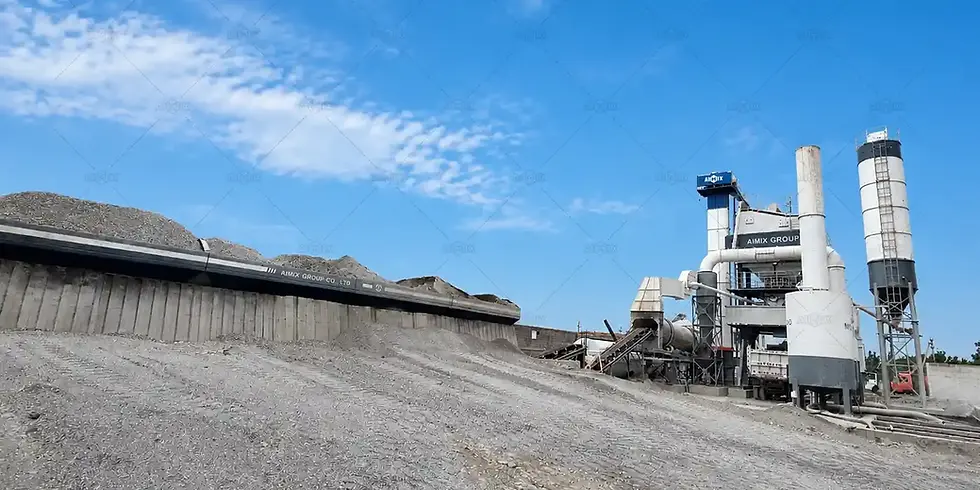
For a long-distance road connecting a mining area with a processing facility, a practical configuration may include a stationary batch asphalt plant in the 120–160 TPH class when the project has high and stable demand from one general production zone.
The configuration can include multiple cold aggregate bins, a suitable dryer and burner, efficient dust collection, sufficient bitumen storage, filler dosing, automatic controls, and adequate finished-mix handling.
If the paving front moves substantially, a mobile batch asphalt plant may provide better logistics. In that situation, the contractor should compare relocation costs with savings from shorter truck cycles.
For exceptionally long corridors, a two-stage or multi-location production strategy may deserve consideration. The final decision should come from a project-specific logistics model rather than a standard equipment recommendation.
Key Questions To Answer Before Purchasing
Before placing an order, project teams should answer several practical questions.
How many tons of asphalt will the project require per day?
What is the maximum distance from the plant to the paving front?
How quickly will the paving front move?
How many trucks are required to maintain continuous supply?
Where will aggregate come from?
Where will bitumen come from?
How much storage is required for aggregate and bitumen?
Will the plant operate for one project or several projects?
How many times might the plant need to relocate?
What local service and spare-parts support is available?
Answering these questions first can prevent contractors from buying a plant that looks suitable on paper but performs poorly in the actual project environment.
Conclusion: Choose The Configuration Around The Road, Not Just The Plant
A long-distance Saudi mining road requires more than high asphalt production capacity. The contractor needs a complete system that connects aggregate supply, asphalt production, truck transport, paving operations, and project scheduling.
For a large and relatively stable project, a stationary batch asphalt plant can provide strong production stability and centralized material management. For a moving construction corridor, a mobile batch plant can reduce logistics pressure. For exceptionally long projects, multiple production points may provide a better balance between production and transportation.
The most suitable configuration depends on daily asphalt demand, road length, paving sequence, transport distance, aggregate source, project duration, and relocation requirements. These factors should be evaluated together before the final equipment decision.
For contractors planning mining access roads, processing-facility connections, industrial roads, or other long-distance infrastructure in Saudi Arabia, a project-specific asphalt plant proposal can provide a more reliable starting point than selecting a model from capacity alone. Share your road length, daily asphalt requirement, paving schedule, aggregate source, and estimated transport distance to develop a configuration that fits the actual project.
Comments