


Why Is A 100 TPH Asphalt Plant Suitable For Medium-Scale Road Projects?
For a medium-scale road project, choosing an asphalt plant is not simply a matter of buying the largest available capacity. Contractors need to balance production demand, project duration, hauling distance, site conditions, fuel consumption, investment, and future workload. If the plant produces too little asphalt, paving crews may wait for material. If it produces far more than the project needs, the additional investment and operating cost may not create enough value.
For many contractors, a 100 TPH asphalt plant for sale offers a practical middle ground. It can provide enough hot mix asphalt for continuous paving while keeping the production system manageable for medium-sized projects. More importantly, its capacity can match many road rehabilitation, provincial road, urban road, industrial access road, and secondary highway projects.
However, 100 TPH is not automatically the right choice for every project. The better approach is to compare the plant capacity with the actual asphalt demand, paving schedule, transport distance, and working hours. This article explains when a 100 TPH asphalt plant makes sense and what contractors should evaluate before purchasing one.

What Does A 100 TPH Asphalt Plant Mean For A Road Contractor?
TPH means tons per hour. Therefore, a 100 TPH asphalt plant has a nominal production capacity of about 100 tons of asphalt mixture per hour under suitable operating conditions.
In real projects, however, contractors should not assume that the plant will produce exactly 100 tons every hour throughout the working day. Material moisture, aggregate gradation, fuel conditions, warm-up time, maintenance, loading efficiency, and other site factors can affect actual output.
For this reason, production planning should use realistic operating efficiency rather than relying only on the nameplate capacity.
Project Factor | Why It Matters | What A 100 TPH Plant Can Offer |
Daily asphalt demand | Determines required production hours | Suitable for moderate daily paving volumes |
Paving continuity | Reduces waiting between truck deliveries | Supports steady material supply |
Transport distance | Long hauling can limit effective paving output | Works best with planned truck logistics |
Project duration | Affects equipment utilization | Useful for projects lasting months or longer |
Future projects | Determines long-term plant utilization | Can serve multiple medium-scale contracts |
Thus, the key question is not simply whether the plant can produce 100 tons per hour. The real question is whether 100 TPH fits the project's complete production and logistics system.
Why Is 100 TPH A Practical Capacity For Medium-Scale Projects?
Medium-scale road projects often sit between small maintenance works and major highway construction. Their asphalt demand can be substantial, but the contractor may not need several hundred tons of mixture every hour.
As a result, a 100 TPH plant can provide a useful balance between capacity and utilization.
It Can Match Moderate Asphalt Demand
Consider a contractor that needs around 600 tons of asphalt mixture for one day's paving work. At a theoretical 100 TPH output, the required production time would be about six hours.
In practice, the contractor should allow additional time for startup, material handling, truck changes, quality checks, and short interruptions. Therefore, the actual schedule may require a longer operating window.
This calculation gives the project manager a useful starting point. Instead of choosing a plant based on the maximum possible capacity, the contractor can work backward from daily material demand.
It Supports Continuous Paving
Asphalt paving works best when the asphalt paver receives material at a steady rate. Long gaps between truck deliveries can affect paving continuity and may create unnecessary delays.
A 100 TPH asphalt plant can support a coordinated truck-and-paver system for many medium-scale projects. However, the plant alone does not guarantee continuous paving. The contractor must also provide enough trucks, suitable hauling routes, and efficient loading and unloading operations.
Therefore, production capacity should always be evaluated together with transportation capacity.
It Avoids Excessive Capacity For Moderate Projects
A larger asphalt plant may appear attractive because it offers higher output. Nevertheless, higher capacity also means a larger initial investment and potentially higher requirements for aggregate storage, fuel supply, power, site preparation, and material logistics.
If the project only requires moderate production, a much larger plant may spend significant time operating below its practical utilization level.
In that situation, a 100 TPH plant can offer a more balanced solution. The contractor invests in capacity that has a better chance of being used regularly.

How Can Contractors Calculate Whether 100 TPH Is Enough?
Before purchasing an asphalt plant, contractors should estimate the project's actual hourly and daily asphalt requirements. This step provides a more reliable basis for equipment selection.
A simple calculation can help:
Required production hours = Daily asphalt demand ÷ Actual hourly production
For example, assume a project requires 700 tons of asphalt mixture per day. If the plant achieves an average practical output of 80 tons per hour during the planned operating period, production would require approximately 8.75 hours.
This calculation also highlights an important point. A 100 TPH plant does not need to operate at full nominal capacity every minute. The contractor should instead consider realistic production performance under local conditions.
Example: 500 Tons Per Day
If a road project needs about 500 tons per day, a 100 TPH plant could theoretically produce this volume in five hours at full capacity.
The contractor could then plan additional time for startup, quality inspection, truck loading, maintenance, and unexpected interruptions.
This capacity may work particularly well for projects with moderate daily paving targets.
Example: 800 Tons Per Day
An 800-ton daily requirement would theoretically require eight hours at 100 TPH.
In this case, project managers should pay closer attention to plant utilization and logistics. If the project operates under a short daily work window, the contractor may need a higher-capacity plant or a longer production schedule.
Example: 1,200 Tons Per Day
A 1,200-ton daily requirement would require about 12 hours at 100 TPH under theoretical full-capacity conditions.
That workload may push the plant beyond a comfortable operating schedule. A higher-capacity plant could make more sense if the project needs this production level consistently.
Therefore, 100 TPH is best viewed as a capacity range for planning, not a universal answer for every medium-scale project.
Which Road Projects Can Benefit From A 100 TPH Asphalt Plant?
The next consideration is project type. Different road projects create different asphalt production patterns. Some require large quantities over a short period. Others require moderate production over many months.
For the latter group, a 100 TPH plant can be particularly practical.
Provincial And Secondary Roads
Provincial roads often involve substantial paving work without the production demand of major national highways.
A 100 TPH asphalt mix plant can provide a steady supply of asphalt for base, binder, and surface courses when the paving schedule remains moderate.
It can also support phased construction. Contractors can produce material according to the progress of different road sections instead of maintaining excessive production capacity.
Urban Road Construction
Urban road projects often have more complex logistics than open highway projects. Traffic restrictions, limited working hours, and restricted truck movements can affect asphalt delivery.
In these situations, production capacity must match the actual paving window.
A 100 TPH plant can provide sufficient output for many urban road projects while allowing contractors to control production according to daily construction schedules.
Road Rehabilitation And Resurfacing
Road rehabilitation does not always require massive asphalt volumes every day. The contractor may work on one section, complete milling, prepare the surface, and then move to the next section.
A 100 TPH plant can suit this phased workflow when daily demand remains moderate.
Moreover, local asphalt production can reduce dependence on third-party suppliers when the project location is far from commercial asphalt plants.
Industrial Access Roads
Industrial parks, factories, warehouses, logistics centers, and mining support facilities often require durable internal roads and access routes.
These projects can generate a steady but moderate asphalt demand. A 100 TPH plant may provide a useful balance between production capacity and project requirements.
Airport And Infrastructure Support Roads
Some airport access roads, service roads, and infrastructure support projects also require reliable asphalt production.
However, contractors should evaluate the project's quality requirements and production schedule carefully. Specialized pavement specifications may require tighter process control and more detailed quality management.
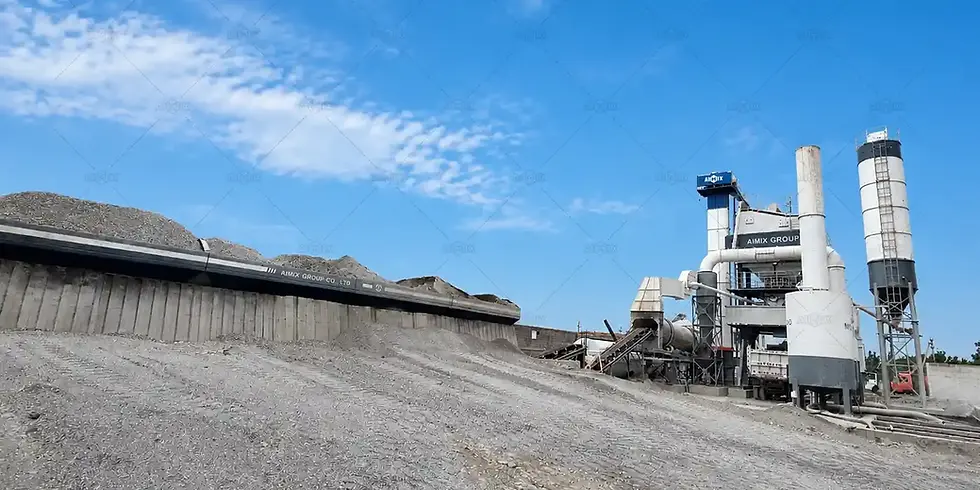
Why Does Plant Location Matter As Much As Plant Capacity?
Production capacity is only one part of asphalt supply. Transportation can become the real bottleneck when the plant is far from the paving site.
For example, a 100 TPH plant may produce material continuously, but insufficient trucks may prevent the paver from receiving asphalt at the required rate. Long travel distances can make this problem worse because each truck completes fewer delivery cycles per day.
Therefore, contractors should evaluate the entire material flow:
Aggregate supply → Asphalt production → Truck loading → Hauling → Paver → Roller → Finished pavement
If one part of this chain is too slow, the entire system loses efficiency.
Shorter Hauling Distances Improve Coordination
A plant located reasonably close to the project can reduce asphalt travel time. It can also make truck scheduling easier.
However, the closest location is not always the best location. Contractors should also consider aggregate availability, land conditions, fuel supply, environmental requirements, road access, and future projects.
The best plant location is usually the one that balances production, transportation, and material supply.
How Does A 100 TPH Plant Affect Truck Requirements?
Truck logistics deserve special attention because asphalt production and asphalt delivery must remain synchronized.
Suppose a plant produces close to 100 tons per hour. If one truck carries 20 tons, the system would need roughly five truckloads per hour just to match the nominal plant output.
But the actual truck requirement depends on the round-trip cycle time.
If a truck completes one delivery cycle in 60 minutes, five trucks may provide only the basic theoretical requirement. If the cycle takes 90 minutes, more trucks may be necessary.
This simple example shows why contractors should not select a plant based only on TPH. Plant capacity, truck capacity, hauling distance, loading time, and paving speed must work together.
What Equipment Configuration Should Contractors Consider?
Once the required capacity is clear, the next step is selecting the plant configuration. A 100 TPH asphalt plant should not be judged by capacity alone.
Batch Type Or Drum Type?
Contractors should first consider whether a batch asphalt plant or drum mix plant better fits the project.
Batch mix asphalt plants produce asphalt mixture in controlled batches. They can offer flexibility when the contractor needs different mix designs or frequent changes between recipes.
Drum plants use a continuous production process. They can provide efficient continuous output for projects with stable mix requirements.
For contractors handling multiple mix specifications, a batch plant may offer greater operational flexibility. For projects with stable production requirements, a continuous drum process may also be worth evaluating.
Aggregate Cold Bins
The cold aggregate feeding system affects production stability. Sufficient hopper capacity helps maintain a consistent supply of different aggregate sizes.
Contractors should consider the number of aggregate fractions required by their mix designs. They should also consider local aggregate availability and moisture conditions.
Drying And Heating System
Aggregate moisture directly affects heating energy and production efficiency. Wet aggregates require more thermal energy before mixing.
Therefore, local climate and aggregate storage conditions matter when evaluating a 100 TPH plant.
Dust Collection System
Dust control is another important consideration. The plant should include a suitable dust collection system that matches the equipment design and local environmental requirements.
Contractors should check applicable emissions, environmental, and site approval requirements before finalizing the equipment configuration.

Can A 100 TPH Plant Reduce Asphalt Production Costs?
Potentially, yes. However, contractors should avoid judging profitability from production capacity alone.
A 100 TPH plant can reduce reliance on purchased asphalt mixture when the project has enough workload to keep the plant properly utilized. Local production can also improve scheduling control and reduce long-distance material transportation.
At the same time, the contractor must account for the complete cost structure.
Cost Category | Key Question |
Plant investment | Does the capacity match the expected workload? |
Fuel | How much energy does local aggregate moisture require? |
Labor | Can the team operate and maintain the plant effectively? |
Maintenance | Are wear parts and spare parts easy to obtain? |
Transportation | Can local production reduce asphalt hauling distance? |
Utilization | Can the plant serve additional projects after completion? |
Consequently, a 100 TPH plant becomes more attractive when the contractor has continuous or repeat demand instead of only a short isolated paving job.
When Should Contractors Choose A Larger Asphalt Plant?
A 100 TPH plant has clear advantages, but it also has limits. Contractors should consider a larger plant when the project requires consistently high production.
For example, a major highway project may require several thousand tons of asphalt mixture within a short construction window. If the contractor needs very long daily operating hours to meet demand, a higher-capacity plant may provide better schedule security.
The same applies when multiple paving crews operate simultaneously. One 100 TPH plant may not provide enough output to maintain both crews efficiently.
Therefore, contractors should compare at least three factors:
Daily asphalt demand + available working hours + required paving continuity.
If these three factors point toward higher output, a 120 TPH, 160 TPH, or larger plant may be more suitable.

When Can A 100 TPH Plant Be A Better Investment?
A 100 TPH plant can be a strong option when the contractor expects repeated medium-scale work.
This is especially relevant for contractors working on provincial roads, municipal roads, industrial areas, rehabilitation projects, and regional infrastructure programs.
Instead of purchasing a plant only for one contract, the contractor can evaluate the wider project pipeline.
Look Beyond The Current Road Project
A plant investment should ideally serve more than one project.
If the contractor has several upcoming road contracts within a practical transportation radius, the plant can achieve higher annual utilization.
Higher utilization can improve the economics of equipment ownership because the initial investment spreads across more production.
Consider Seasonal Work
Road construction can be seasonal in some regions. Weather conditions may shorten the effective paving season.
Contractors should therefore estimate annual operating days rather than assuming year-round production.
This approach provides a more realistic investment calculation.
What Should Buyers Check Before Ordering A 100 TPH Asphalt Plant?
Capacity is important, but experienced buyers normally evaluate the complete system before making a final decision.
Check The Real Production Conditions
Ask how the quoted capacity relates to actual aggregate moisture, fuel type, mix temperature, and local operating conditions.
Check The Mix Requirements
Confirm whether the plant can support the required aggregate sizes, asphalt content, mix designs, and production changes.
Check Site Requirements
Review land access, foundation conditions, power supply, fuel storage, aggregate storage, drainage, and truck circulation before installation.
Check After-Sales Support
Production downtime can affect the paving schedule. Therefore, spare parts, technical support, installation assistance, operator training, and maintenance response all deserve attention.
Check Future Utilization
Do not evaluate the plant only against today's contract. Consider whether it can support future road, bridge, industrial, airport, or municipal projects.
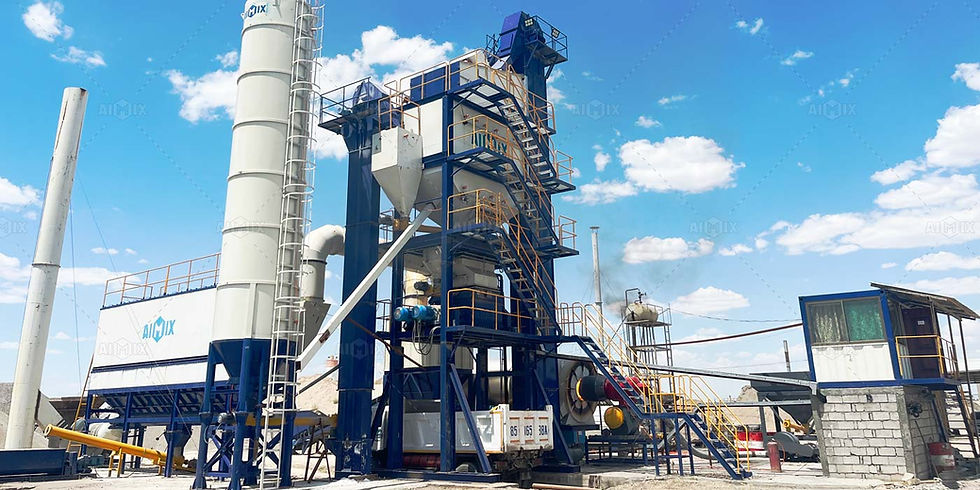
How Can AIMIX Help Contractors Evaluate A 100 TPH Solution?
A suitable asphalt plant starts with project analysis rather than a standard equipment list. AIMIX can help contractors evaluate capacity, plant configuration, material flow, and project conditions before equipment selection.
The evaluation can consider the expected asphalt demand, aggregate characteristics, project location, transportation distance, mix requirements, working schedule, and future utilization.
For contractors who need a 100 TPH solution, this approach helps avoid two common mistakes. The first is buying a plant that cannot keep up with the paving schedule. The second is investing in excessive capacity that remains underused.
AIMIX can also provide technical guidance for installation, commissioning, operator training, spare parts, and ongoing technical support. These services matter because reliable production depends on more than the equipment itself.
Final Takeaway: Is 100 TPH The Right Capacity For Your Project?
A 100 TPH asphalt plant can be suitable for medium-scale road projects because it provides a practical balance between production capacity, equipment investment, and operational flexibility.
It can support many provincial road, urban road, rehabilitation, industrial access road, and regional infrastructure projects. It can also work well when the contractor has several medium-sized projects within a practical service area.
Nevertheless, contractors should not select 100 TPH simply because it is a popular capacity. The correct choice depends on daily asphalt demand, actual production efficiency, working hours, truck cycles, hauling distance, mix requirements, and future workload.
If your project requires around 500–800 tons of asphalt mixture per day, a 100 TPH plant may provide a practical production basis. If demand consistently exceeds this range or the paving window is very short, a higher-capacity plant may deserve consideration.
The most reliable decision starts with numbers. Calculate your daily asphalt requirement. Estimate realistic production hours. Check truck cycles. Evaluate the plant location. Then compare the total investment with your current and future project pipeline.
Planning a medium-scale road project? Share your expected asphalt demand, project location, paving schedule, and mix requirements with AIMIX. Our technical team can help you evaluate whether a 100 TPH asphalt plant fits your project and recommend a suitable configuration based on actual working conditions.
Comments