


Can a 120 t/h Asphalt Batching Plant Support Continuous Paving Schedules in Kazakhstan?
Kazakhstan is investing heavily in road infrastructure. From national highways linking major cities to regional roads serving mining, oil, and agricultural zones, paving schedules are often tight and weather windows are short. For contractors and project owners, one practical question appears again and again: can a 120 t/h asphalt batch plant truly support continuous paving schedules in Kazakhstan?
This is not just a technical question. It is a business decision that affects productivity, project timelines, and profit margins. In the sections below, we look at this topic from the contractor’s perspective and from the realities of the construction industry in Kazakhstan. We focus on facts, practical experience, and real operational considerations rather than theoretical numbers.
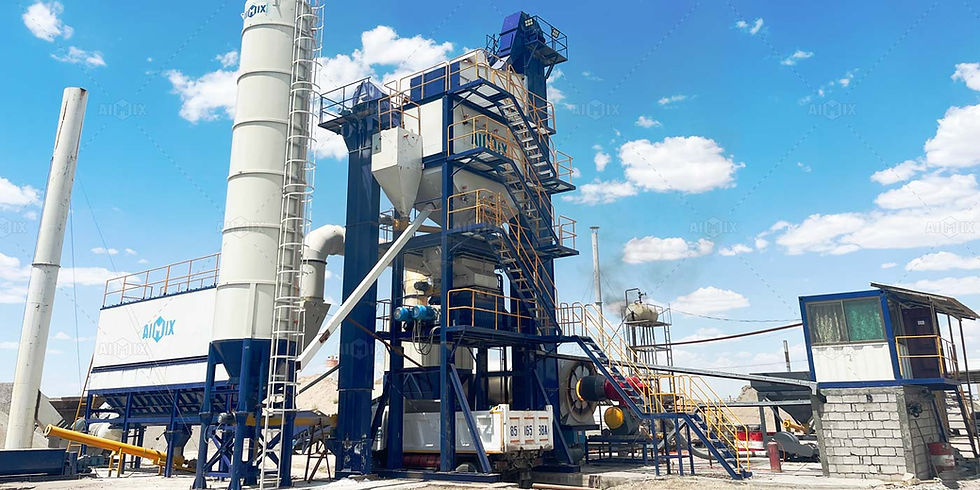
Understanding Continuous Paving in the Kazakh Construction Context
Before evaluating plant capacity, it is important to clarify what “continuous paving” means in real projects. In Kazakhstan, continuous paving usually refers to stable asphalt supply over long shifts, often 8–12 hours, with minimal interruptions.
This requirement becomes more demanding when projects are located far from cities. Long hauling distances, limited local infrastructure, and extreme temperatures all add pressure to the asphalt supply chain. Therefore, plant capacity alone does not guarantee continuity. The entire system must work together.
With this context in mind, let us first examine whether a 120 t/h asphalt mixer plant matches typical project demands.
What Does a 120 t/h Asphalt Batching Plant Actually Deliver?
On paper, a 120 t/h asphalt batching plant produces 120 tons of hot mix asphalt per hour under ideal conditions. In real projects, actual output usually ranges from 85% to 95% of nominal capacity.
That means a well-configured plant can realistically supply around 100–110 t/h. Over a 10-hour shift, this equals roughly 1,000 to 1,100 tons of asphalt.
To put this into perspective, such output can support:
One large paver working continuously
Two medium pavers operating with coordinated scheduling
Highway base and binder course paving with stable material demand
However, capacity figures alone do not tell the full story. Therefore, we must look at how this output aligns with common paving scenarios in Kazakhstan.

Matching Plant Output with Typical Paving Requirements
Most highway and regional road projects in Kazakhstan fall into medium-scale categories. Lane widths usually range from 7 to 15 meters, while paving thickness varies between 4 and 8 cm depending on the layer.
Under these conditions, asphalt consumption often falls between 200 and 350 tons per kilometer per lane. A 120 t/h hmp plant can comfortably support daily paving lengths of 3 to 5 kilometers, depending on design and logistics.
As a result, for many state-funded and private projects, this plant size offers a strong balance between capacity and investment cost. Still, to achieve continuous paving, the plant must adapt to local environmental challenges.
How Climate and Geography in Kazakhstan Affect Asphalt Supply
Kazakhstan has one of the most demanding climates for asphalt production. Summer temperatures can exceed 35°C, while shoulder seasons bring sharp drops at night. Wind and dust also affect aggregate handling.
A 120 t/h asphalt batching plant can handle these conditions if it includes proper insulation, efficient burners, and stable control systems. Consistent heating performance becomes essential for maintaining mix temperature during long production runs.
At the same time, geography plays a major role. Projects are often far from aggregate sources or fuel suppliers. Therefore, plant reliability and ease of maintenance become just as important as output capacity.

Logistics: The Real Key to Continuous Paving
Even the best asphalt plant cannot support continuous paving without reliable logistics. Truck cycles, loading efficiency, and traffic conditions all affect material flow.
For a 120 t/h plant, contractors typically need:
8–12 dump trucks, depending on hauling distance
Well-coordinated dispatch scheduling
Sufficient hot mix storage or surge bins
When these elements align, material reaches the paver steadily. As a result, paving crews avoid stops that cause temperature loss and surface defects.
Therefore, choosing a 120 t/h asphalt batching plant makes sense only when logistics planning receives equal attention.
Plant Configuration Matters More Than Rated Capacity
Not all 120 t/h asphalt batching plants perform the same way. Configuration choices directly affect continuous production.
Aggregate Bins and Drying System
Sufficient cold aggregate bins reduce frequent refilling. A high-efficiency drying drum ensures stable moisture removal, especially during early mornings or after rainfall.
Mixing Cycle and Control System
Modern control systems shorten mixing cycles while maintaining quality. Faster cycles translate into smoother output and less waiting time for trucks.
Environmental and Dust Control
Strict emission requirements apply in many regions. Efficient baghouse systems prevent downtime caused by dust accumulation and inspections.
When these components work together, a 120 t/h plant delivers stable performance hour after hour.

Economic Perspective: Is 120 t/h the Right Investment Level?
From a contractor’s point of view, investment efficiency matters. Larger plants require higher upfront costs, more fuel, and more operators. Smaller plants may struggle with peak demand.
A 120 t/h asphalt batching plant often sits at a sweet spot. It offers enough capacity for continuous paving without excessive capital pressure. Fuel consumption remains manageable, and maintenance teams can handle the equipment without large specialized crews.
For companies bidding on medium to large road projects in Kazakhstan, this balance improves competitiveness and reduces financial risk.
Real-World Application Scenarios in Kazakhstan
In practice, 120 t/h asphalt batching plants are commonly used in:
National and regional highway rehabilitation
Industrial access roads for mining and oil fields
Urban arterial road upgrades
In these scenarios, continuous paving becomes achievable when production, transport, and paving teams coordinate closely. Many contractors report stable daily output and consistent surface quality with this plant size.

So, Can a 120 t/h Asphalt Batching Plant Support Continuous Paving?
The answer is yes, under realistic and achievable conditions. A 120 t/h asphalt batching plant can support continuous paving schedules in Kazakhstan when:
The project scale matches the plant’s output
Logistics are planned and controlled carefully
The plant is properly configured for local climate
Operators receive adequate training
Rather than chasing maximum capacity, successful contractors focus on system stability. In this sense, 120 t/h often proves more practical than larger, more complex setups.
Choosing the Right Partner for Your Asphalt Plant Project
Equipment alone does not guarantee success. Technical support, spare parts availability, and commissioning guidance all influence long-term performance.
We work closely with contractors operating in Central Asia and similar environments. Our asphalt batching plants are designed with real project conditions in mind, not just catalog specifications. From plant selection to on-site support, we aim to help customers achieve stable, continuous paving.

Final Thoughts and Call to Action
Continuous paving in Kazakhstan demands more than high numbers on a nameplate. It requires the right balance of capacity, reliability, and operational planning.
If you are considering a 120 t/h asphalt batching plant for upcoming road projects, now is the time to evaluate your actual paving needs and logistics conditions. A well-chosen solution can help you finish projects faster, control costs, and improve pavement quality.
Contact us to discuss your project requirements and explore whether a 120 t/h asphalt batching plant is the right fit for your paving schedule in Kazakhstan.


Comments