


Which Asphalt Plant Is Best For My 120,000-Ton Per Year Mix Supply Business?
- aimixglobal5
- Feb 24
- 7 min read
If you plan to supply about 120,000 tons of asphalt mix each year, you are already in a smart position. This scale fits many municipal roads, private paving jobs, and steady maintenance work. However, one big question still stands. Which asphalt plant should you choose to make this business stable and profitable?
The short answer is simple. You need a plant that matches your real demand, your local market, and your long-term plan. The longer answer takes a bit more thinking. In this guide, we will walk through that thinking step by step. We will keep it practical. We will keep it honest. And we will keep it focused on what contractors and mix suppliers actually face on site.
Let’s start from your target output and move forward with clear logic.
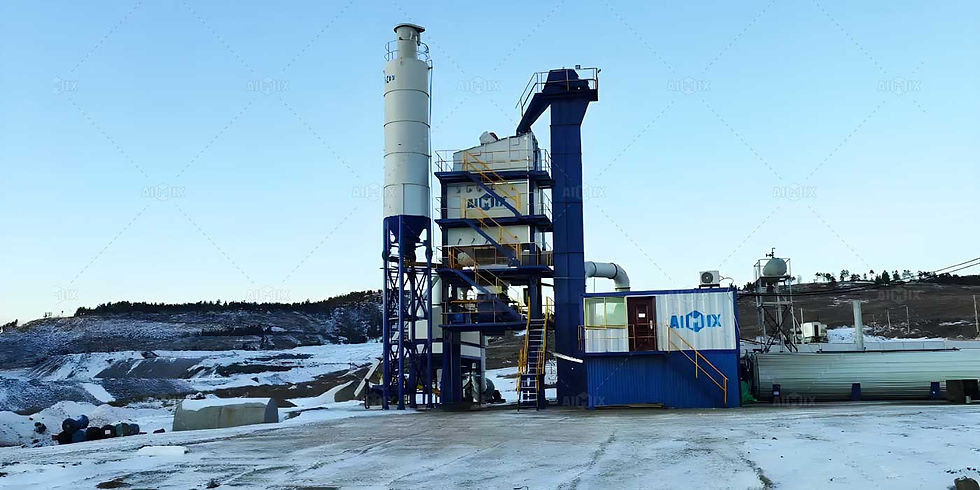
Understand What 120,000 Tons Per Year Really Means
Before you compare models, you should translate annual demand into daily and hourly needs. This step sets the foundation for every smart decision that follows.
For example, 120,000 tons per year usually means:
- About 10,000 tons per month
- About 400 to 450 tons per working day, if you work 22 to 25 days per month
- About 50 to 70 tons per hour, if you run 8 hours per day
These numbers are not strict. Your schedule may change. Your peak season may push higher. Still, they give you a clear range. In most cases, a plant with a rated capacity of 60 to 80 TPH fits this business size very well.
Now that you have a rough target, the next step is to choose the right plant type.
Choose Between Batch Type And Drum Mix Type
Once you know your capacity range, you face a classic choice. Batch type or drum mix type? Each one solves a different problem. Therefore, you should link this choice to your market first, not to the price tag.
Why Many Contractors Prefer Batch Type Plants
Batch type asphalt plants mix asphalt in separate batches. This design gives you strong control over mix quality. You can change formulas fast. You can produce different mixes in the same day. You can also meet strict project specs more easily.
For a 120,000-ton business, this flexibility matters. You may serve city roads today. You may serve a private yard tomorrow. Each job may ask for a different gradation or binder content. With a batch plant, you can switch without stress.
In addition, many regions prefer asphalt batch mix plants for compliance reasons. Inspectors like clear records. Owners like stable quality. Over time, this trust helps you win more bids.
However, batch plants cost more at the start. They also need a bit more space and planning. So, you should only choose this route if your market values quality and flexibility.

When A Drum Mix Plant Makes More Sense
Drum mix plants run in a continuous mode. They shine when you produce one mix type for long hours. They cost less to buy. They also cost less to maintain in many cases.
If your 120,000 tons mainly go to one or two standard road mixes, a drum plant can work well. You save on investment. You keep the system simple. You also train operators faster.
Still, you should remember one limit. Drum mix plants do not switch mixes as easily. If your clients often ask for changes, you may feel stuck.
So, before you move on, ask one honest question. Do my customers value mix variety and tight specs, or do they value speed and price more? Your answer points to the right type.

Decide On Stationary Or Mobile Configuration
After you choose the mixing method, you face another practical choice. Should the plant stay in one place, or should it move with your projects?
This decision depends on how you run your business today and how you plan to grow it tomorrow.
Why A Stationary Plant Fits A Stable Supply Business
If you plan to serve a fixed area, a stationary plant often wins. You can build solid foundations. You can design better material flow. You can also optimize storage and traffic inside the yard.
For a 120,000-ton per year business, this stability helps. You can negotiate long-term aggregate supply. You can build strong ties with local clients. You can also reduce downtime from frequent moves.
In addition, stationary plants often offer better expansion options. If your market grows, you can add silos or upgrade burners later.
When A Mobile Asphalt Plant Brings More Value
On the other hand, some contractors work across wide regions. They follow projects. They set up near job sites. In this case, a mobile asphalt plant for sale cuts hauling costs and saves time.
Modern mobile batch plants and mobile drum plants can reach 60 to 80 TPH with good reliability. They also pack into transport-friendly modules. This design reduces setup time.
However, mobility always adds some compromise. You may get less storage. You may also accept simpler layouts. So, you should choose mobile only if your project pattern truly needs it.

Match Rated Capacity With Real Operating Conditions
At this point, you may think, “I need about 60 to 70 TPH, so I will buy a 60 TPH plant.” This logic sounds right, but it often leads to stress later.
In real life, plants do not run at 100% rated output all day. Weather changes. Material moisture changes. Trucks arrive late. Operators take breaks. All these small factors reduce actual output.
Therefore, a smart rule is simple. Choose a plant with some buffer. For a 120,000-ton per year target, a 80 TPH plant often feels more comfortable than a 60 TPH one.
This buffer gives you three benefits:
- You finish daily targets with less pressure.- You handle peak season without overtime chaos.- You reduce wear because you do not push the system to the limit.
In the long run, this choice often saves money, not wastes it.
Think About Fuel, Power, And Local Costs
Next, you should look beyond the mixing tower. Operating cost shapes your profit every single day. Therefore, you must check fuel type, power supply, and local prices.
Most asphalt plants use diesel, heavy oil, or gas burners. Each option has a different cost and supply risk. For example, gas may cost less in some regions, but supply may be unstable in others. Diesel works almost everywhere, but prices can swing fast.
You should also check your power grid. Can it support the plant load? If not, you may need generators. This adds cost and noise. It also adds maintenance work.
Because of these factors, two plants with the same output can show very different profit results in the same year. So, always calculate operating cost before you decide.

Plan For Quality Control And Compliance From Day One
Quality is not a slogan in asphalt business. It is your ticket to repeat orders and long-term contracts. So, your plant choice should support stable quality control.
For example, you should look at:
- Weighing accuracy of aggregates and bitumen- Temperature control in drying and mixing- Dust collection and emission control systems- Data recording and reporting functions
Many local authorities now ask for clearer records and cleaner sites. If your plant helps you meet these rules, you avoid fines and delays. More importantly, you build trust with clients and inspectors.
Therefore, do not treat compliance as a burden. Treat it as a business advantage.
Do Not Ignore Service, Parts, And Training
Even the best plant stops one day. When that day comes, support decides how fast you get back to work. So, you should evaluate suppliers on more than just machine specs.
Ask simple but critical questions:
- Do they have service engineers in or near your region?- Do they stock common spare parts?- Do they offer operator training and maintenance guides?- Do they answer calls fast during peak season?
For a 120,000-ton per year business, every lost day costs real money. Reliable support reduces this risk. Over time, it also protects your reputation with your own customers.

Compare Total Cost Of Ownership, Not Just Purchase Price
At this stage, you may have two or three plant options on your list. One may look cheaper at first glance. Another may look more advanced. The right way to choose is to compare total cost of ownership.
This includes:
- Purchase price- Installation and foundation cost- Fuel and power consumption- Maintenance and spare parts- Labor and training- Downtime risk
Sometimes, a slightly higher purchase price leads to lower yearly cost. Sometimes, a “cheap” plant becomes expensive because of frequent stops or high fuel use.
So, take one more step. Put numbers on paper. Compare three to five years, not just the first invoice.
A Practical Recommendation For A 120,000-Ton Business
Based on real projects and daily operation experience, here is a practical summary.
If your market needs flexible mixes and stable quality, a 80 TPH class batch type asphalt plant is often the best fit. It gives you room to grow. It also helps you serve different clients with confidence.
If your market focuses on one or two standard mixes and cost control, a 60 to 80 TPH drum mix plant can also work well. In this case, you should invest more time in checking fuel efficiency and service support.
If you run projects across wide areas, consider a mobile version. If you serve one region long-term, a stationary setup brings more efficiency.
In all cases, do not oversize without reason. Also, do not undersize to save a little money today.

Final Thoughts And Your Next Step
Choosing the best asphalt plant for a 120,000-ton per year mix supply business is not about chasing the biggest machine. It is about matching capacity, quality, cost, and support to your real work.
When you align these factors, your plant becomes more than equipment. It becomes the engine of your growth.
If you want a clearer answer for your own site, your own market, and your own budget, the next step is simple. Talk with a professional team. Share your project details. Check real cases. Then, choose a solution that works not only on paper, but also on your job site.
Your business deserves a plant that works as hard as you do. Now is a great time to make that choice.


Comments