


Choosing a Ready Mix Concrete Plant for Sale for Commercial Concrete Supply Businesses
Commercial ready-mix concrete suppliers operate in a highly competitive industry where productivity, concrete quality, and delivery reliability directly determine business success. Unlike contractors purchasing a batching plant for a single project, commercial suppliers must serve multiple customers every day while maintaining consistent concrete performance across thousands of batches. As a result, investing in the right ready mix concrete plant for sale is a long-term business decision that affects production efficiency, operating costs, customer satisfaction, and future expansion opportunities.
The ideal plant should not only meet current production requirements but also support future business growth through scalable capacity, intelligent automation, and dependable after-sales service. Whether you are establishing a new concrete supply company or upgrading an existing production facility, evaluating equipment from multiple perspectives helps maximize return on investment while ensuring stable operations for years to come.

Match Plant Capacity to Your Business Model
The first step in selecting a batching plant is understanding your production objectives. Commercial concrete suppliers often serve a variety of projects simultaneously, including residential buildings, commercial developments, municipal infrastructure, and industrial construction. This means production demand can fluctuate significantly throughout the year, making accurate capacity planning essential.
Rather than purchasing the largest available equipment, businesses should analyze average daily production, peak-hour demand, expected order growth, and delivery schedules. A properly sized plant minimizes unnecessary capital investment while ensuring sufficient production capacity during busy construction seasons.
It is also wise to consider future expansion. Choosing a plant with room for additional aggregate storage, cement silos, or upgraded automation can help accommodate increasing customer demand without replacing the entire production system.
Prioritize Concrete Quality and Production Consistency
For commercial suppliers, every concrete delivery represents the company's reputation. Even small variations in batching accuracy can affect concrete strength, workability, and durability, potentially leading to rejected deliveries or dissatisfied customers.
A high-quality ready mix concrete plant for sale should include precision weighing systems for aggregates, cement, water, and admixtures. Combined with efficient twin-shaft or planetary mixers, these systems help produce homogeneous concrete that consistently meets project specifications.
Modern PLC control systems further improve consistency by automating batching processes, storing mix recipes, and reducing the possibility of human error. This level of accuracy becomes increasingly valuable when supplying concrete for high-rise buildings, bridges, and other engineering projects with strict quality requirements.
Improve Operational Efficiency Through Intelligent Design
Efficient production involves much more than fast mixing. The entire workflow—from raw material storage to concrete discharge—should be designed to minimize waiting time and maximize output.
Features such as optimized aggregate bins, high-capacity cement silos, belt conveyor feeding systems, automatic moisture compensation, and intelligent scheduling software help reduce batching cycles and improve material utilization. As production efficiency increases, operating costs per cubic meter of concrete typically decrease.
Automation also enables operators to monitor production in real time, generate digital reports, and quickly identify equipment issues before they cause costly downtime. These capabilities improve both productivity and day-to-day plant management.

Consider Local Market Requirements
The best batching plant configuration often depends on the characteristics of the local construction market. Economic conditions, project types, environmental regulations, and available land all influence equipment selection.
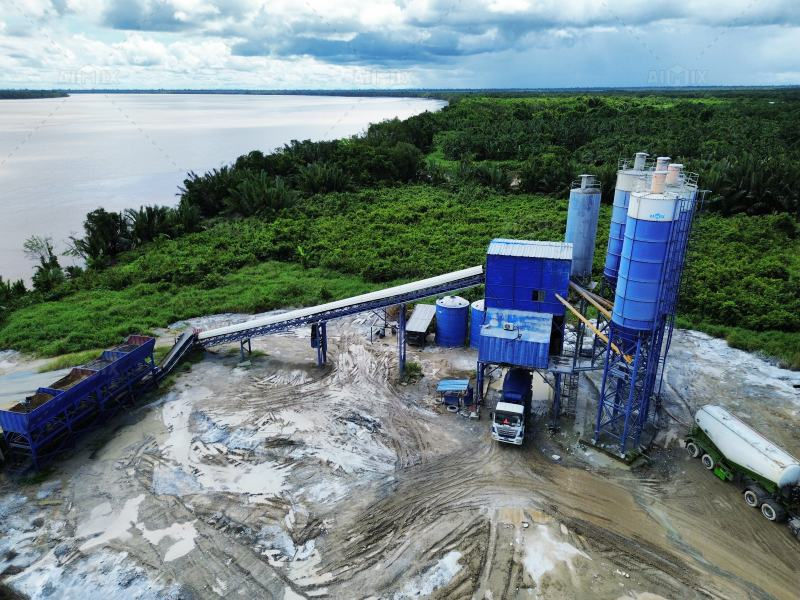
For example, investment in a ready mix concrete plant in Bangladesh has grown alongside the country's rapid urbanization and infrastructure development. Commercial suppliers commonly focus on high-capacity stationary plants capable of supporting continuous production for highways, residential developments, industrial parks, and public infrastructure projects. Reliability, simple maintenance, and cost-effective operation are often key purchasing considerations in this market.
By comparison, selecting a ready mix plant Singapore requires greater attention to space efficiency, environmental compliance, and automation. Limited industrial land encourages compact plant layouts, while strict regulations encourage advanced dust collection, low-noise equipment, and intelligent production management systems that improve operational efficiency without increasing labor requirements.
Evaluate Total Lifecycle Costs Instead of Initial Price
Many buyers naturally compare equipment prices during the purchasing process, but the initial investment represents only one portion of the plant's total cost. Long-term operating expenses often have a much greater impact on overall profitability.
Energy consumption, spare parts availability, maintenance frequency, equipment durability, labor requirements, and production downtime all contribute to the total cost of ownership. A batching plant with higher-quality components may require a larger upfront investment but can significantly reduce operating expenses over its service life.
Businesses should therefore evaluate equipment based on long-term value rather than purchase price alone. Lower maintenance requirements and higher production reliability often generate a stronger return on investment over many years of operation.
Choose a Manufacturer That Provides Reliable Support
Purchasing equipment is only the beginning of a batching plant's lifecycle. Reliable technical support becomes increasingly important as production volumes increase and customer delivery schedules become more demanding.
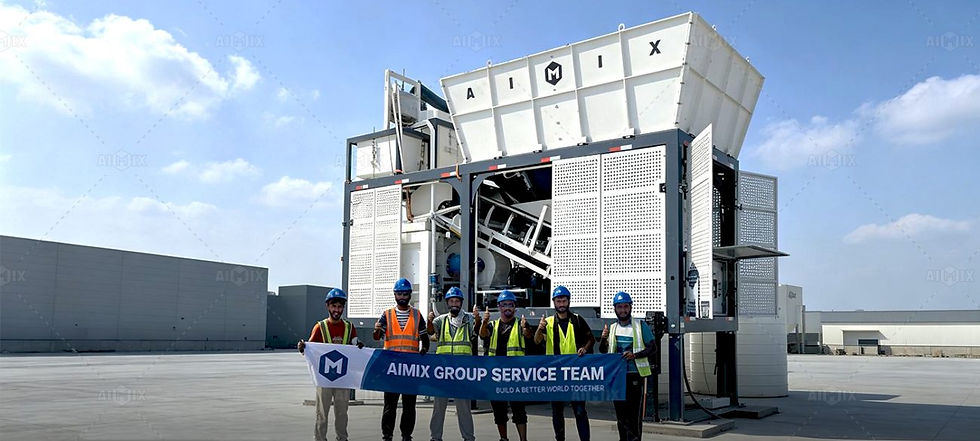
A reputable manufacturer should provide installation assistance, commissioning support, operator training, preventive maintenance recommendations, readily available spare parts, and responsive technical service. These resources help minimize production interruptions and extend equipment lifespan.
Strong after-sales service also ensures that future plant upgrades, software updates, and capacity expansions can be completed efficiently, allowing businesses to adapt to changing market demands with confidence.

Conclusion
Choosing the right ready mix concrete plant for sale requires balancing production capacity, concrete quality, operational efficiency, lifecycle costs, and long-term business objectives. Rather than focusing solely on equipment specifications or purchase price, commercial concrete suppliers should evaluate how each plant supports reliable production, future expansion, and sustainable profitability. Whether investing in a ready mix concrete plant in Bangladesh to meet growing infrastructure demand or selecting a ready mix plant Singapore designed for efficient operation in a highly regulated market, the right batching plant becomes a strategic asset that strengthens competitiveness and supports long-term business success.

Comments