


RMC Plant Installation Time: What Determines How Quickly a Concrete Plant Can Start Production?
The installation time of an RMC plant depends on more than equipment assembly. Site preparation, foundation requirements, plant configuration, equipment delivery, electrical connections, commissioning, and operator training can all affect how quickly the plant starts producing concrete. For contractors planning a new project, understanding these factors is important for controlling RMC plant cost and avoiding delays. A well-organized installation process can significantly shorten the period between equipment arrival and commercial production.
1. What Determines RMC Plant Installation Time?
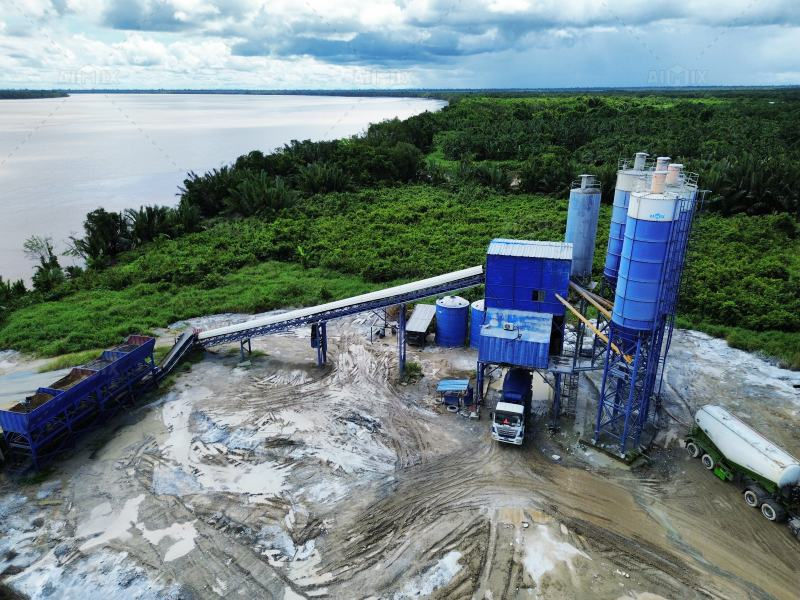
The first factor is the type and configuration of the RMC plant. A conventional stationary plant generally requires more site preparation because it may need foundations, aggregate storage areas, cement silos, conveyors, electrical systems, and supporting infrastructure. By comparison, a mobile or modular RMC plant can often reduce installation work because major components are pre-assembled and designed for faster transportation and setup.
Plant capacity also influences installation time. A small RMC plant with a relatively simple configuration may require fewer components and less supporting infrastructure, while a high-capacity plant with multiple aggregate bins, larger cement storage, additional weighing systems, and more complex automation can take longer to assemble and commission.
The condition of the construction site is equally important. A level and accessible site with prepared foundations, power supply, drainage, and sufficient space for aggregate storage can allow installation to proceed smoothly. Poor road access, uneven ground, difficult weather conditions, or incomplete civil works can create delays even when the equipment itself is ready.
2. Site Preparation and Foundation Work
Site preparation is often one of the most underestimated parts of an RMC plant installation. Before equipment arrives, the project team should confirm the plant layout, prepare access roads, level the installation area, arrange drainage, and establish locations for aggregate stockpiles, cement silos, control rooms, and concrete truck movement. Completing these tasks in advance prevents installation crews from waiting for civil works.
Foundation requirements vary according to the plant design. A stationary RMC plant may require concrete foundations or reinforced support structures for major components. The foundation must reach the required strength before heavy equipment is installed. If foundation construction starts only after the equipment arrives, the overall project schedule can be extended considerably.
For projects with strict deadlines, a modular or mobile RMC plant can be considered when appropriate. Reducing permanent civil construction can shorten the preparation period and may also lower part of the initial RMC plant cost. However, the final choice should consider production capacity, project duration, local regulations, and the expected frequency of relocation.
3. Equipment Delivery and Mechanical Assembly
Equipment transportation has a direct influence on the installation schedule. Before shipment, the buyer should confirm the transportation route, unloading area, lifting equipment, and access for trucks. Large components such as cement silos, mixers, aggregate bins, and conveyors may require specialized transportation or cranes, particularly for high-capacity plants.
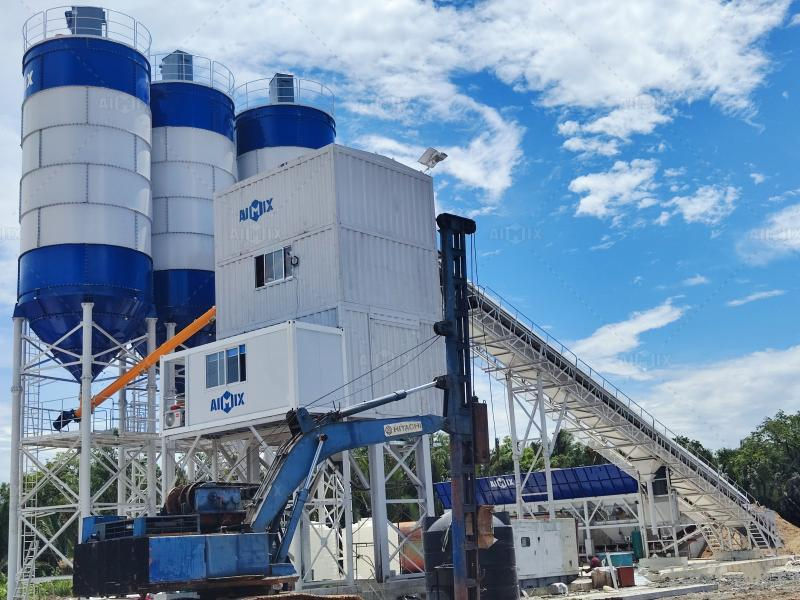
Once the equipment reaches the site, installation usually involves positioning the aggregate batching system, mixer, conveyor, cement silos, weighing systems, pneumatic components, and control system. A clear installation drawing and component labeling system can help technicians identify each part quickly and reduce assembly errors.
Pre-assembly at the manufacturing facility can further improve efficiency. When major components are assembled and tested before shipment, fewer installation operations are required at the construction site. This approach is particularly useful for mobile and modular RMC plants where rapid deployment is an important part of the equipment design.
4. Electrical Installation and Control System Setup
Mechanical assembly is only one part of the installation process. The RMC plant also needs electrical wiring, motor connections, sensors, weighing systems, control cabinets, and communication connections. The availability of a stable power supply and properly prepared electrical infrastructure can therefore have a major effect on the commissioning schedule.
The control system must also be tested after installation. Operators and technicians normally check weighing accuracy, sensor signals, mixer operation, conveyor movement, gate opening and closing, emergency stops, and automated batching sequences. Any wiring error or communication problem should be corrected before trial production begins.
For modern plants, automated control can simplify daily operation, but it also makes commissioning an important technical stage. Operators should understand the batching software, production parameters, alarm functions, and basic troubleshooting procedures before the plant enters continuous production.
5. Testing, Commissioning, and Trial Production
After mechanical and electrical installation is completed, the RMC plant enters the commissioning stage. Technicians first conduct no-load tests to verify that motors, conveyors, mixers, pumps, valves, and other components operate correctly. This stage helps identify mechanical or electrical problems before concrete materials are introduced.
The next step is usually trial production. Aggregate, cement, water, and admixtures are fed according to the designed mix ratio, allowing technicians to verify weighing accuracy, mixing performance, discharge operation, and concrete consistency. If the plant is designed for multiple concrete grades, several mix designs may need to be tested before normal production begins.
Commissioning should not be rushed simply to achieve an earlier start date. A plant that enters production without proper calibration or testing may experience inaccurate batching, material waste, inconsistent concrete quality, or unexpected downtime. Spending additional time during commissioning can therefore reduce operating problems later.
6. How to Start an RMC Plant Efficiently
Knowing how to start an RMC plant involves more than purchasing equipment. A practical sequence is to first determine the required production capacity and concrete demand, select the appropriate plant configuration, confirm the installation site, complete civil works, arrange equipment transportation, and prepare power and water supplies before delivery.
The next stage is equipment installation, followed by electrical connection, control-system configuration, calibration, and trial production. At the same time, the operator team should be trained in plant operation, routine inspection, batching procedures, emergency handling, and basic maintenance. Having trained personnel available before commissioning can prevent unnecessary delays after installation.
It is also important to coordinate the RMC plant with the concrete delivery system. Ready mix trucks, aggregate supply, cement storage, admixture systems, and project-site demand all need to be ready when production starts. A plant may technically be capable of producing concrete, but commercial operation cannot run efficiently if raw materials or delivery vehicles are unavailable.
7. How Installation Time Affects RMC Plant Cost
Installation time has a direct relationship with overall project economics. Longer installation periods can increase labor expenses, equipment rental costs, site management expenses, accommodation costs, and the financial impact of delayed concrete production. For projects operating under tight construction schedules, these indirect costs can be significant.
However, choosing the fastest installation method is not always the cheapest option. A lower RMC plant cost at the purchasing stage may result in higher foundation, transportation, installation, or maintenance expenses later. Buyers should therefore evaluate total project cost rather than comparing equipment prices alone.
A useful approach is to compare the initial equipment investment with installation requirements, expected production capacity, project duration, relocation needs, and operating costs. For short-term or remote projects, faster installation and mobility may have greater economic value. For long-term commercial production, a stationary RMC plant may provide better overall economics despite requiring more initial site preparation.

Conclusion
RMC plant installation time is determined by the interaction of equipment design, site preparation, foundation work, transportation, mechanical assembly, electrical installation, commissioning, and operator readiness. Contractors can shorten the schedule by preparing the site before equipment delivery, selecting a configuration suited to the project, using pre-assembled components, and completing testing systematically. When evaluating RMC plant cost and planning how to start an RMC plant, installation time should be treated as an important part of the total project investment rather than simply a construction detail.

Comments