


How Much Does a Concrete Batch Plant Cost with Intelligent Control, Remote Monitoring, and Data Management?
The cost of a concrete batch plant depends not only on production capacity and mechanical equipment but also on the level of automation and digital technology included in the system. A plant equipped with intelligent control, remote monitoring, automated data collection, and production management functions usually requires a higher initial investment than a basic manually operated plant. However, these technologies can improve batching accuracy, reduce labor requirements, simplify maintenance, and provide better control over long-term operating costs.
For buyers comparing a concrete batching plant in UAE or looking for a concrete batching plant for sale Australia, intelligent systems can be particularly valuable when plants need to operate continuously, serve multiple projects, or maintain strict concrete quality standards. Understanding which technologies affect the price can help buyers determine whether the additional investment is justified.
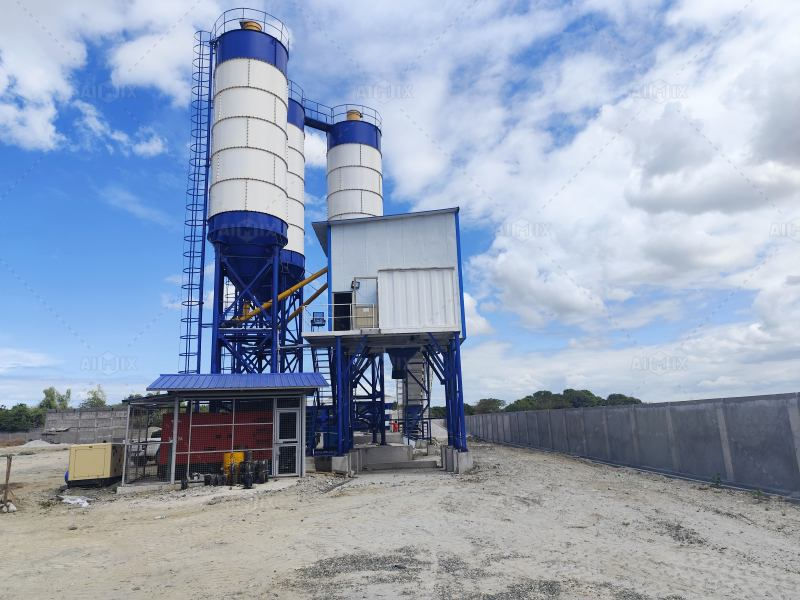
1. How Intelligent Control Changes Plant Cost
A conventional concrete batching plant may rely on basic electrical controls and manual operator intervention. An intelligent system uses PLC control, an HMI interface, sensors, automatic weighing, recipe management, alarm functions, and production monitoring to coordinate the entire batching process.
The addition of these components increases the initial equipment price because more sophisticated electrical hardware and software are required. The final cost depends on the PLC and HMI brands, number of sensors, control cabinet configuration, software functions, and level of automation.
However, intelligent control can also reduce operating costs. Automated batching minimizes manual errors and helps maintain consistent material proportions, which is especially important when producing large quantities of commercial concrete.
2. Production Capacity Still Has the Biggest Influence
Although intelligent control affects the price, production capacity remains one of the most important cost factors. A 25–35 m³/h plant generally requires fewer materials handling and storage resources than a 90–120 m³/h system.
Higher-capacity plants need larger aggregate bins, mixers, cement silos, conveyors, weighing systems, and electrical equipment. Intelligent control must also manage more components and higher production volumes, which can further increase the automation system's complexity.
Therefore, buyers should first determine the required hourly and daily concrete output before selecting an intelligent batching system. There is little economic value in paying for a highly sophisticated high-capacity plant if the project only requires a small amount of concrete.
3. Remote Monitoring Adds Value for Overseas Projects
Remote monitoring is one of the most useful upgrades for international buyers. A connected batching plant can transmit operating information such as production output, material consumption, equipment status, alarms, and fault information to authorized users.
This can allow plant managers or technical teams to monitor production without being physically present at the control room. In some systems, remote diagnosis can also help engineers identify potential problems before sending technicians to the site.
For projects in remote areas, the value of remote monitoring can be significant. It can reduce troubleshooting time and help overseas equipment suppliers provide faster technical support.
4. Why Data Management Matters for Commercial Concrete Production
A modern batching plant can record production data for each batch, including material quantities, mix formulas, production time, and output. This information can help operators analyze production performance and identify deviations.
Data management can also support inventory planning. By monitoring cement, aggregate, water, and additive consumption, managers can estimate material requirements and reduce the risk of unexpected shortages.
For ready-mix concrete businesses, historical production records can also help compare different mix designs and monitor production efficiency. As the number of daily batches increases, these digital records become more useful than manually maintained production logs.

5. Intelligent Systems for Concrete Batching Plant in UAE Projects
For customers considering a concrete batching plant in UAE, intelligent control can be useful because many construction projects operate under demanding schedules and require consistent concrete supply. Large commercial buildings, infrastructure projects, industrial facilities, and urban developments may require continuous production and accurate quality control.
The local environment should also be considered when configuring the plant. High temperatures, dusty conditions, and intensive operating schedules can place additional demands on electrical systems and equipment protection.
A suitable intelligent system can provide equipment alarms, operating status monitoring, and production records, helping operators manage the plant more efficiently. Buyers should also confirm that electrical components, control cabinets, and sensors are properly protected for the intended working environment.
6. Remote Support for Concrete Batching Plant for Sale Australia
For buyers searching for a concrete batching plant for sale Australia, after-sales service and remote technical support can be important considerations. Australia covers a large geographical area, and some construction and mining projects are located far from major cities.
A batching plant with remote monitoring capabilities can allow the supplier to access operating information remotely, depending on the system and permissions provided. Engineers may be able to review alarms, operating parameters, and production data to help diagnose problems.
This does not eliminate the need for local maintenance, but it can make technical support more efficient. Buyers should therefore ask suppliers whether remote diagnosis is included in the quotation and what types of support can actually be provided.
7. Automation Can Reduce Labor Requirements
Another factor affecting the investment value of intelligent batching plants is labor efficiency. A traditional plant may require operators to manually monitor several stages of batching and production, while an automated system can coordinate these operations through programmed control sequences.
Automatic material weighing, batching, mixing, and discharge can reduce unnecessary manual intervention. One trained operator may be able to supervise more of the production process, depending on the plant configuration and local operating requirements.
For large commercial plants, labor savings over several years can partially offset the higher initial cost of automation.
8. Compare Technology Cost with Long-Term Savings
When asking how much does a concrete batch plant cost with intelligent control, buyers should not evaluate the automation package separately from the entire project. The real question is whether the additional investment creates measurable operational benefits.
Consider potential savings in labor, material waste, downtime, maintenance, and production management. A plant producing hundreds of cubic meters per day may benefit considerably from better control and data management, while a small plant with limited daily output may require only basic automation.
It is also important to compare the software and hardware included by different suppliers. Two plants may both be advertised as “fully automatic,” while offering very different levels of remote monitoring, data recording, fault diagnosis, and production management.
9. Ask Suppliers for a Detailed Automation Configuration
Before purchasing, request a detailed list of the intelligent control components included in the quotation. This should identify the PLC, HMI, sensors, VFDs, communication equipment, control software, remote monitoring functions, and data management features.
Ask whether remote access requires additional software or subscriptions and whether production data can be exported for further analysis. Also confirm warranty coverage and technical support for the automation system.
A clear technical proposal makes it easier to compare the true value of different concrete batching plant for sale Australia or UAE project quotations.
Conclusion
A concrete batch plant with intelligent control, remote monitoring, and data management generally costs more than a basic automated system, but the additional investment can provide greater production accuracy, labor efficiency, equipment visibility, and technical support. The actual price depends on capacity, mechanical configuration, automation level, component brands, and software functions.
For a concrete batching plant in UAE, intelligent control can support efficient production under demanding construction conditions. For buyers evaluating a concrete batching plant for sale Australia, remote monitoring and digital support can be especially useful for projects in geographically remote areas. Ultimately, the right configuration should balance the initial equipment cost with expected production volume, operating savings, maintenance requirements, and long-term business needs.

Comments