


Compact Batching Plant for Easy Transportation: How Design Affects Delivery, Assembly, and Relocation
A compact batching plant is designed to provide concrete production capability while reducing the space, transportation, and installation requirements normally associated with larger plants. For contractors working on remote, temporary, urban, or multi-site projects, transportation is not simply a logistics issue—it can directly affect the total project cost and construction schedule. The plant's dimensions, modular structure, component arrangement, and mobility all determine how easily it can be delivered, assembled, dismantled, and relocated.
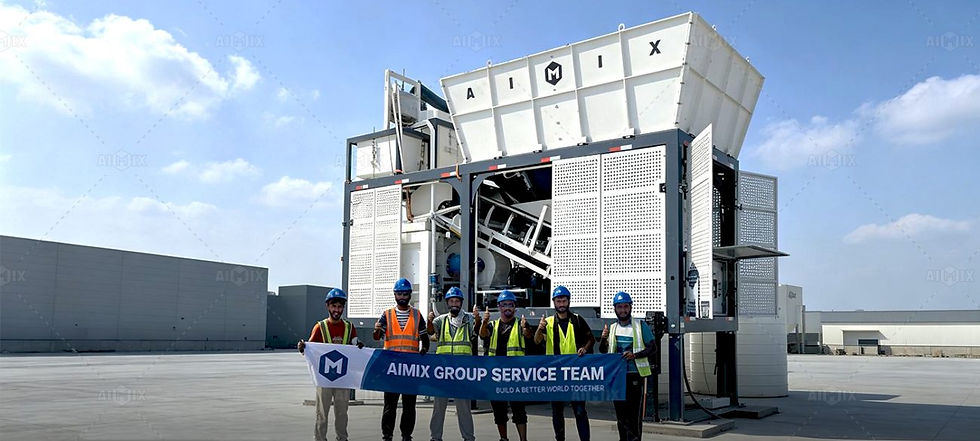
Why Transportation Matters in Batching Plant Selection
Transporting a concrete batching plant involves more than moving the main equipment from the manufacturer to the construction site. Aggregate bins, conveyors, mixers, cement silos, control systems, and supporting components may all require separate transportation. Oversized components can increase freight costs and create additional challenges when roads, bridges, or site entrances have restrictions.
A compact design reduces these challenges by making the overall equipment arrangement more space-efficient. Components can be integrated or modularized to reduce unnecessary dimensions, while detachable structures can simplify loading and unloading. This can be particularly valuable for projects located far from major transportation routes.
For contractors, transportation should therefore be evaluated together with the plant's purchase price. A slightly higher equipment investment may provide better overall value if the design significantly reduces shipping complexity and relocation expenses.
How Compact Design Simplifies Delivery
The physical dimensions of a batching plant have a direct effect on transportation. A plant with compact components can require fewer vehicles or avoid special transportation arrangements that may be necessary for oversized equipment.
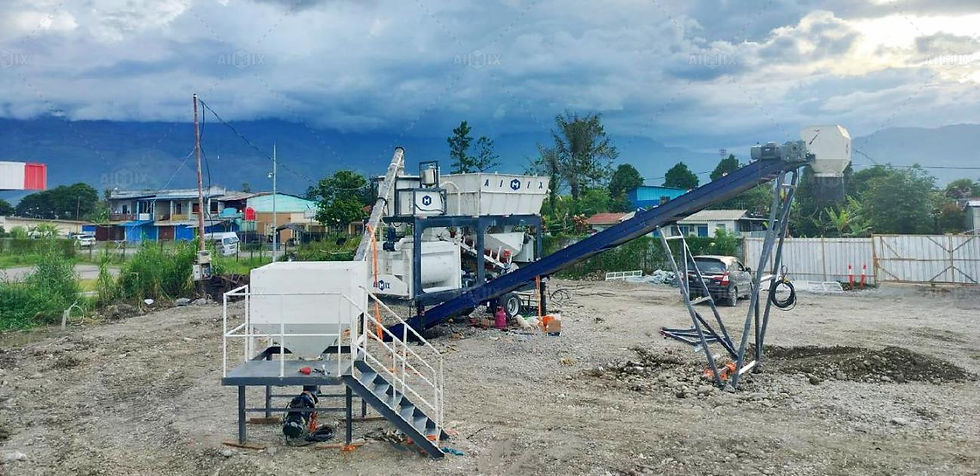
A portable concrete batching plant takes this concept further by emphasizing transportability and rapid deployment. Depending on the model, key components may be designed for easier loading, towing, or containerized transportation. This allows contractors to move the equipment between locations without treating every relocation as a major reconstruction project.
Before purchasing, buyers should ask the manufacturer for transportation dimensions, component weights, loading requirements, and the number and type of vehicles or containers required. These details provide a more realistic estimate of delivery costs than the equipment quotation alone.
Modular Components Make Assembly Easier
Transportation is only one part of the challenge. Once the plant reaches the site, it must be assembled and commissioned before concrete production can begin.
A compact batching plant can use modular structural components to simplify this process. Instead of transporting and constructing a large integrated structure at the site, major sections can be delivered separately and assembled according to a predefined layout.
This approach can reduce lifting requirements and make installation more manageable in locations with limited working space. It can also help contractors organize installation more efficiently because the major components and their connection points are clearly defined.
For temporary projects, faster assembly has another important advantage: the plant can begin producing concrete sooner, allowing the construction team to focus on the main project instead of spending excessive time establishing the concrete production facility.

Site Access Is an Important Consideration
A batching plant may have a compact footprint but still be difficult to transport if the project site has restricted access. Narrow roads, steep terrain, low bridges, weak roads, or limited turning areas can create problems for heavy equipment transportation.
For this reason, buyers should evaluate the complete transportation route before selecting a plant. Check the width and height restrictions along the route, available unloading areas, and the distance between the site entrance and the planned plant location.
A small concrete batching plant can be particularly useful when access conditions are difficult. Its smaller overall footprint can make positioning easier and reduce the amount of space needed for material handling and equipment installation.
Relocation: An Often-Overlooked Cost
For a permanent project, transportation may occur only once. For contractors handling multiple temporary projects, however, the plant may need to be moved several times during its service life.
In this situation, relocation costs can become a major part of the total operating expense. Dismantling, loading, transportation, reassembly, and commissioning all require time and labor.
A compact and modular design can reduce these requirements. If the plant can be dismantled into manageable modules and transported using commonly available vehicles, contractors can move it between projects more efficiently.
The economic benefit becomes even greater when one plant can serve multiple projects. Instead of purchasing separate plants for different locations, a contractor can relocate the same equipment according to project demand.
Compact Does Not Mean Low Production
One common misconception is that a compact batching plant must have very low production capacity. In reality, compact design primarily focuses on reducing footprint, transportation requirements, and installation complexity.
The appropriate capacity still depends on concrete demand. A contractor should estimate required hourly output, daily production, project duration, and peak concrete demand before choosing the equipment.
For example, a smaller project may benefit from a compact plant that produces enough concrete for daily construction requirements without occupying unnecessary space. A larger infrastructure project may require a higher-capacity compact configuration that balances production requirements with restricted site conditions.
The objective is not simply to choose the smallest plant available, but to find the smallest practical configuration that can meet the project's production requirements.
Comparing Compact, Portable, and Small Plants
The terms compact, portable, and small concrete batching plant can overlap, but they emphasize different characteristics.
A compact batching plant mainly focuses on reducing the footprint and making efficient use of limited space. A portable concrete batching plant emphasizes transportation and movement between sites. A small concrete batching plant generally refers to a lower-capacity solution designed for projects with relatively modest concrete requirements.
Some plants can combine all three characteristics. For contractors, the best choice depends on whether the main challenge is limited space, frequent relocation, low production demand, or a combination of these factors.
What to Check Before Buying
Before selecting a compact plant for transportation and relocation, buyers should confirm several specifications with the manufacturer:
Overall transportation dimensions
Individual component weights
Number of transport vehicles required
Container-loading options
Installation and dismantling procedures
Lifting equipment requirements
Site access requirements
Foundation or ground preparation
Relocation time
Technical support during installation
It is also useful to request a complete transportation and installation plan rather than relying only on product specifications. This allows the contractor to estimate the actual logistics requirements before placing an order.
Conclusion
The transportation advantage of a compact batching plant comes from more than simply having a smaller footprint. A well-designed plant can simplify delivery, reduce assembly requirements, improve site access, and make future relocation more practical. For contractors working on temporary, remote, or space-constrained projects, these advantages can have a direct impact on project efficiency and total operating costs. By comparing transportation dimensions, modularity, installation requirements, mobility, and production capacity together, buyers can determine whether a compact, portable concrete batching plant or small concrete batching plant is the most suitable solution for their project.

Comments