


Concrete Crusher Performance When Processing Concrete with Embedded Pipes and Metal Components
Concrete from demolition projects often contains embedded steel bars, metal fittings, electrical conduits, and pipes that complicate crushing operations. Unlike clean concrete blocks, this material requires additional attention to feeding, crushing, and separation. If metal components enter the crushing chamber without proper preparation, they may cause blockages, accelerate equipment wear, or interrupt production. Understanding these challenges helps contractors configure a concrete crushing system that improves material recovery while maintaining stable operating performance.

1. Why Embedded Pipes and Metal Components Complicate Concrete Crushing
Demolition concrete is rarely uniform. Depending on the original structure, it may contain reinforcing bars, steel pipes, copper wiring, metal brackets, and plastic or PVC conduits. These materials behave differently from concrete when subjected to crushing forces.
Concrete is brittle and fractures under impact or compression, while metal components are generally more ductile. Instead of breaking into smaller particles, long metal pieces may bend, stretch, or become entangled with moving crusher components. Pipes can also remain partially embedded in concrete, making them difficult to separate before crushing.
The size and arrangement of these contaminants influence processing difficulty. Short steel fragments may pass through certain crushing stages after appropriate separation, whereas long pipes, cables, and large metal fittings can become trapped in feeders or crushing chambers. Consequently, the composition of incoming demolition waste should be evaluated before selecting equipment and determining the processing sequence.
2. How Metal Components Affect Concrete Crusher Performance
Embedded metal can affect several parts of a concrete crushing plant, particularly the feeding system, crushing chamber, and discharge area.
Feeding interruptions: Long pipes and metal bars may become lodged in hopper openings or feeder grizzly sections, restricting material flow.
Crushing chamber blockages: Ductile metal may bend around moving components or accumulate between crushing surfaces, preventing normal material discharge.
Increased component wear: Repeated contact with hard metal objects can damage or accelerate wear on jaw plates, impact blow bars, and other crushing components.
Unstable production: Operators may need to stop the machine to remove trapped materials, reducing operating availability and daily output.
Product contamination: Metal fragments that remain in the crushed material can affect recycled aggregate quality and create problems for downstream applications.
These effects are not determined by the quantity of metal alone. The length, shape, hardness, and position of embedded components are also important. A relatively small amount of long, tangled metal may create more serious operating problems than a larger quantity of short, separated fragments.
3. Pre-Sorting and Preparation Before Crushing
Effective material preparation is one of the most important ways to reduce metal-related operating problems. Before concrete enters the crusher, contractors should remove components that are unsuitable for mechanical processing.
Excavators fitted with suitable attachments can break large demolition pieces and expose embedded pipes or reinforcement. Workers or mechanical sorting systems can then remove accessible metal components. Large pipes, cables, and fittings should receive particular attention because their length and flexibility increase the risk of entanglement.
Pre-screening can also help separate loose soil, small debris, and fine materials from larger concrete blocks. This reduces unnecessary loading on the primary crusher and makes the remaining feed easier to manage.
However, complete manual removal of every embedded component is not always practical, especially on large demolition sites. The preparation process should therefore prioritize materials most likely to cause blockages or damage while maintaining a reasonable balance between sorting effort and processing efficiency.

4. Choosing the Right Crushing Equipment and Configuration
The appropriate crusher depends on concrete block size, reinforcement conditions, required production capacity, and finished aggregate specifications.
A jaw crusher is commonly used for primary reduction because its compression-based crushing mechanism can handle large concrete blocks. It is suitable for breaking bulky demolition material into smaller pieces before further processing. Nevertheless, long metal components should be removed or controlled before entering the crushing chamber to reduce the risk of bridging and mechanical interference.
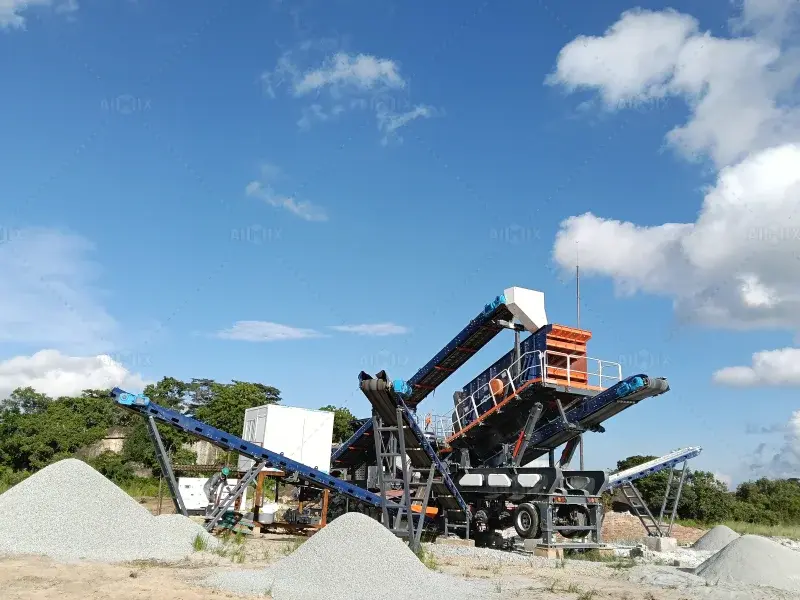
A mobile impact crushing plant can be useful for secondary crushing and on-site concrete recycling. Its impact mechanism breaks concrete through repeated collisions, helping produce smaller particles and suitable aggregate shapes. However, impact crushers require particular attention to metal contamination because long or ductile components may become entangled with the rotor or other internal parts.
For projects involving heavily reinforced concrete, a practical configuration may include:
A receiving hopper and vibrating feeder to regulate material flow.
A primary jaw crusher to reduce large concrete blocks.
Magnetic separation to remove liberated ferrous metal.
A secondary impact crusher for further concrete size reduction.
Vibrating screens to separate finished aggregate sizes.
The final arrangement should be determined by actual waste composition and production targets. Non-ferrous metals such as copper and aluminum are not reliably removed by conventional magnetic separators, so additional sorting methods may be needed when their recovery or removal is important.
5. The Role of Metal Separation in Construction and Demolition Waste Recycling
Metal separation is essential for improving material recovery and protecting downstream equipment. In construction and demolition waste recycling, magnetic separators are commonly installed above conveyor belts or at suitable discharge points to capture liberated ferrous materials.
The timing of separation matters. If metal is removed too early, some pieces may remain embedded in large concrete blocks. If separation occurs only after final crushing, the equipment may already have experienced unnecessary wear or interruptions. A combination of pre-sorting and post-primary-crushing magnetic separation is often more practical.
The separated metal can be collected for further handling or recycling, while the remaining concrete continues through screening and additional processing. This approach supports better resource recovery and reduces the amount of metal entering finished aggregate stockpiles.
For mixed demolition waste containing pipes, cables, plastic, and other non-ferrous contaminants, magnetic separation should be combined with manual sorting or other appropriate separation methods. No single separator can remove every type of contaminant.
6. Maintaining Stable Production and Recycled Aggregate Quality
Even with suitable equipment, operating procedures strongly influence crushing performance. Operators should monitor feed consistency, machine load, discharge conditions, and the presence of metal in processed material.
Feeding oversized batches should be avoided because they can create sudden load increases and make it more difficult to identify problematic components. Excavator operators should distribute material evenly and avoid introducing long pipes or tangled reinforcement directly into the hopper.
Regular inspections are also necessary. Jaw plates, blow bars, feeder components, conveyor belts, and discharge openings should be checked for unusual wear or damage. Any signs of repeated blockage should trigger an investigation into the incoming material and sorting process rather than relying only on frequent manual removal.
Finished aggregate should also be inspected for residual metal, excessive fine content, and unsuitable particle sizes. Screening helps separate different aggregate grades, but it cannot replace proper metal removal. The quality of recycled concrete depends on the combined performance of sorting, crushing, separation, and screening.
7. Planning a Concrete Recycling System for Metal-Contaminated Waste
Before installing a concrete crushing plant, contractors should investigate the type of structures being demolished and the likely composition of the waste. Concrete from industrial buildings, bridges, and reinforced foundations may contain different quantities and arrangements of metal components.
A representative material assessment should identify maximum concrete block size, reinforcement density, pipe dimensions, and the proportion of non-concrete contaminants. These findings help determine whether additional sorting equipment, magnetic separators, or multiple crushing stages are necessary.
Production planning should also consider the time required for pre-sorting and metal removal. A crusher with high rated capacity cannot maintain that output if the upstream preparation process supplies material inconsistently. Matching sorting capacity with crushing capacity is therefore essential for achieving stable overall production.

Conclusion
Processing concrete with embedded pipes and metal components requires more than selecting a crusher with sufficient capacity. Long metal objects can cause feeding interruptions, chamber blockages, equipment wear, and product contamination. Effective pre-sorting, suitable crushing stages, magnetic separation, and regular quality inspections help reduce these risks. By coordinating equipment configuration with actual demolition waste characteristics, contractors can improve crusher availability, recover more reusable materials, and achieve more reliable results in construction and demolition waste recycling.


Comments