


Mobile Crusher Plant Price: Understanding the Cost Differences Between Basic Setups and Fully Integrated Crushing Systems
The mobile crusher plant price can vary considerably depending on equipment configuration, processing stages, and the level of system integration. A basic setup may include only a mobile crusher and essential feeding or conveying equipment, while a fully integrated system can combine feeding, crushing, screening, material transfer, and multiple processing units on one or more mobile platforms. Although a basic configuration generally requires a lower initial investment, the more economical option depends on production requirements, finished product specifications, and the additional equipment needed to complete the processing operation.

What Is Included in a Basic Mobile Crushing Setup?
A basic mobile crushing setup typically focuses on one primary processing function, such as reducing large rocks into smaller pieces. Its configuration may include a mobile chassis, a feeder, a primary crusher, and a discharge conveyor. Some models also include a vibrating screen or additional conveyors, depending on their design.
This type of setup is suitable for projects that require straightforward crushing operations or already have supporting equipment available at the site. For example, a contractor may use a mobile jaw crusher for primary crushing and transfer the processed material to an existing screening system. In this situation, purchasing a simpler unit can avoid paying for equipment that the project does not need.
However, a basic setup does not necessarily mean a lower total project cost. If additional screens, conveyors, or secondary crushers must be purchased separately, their costs should be included in the investment calculation. Transportation, installation, equipment coordination, and material transfer arrangements may also increase the overall budget.
Why Fully Integrated Crushing Systems Cost More
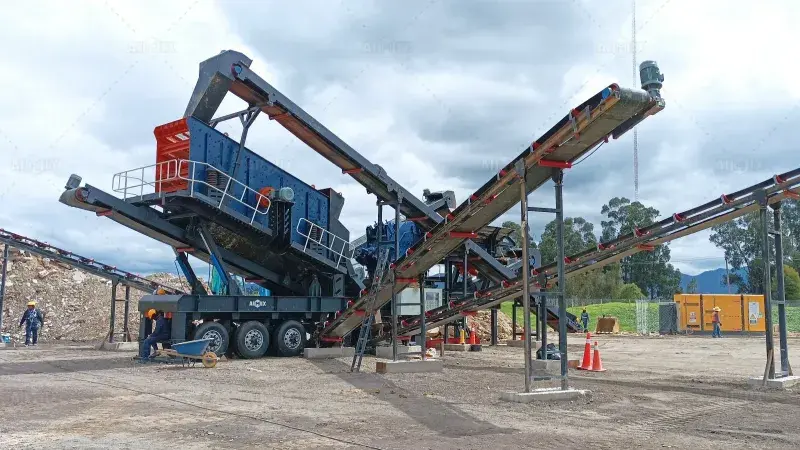
A fully integrated mobile crushing system combines several processing functions into a coordinated production solution. Depending on the configuration, it may include feeding, primary crushing, secondary crushing, screening, and finished-product discharge.
For example, a mobile crushing plant with a jaw crusher, impact crusher, and vibrating screen can process raw material through multiple stages and separate it into different aggregate sizes. Some compact configurations integrate several functions into one mobile unit, while larger production systems use multiple mobile units connected by conveyors.
The higher purchase price generally reflects the additional equipment, structural components, conveyors, screening systems, and integration requirements. However, a complete system can reduce the need to purchase separate machines and simplify material transfer between processing stages.
Another advantage is production coordination. When the equipment is designed as a complete system, the capacities of the crushers, screens, and conveyors can be matched more effectively. This helps reduce unnecessary material accumulation and improves the consistency of the overall production process.
How Crusher Type Influences Mobile Plant Price
The crusher selected for a mobile plant is another important factor affecting its price. Different crusher types have different structures, processing capabilities, and application requirements.
A mobile jaw crusher is commonly used for primary crushing of large feed materials. It is suitable for applications involving hard rock, quarry materials, and construction waste. A mobile impact crusher is often selected when additional particle reduction and shaping are required, while a mobile cone crusher is commonly used for secondary or tertiary crushing of hard and abrasive materials.
The mobile impact crusher price depends on factors such as processing capacity, rotor configuration, crushing chamber design, feeding system, and integrated screening equipment. A configuration that includes additional screening and material return systems will generally require a higher investment than a basic impact crushing unit.
Similarly, the mobile cone crusher price varies according to the crusher model, capacity, hydraulic system, automation features, and supporting equipment. Cone crushers designed for demanding hard-rock applications may require different configurations from those used in less abrasive materials.
Therefore, comparing prices by crusher type alone can be misleading. Buyers should also consider the complete equipment configuration and the role each machine plays in the production line.

Basic Setup vs. Fully Integrated System: Where Does the Cost Difference Come From?
Several factors explain why two mobile crushing solutions with similar production capacities may have different purchase prices.
First, the number of processing stages directly affects equipment requirements. A basic primary crushing unit requires fewer machines than a system combining primary crushing, secondary crushing, and screening.
Second, screening and conveying equipment contribute to the overall cost. A plant designed to produce several finished aggregate sizes may require multi-deck vibrating screens, additional conveyors, and material return systems.
Third, automation and operational features can influence the investment. Hydraulic adjustment systems, centralized control panels, remote monitoring, and automatic protection functions may increase the initial equipment cost while improving operational convenience.
Finally, mobility design also matters. Wheeled and tracked mobile crushers have different chassis structures and transportation characteristics. The appropriate choice depends on relocation frequency, site terrain, transportation arrangements, and project duration.
How to Choose a Configuration Based on Production Requirements
The most economical mobile crushing configuration is not necessarily the one with the lowest purchase price. It should match the actual production process and avoid unnecessary equipment investment.
For projects requiring primary size reduction with an existing downstream processing system, a basic mobile jaw crusher may be sufficient. If the objective is to produce finished aggregates with controlled particle sizes, a configuration combining crushing and screening may be more appropriate.
For hard-rock projects requiring multiple crushing stages, a mobile jaw and cone combination can provide a suitable processing arrangement. For certain applications involving limestone, concrete waste, or other suitable materials, an impact-based configuration may be considered.
Buyers should also estimate the required output of each finished product. A plant designed to produce several aggregate grades needs sufficient screening capacity and appropriate material distribution. Purchasing a high-capacity crusher without matching the supporting equipment may create bottlenecks rather than increase saleable production.
Evaluate Total Investment Beyond the Purchase Price
Before comparing quotations, buyers should calculate the overall cost of putting the mobile crushing system into operation. In addition to equipment prices, the budget should account for transportation, commissioning, fuel consumption, wear parts, routine maintenance, labor, and potential equipment downtime.
A basic setup may have a lower initial price but require additional equipment or more complicated material transfer arrangements. A fully integrated system may cost more upfront but provide a more coordinated production process and reduce the need for separate equipment purchases.
The expected project duration is another important consideration. For short-term projects, a simpler configuration may be sufficient, particularly when the required processing stages are limited. For long-term aggregate production, investing in a more complete system may offer better operational value.
Conclusion
The cost difference between basic mobile crushing setups and fully integrated crushing systems comes mainly from equipment configuration, processing stages, screening capacity, automation, and mobility requirements. A basic setup can be economical for straightforward crushing operations, while an integrated system may be more suitable for projects requiring multiple processing stages and finished aggregate products. Rather than comparing the mobile crusher plant price alone, buyers should evaluate the complete production requirements, supporting equipment, operating costs, and expected project duration to identify the most practical investment.


Comments