


Concrete Crushing Equipment for Sale for Multiple Job Sites: Planning Around Transport and Setup
When a contractor handles several demolition, renovation, or infrastructure projects at different locations, buying concrete crushing equipment for sale requires more than comparing capacity and purchase price. The equipment must move between sites efficiently, fit local access conditions, and resume production without lengthy setup. Transport arrangements, installation requirements, material characteristics, and project schedules all influence whether one shared crushing unit can serve multiple jobs profitably.

1. Evaluate the Workload Across All Job Sites
Before selecting equipment, compare the concrete volumes, project durations, and distances between sites. A contractor working on several small demolition projects may benefit from one mobile crusher that moves as work progresses. However, a business supplying aggregates continuously from multiple locations may need separate units if production schedules overlap.
Estimate the amount of concrete available at each site and the daily production target. Consider whether material arrives continuously or in batches, since irregular feed can leave a crusher idle even when its rated capacity is sufficient. Also account for concrete containing reinforcing steel, oversized slabs, and mixed demolition debris, which may require additional preparation before crushing.
A shared machine is most practical when project schedules can be coordinated. If two sites require crushing simultaneously, compare the cost of moving one unit repeatedly with hiring a subcontractor or purchasing a second machine. Equipment utilization, rather than rated output alone, should guide the decision.
2. Choose a Crusher Configuration That Matches Site Conditions
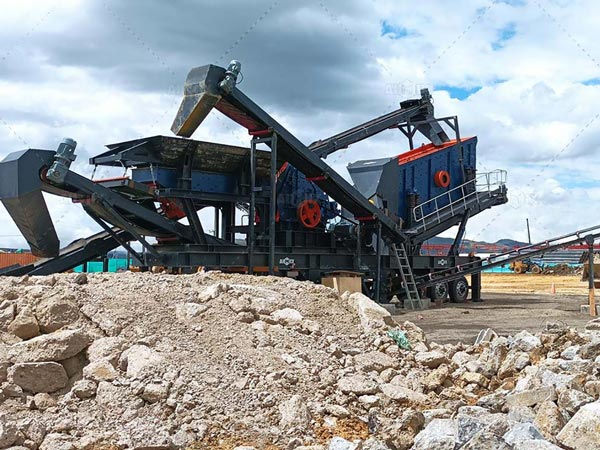
Mobile equipment can reduce the need for permanent foundations and extensive installation work. For contractors handling changing job locations, the main decision is whether a wheeled or tracked configuration better suits transport routes, ground conditions, and operating requirements.
Wheeled units can be suitable when sites have accessible roads, prepared working areas, and adequate space for towing and positioning. Tracked machines are often advantageous on uneven demolition sites or unpaved construction areas because they can move around the work zone under their own power. However, road transport may still require a suitable trailer and appropriate permits.
The crushing mechanism also matters. Jaw crushers are commonly used for primary reduction of large concrete pieces, while mobile impact crushers can be useful when producing recycled aggregate with a cubical shape is a priority. The right choice depends on feed size, reinforcement, required product gradation, and wear costs. Reinforced concrete may require effective metal separation and careful control of feed size to prevent blockages and unnecessary damage.
For operations serving varied projects, evaluate the complete processing setup rather than the crusher alone. A feeder, magnetic separator, screening unit, and discharge conveyors may be necessary to produce usable recycled aggregate. A compact configuration may be easier to relocate, while a more complete system can reduce the need for separate processing stages.
3. Calculate Transport Costs Before Purchasing
Moving equipment between sites creates costs beyond fuel. Include the transport vehicle, loading and unloading, operator time, escort requirements where applicable, permits, and any temporary road closures or access arrangements. Oversized or heavy equipment may require specialist transport, making frequent relocation expensive.
Measure the actual route between projects instead of relying only on straight-line distance. Narrow entrances, low bridges, steep gradients, weak access roads, and restricted turning areas can affect delivery time and transport feasibility. Confirm the machine's transport dimensions and weight against the carrier's limits and local regulations.
Relocation frequency should be part of the financial calculation. If a crusher moves every few weeks, a configuration with faster setup may justify a higher initial cost. If projects are close together and relocation is infrequent, purchase price and processing efficiency may deserve greater weight.
Compare the expected cost per operating hour under realistic conditions. Include transport, setup, fuel, wear parts, labor, maintenance, and lost production during moves. This gives a more useful comparison than equipment price alone.

4. Plan Setup and Production at Each New Location
Fast relocation does not automatically mean fast production. Every new site needs a practical setup plan covering ground stability, working space, feed access, discharge areas, and material stockpiles. The machine must be positioned on suitable ground with safe access for loaders, excavators, haul trucks, and maintenance personnel.
Check power and utility requirements before delivery. Depending on the configuration, the unit may use diesel power, an external electrical supply, or a combination of power systems. Confirm fuel access, ventilation requirements, noise restrictions, and dust-control arrangements. For urban demolition projects, operating hours and nearby buildings may influence where the crusher can be positioned.
Establish a repeatable commissioning checklist for every move. Inspect the machine after transport, verify that components and safety devices are correctly positioned, check conveyors and guards, and confirm that emergency stops and material separation systems work properly. Operators should follow the manufacturer's instructions before restarting production.
Standardized setup procedures reduce delays when crews move between projects. Keeping spare wear parts, tools, barriers, and dust-suppression equipment available can also prevent small omissions from extending downtime.
5. Match Output to Road Aggregate Production Requirements
Some contractors crush concrete primarily to reduce disposal volumes, while others process it into recycled aggregate for resale or reuse. The intended end use determines the required output size, screening arrangement, and quality-control process.
For road aggregate production, recycled concrete may be suitable for certain subbase, base, or other construction applications when it meets the project's technical specifications. Acceptance depends on factors such as grading, material strength, contamination, durability, and applicable local standards. Crushed concrete should not automatically be treated as interchangeable with natural aggregate.
If a project requires several product sizes, confirm whether the selected configuration can separate and stockpile them efficiently. A screening unit may help control gradation, while a magnetic separator can remove reinforcing steel and other ferrous material. Oversize particles may need to be returned for further crushing, depending on the circuit design.
Plan quality checks before processing begins. Sampling each production run helps identify changes in feed material or gradation that could make the aggregate unsuitable for its intended application. Where specifications are strict, confirm acceptance requirements with the project engineer or relevant authority before investing in a particular configuration.
6. Compare Ownership With Contract Crushing
Owning equipment makes sense when a contractor has a reliable pipeline of projects, enough material to keep the machine productive, and the personnel needed to operate and maintain it. It can also give the business greater control over demolition schedules and recycled-material supply.
Contract crushing may be more economical when projects are short, widely separated, or unpredictable. Hiring a specialist avoids some ownership costs and can provide equipment matched to a particular site. However, availability, mobilization charges, minimum operating periods, and scheduling conflicts can affect the final cost.
Build a comparison using annual operating hours rather than assuming the crusher will remain busy throughout the year. Include financing or depreciation, insurance, maintenance, transport, operator wages, and expected downtime. Then compare these costs with subcontractor rates and the value of material recovered or sold.
7. Build a Repeatable Multi-Site Operating Plan
A successful multi-site crushing operation depends on coordination as much as machinery. Create a relocation schedule that considers concrete delivery, demolition progress, transport availability, and the next site's readiness. Moving equipment before sufficient feed is available wastes mobilization costs; moving too late can delay the following project.
Assign responsibility for transport bookings, site preparation, inspections, and production records. Track operating hours, tons processed, fuel consumption, wear-part replacement, relocation costs, and downtime at each location. These records reveal which projects justify shared equipment and which would benefit from a different arrangement.
Ultimately, the best concrete crushing equipment for sale is not necessarily the machine with the highest capacity or lowest purchase price. It is the configuration that fits the contractor's material, transport routes, site conditions, product requirements, and project schedule while maintaining acceptable costs across the full operating cycle.


Comments