


Concrete Pumping Batching Plant for Mountain Construction: Solving Transportation Challenges
Mountain construction projects often face some of the most difficult working conditions in the construction industry. Limited road access, steep terrain, long transportation distances, and unpredictable weather can create major challenges for concrete supply. Traditional concrete delivery methods may result in higher transportation costs, longer waiting times, and difficulties maintaining concrete quality during transit. A concrete pumping batching plant provides an effective solution by combining concrete production and pumping functions in one integrated system, allowing contractors to produce and deliver concrete directly at challenging construction sites.
For companies planning to buy concrete batching plant equipment for mountain projects, choosing a solution that matches site conditions is essential. Compared with conventional stationary plants that require large foundations and extensive transportation arrangements, a concrete pumping batching plant offers greater flexibility, compact design, and improved onsite efficiency. It helps contractors overcome logistical challenges while ensuring a continuous supply of fresh concrete for foundations, roads, tunnels, retaining walls, and other mountain infrastructure projects.
Challenges of Concrete Supply in Mountain Construction
Transportation is one of the biggest obstacles in mountain construction. Many remote sites are located far from commercial concrete plants, and narrow roads or steep slopes make concrete truck delivery difficult. Long transportation distances can increase fuel costs, vehicle maintenance expenses, and project delays.
In addition, concrete quality may be affected during long-distance transportation. Extended delivery times can cause changes in concrete slump and workability, which may influence construction performance. For mountain projects where access is already limited, relying entirely on external concrete suppliers can create scheduling risks and reduce construction efficiency.
A concrete pumping batching plant addresses these issues by moving concrete production closer to the construction area. By producing concrete onsite and pumping it directly to the required location, contractors can reduce transportation dependence and improve project control.
Integrated Batching and Pumping Improves Efficiency
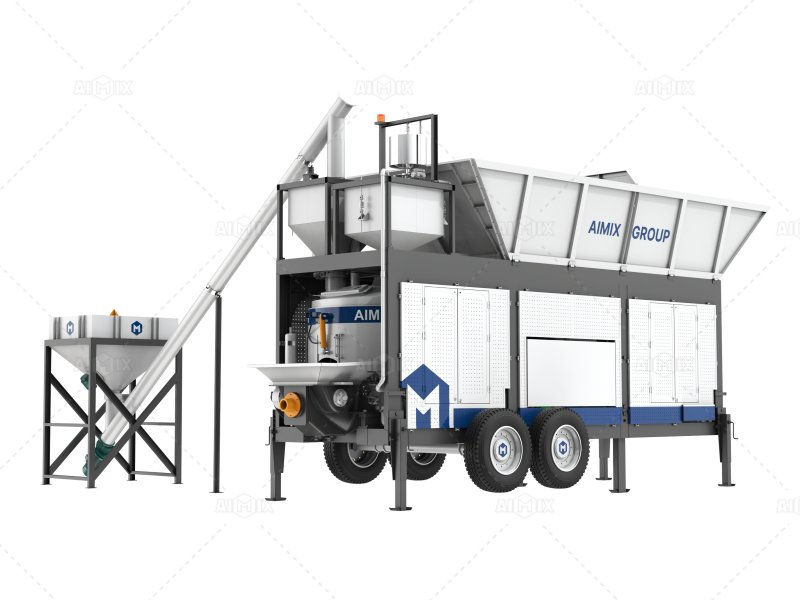
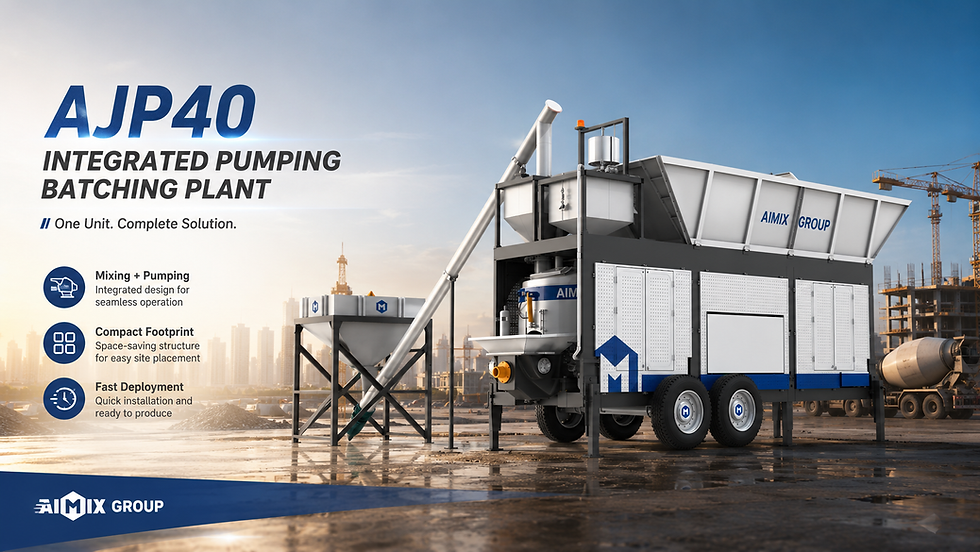
The main advantage of a concrete pumping batching plant is its integrated design. Unlike traditional construction methods that require separate equipment for concrete mixing, transportation, and pumping, this solution combines multiple functions into a single unit.
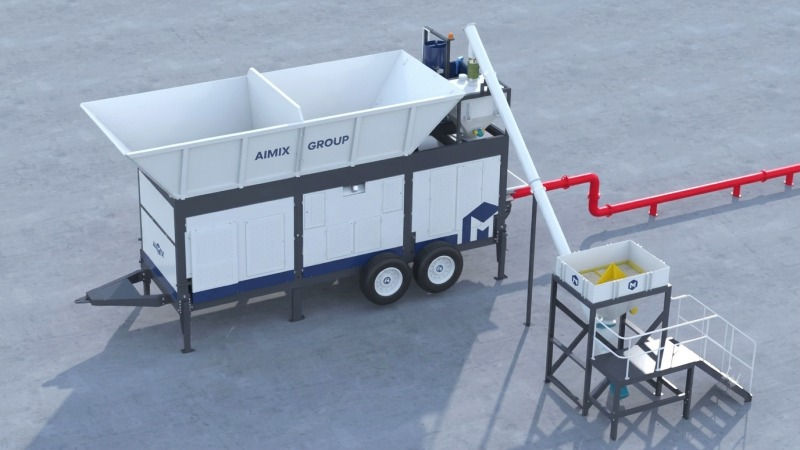
The system can complete material weighing, mixing, and concrete pumping within one coordinated process. This reduces the need for additional equipment and minimizes the space required at the construction site. For mountain projects where working areas are often limited, this compact design provides significant operational advantages.
The direct pumping function also allows concrete to reach difficult areas such as slopes, valleys, and elevated construction points. Contractors can improve placement efficiency while reducing manual handling and labor requirements.
Compact Design for Limited Mountain Worksites
Space availability is another important factor in mountain construction. Many remote sites do not have enough space for installing large concrete production facilities or storing excessive equipment.
A compact concrete pumping batching plant is designed to operate efficiently in restricted areas. Its smaller footprint allows easier installation near the construction zone without requiring extensive site preparation. This is particularly useful for projects such as mountain roads, hydropower facilities, slope protection works, and remote residential developments.
Compared with traditional batching systems, compact designs reduce transportation difficulties and simplify site layout planning. Contractors can achieve reliable concrete production even when construction conditions are challenging.
Reducing Transportation Costs and Project Delays
Transporting ready-mix concrete to mountainous areas often requires additional resources. Specialized trucks, longer travel times, and difficult road conditions can significantly increase project costs.
By producing concrete onsite, a concrete pumping batching plant reduces the number of concrete deliveries required. Raw materials such as cement, aggregates, and water can be transported in bulk and stored near the project location, improving material management.
The reduction in transportation distance also helps contractors maintain a more predictable construction schedule. Concrete can be produced according to daily project requirements, reducing waiting time and improving overall workflow.
Improving Concrete Quality Control
Maintaining consistent concrete quality is critical for mountain infrastructure projects, where structures must withstand challenging environmental conditions. A concrete pumping batching plant provides better control over the production process compared with relying on external suppliers.
Advanced weighing systems and automated controls ensure accurate measurement of raw materials, while efficient mixers provide uniform concrete quality. Contractors can adjust mix designs based on specific project requirements, such as high-strength concrete for bridges or durable concrete for slope protection structures.
Better quality control reduces the risk of construction problems and helps extend the service life of mountain infrastructure.
Flexible Solution for Various Mountain Projects
Mountain construction covers a wide range of applications, including roads, bridges, tunnels, mining facilities, dams, and residential developments. Each project may have different concrete demand and site limitations.
A concrete pumping batching plant can be configured according to production requirements, pumping distance, and construction conditions. Smaller models are suitable for local infrastructure projects, while higher-capacity systems can support larger construction operations.
For contractors considering whether to buy concrete batching plant equipment, evaluating future project demand is important. A flexible and efficient plant can provide value across multiple projects instead of serving only a single construction site.
Conclusion
Mountain construction requires reliable concrete solutions that can overcome transportation difficulties, limited access, and challenging terrain. A concrete pumping batching plant offers an efficient approach by integrating concrete production and pumping into one compact system. It reduces transportation costs, improves concrete quality control, saves installation space, and supports faster construction progress.
For contractors planning to buy concrete batching plant equipment, selecting a solution designed for remote and difficult environments can significantly improve project efficiency and profitability. With its mobility, flexibility, and integrated operation, a concrete pumping batching plant is becoming an increasingly valuable choice for modern mountain construction projects.

Comments