


Grinding Mill for Sale and Powder Processing Plant Layout: Designing Material Flow for Efficient Production
Buying a grinding mill is only one part of building a reliable powder processing plant. The way raw material moves from feeding and crushing to grinding, classification, collection, and storage can have just as much influence on production efficiency as the mill itself.
A well-designed layout should create a logical material flow with minimal unnecessary handling, appropriate equipment spacing, and sufficient room for maintenance. When evaluating a grinding mill for sale, therefore, buyers should consider how the equipment will fit into the complete processing circuit rather than judging the mill as an isolated machine.

Start the Layout with Material Flow
The first step in designing a powder processing plant is to define the complete material route.
A typical dry grinding process may follow this sequence:
Raw material → Feeding → Primary size reduction → Grinding → Classification → Powder collection → Storage or packaging
The exact configuration depends on the material, required feed size, final fineness, production capacity, and whether the process requires open- or closed-circuit operation.
Mapping this flow before positioning individual machines helps identify potential bottlenecks. For example, a grinding mill may have sufficient capacity, but an undersized feeder or classifier can restrict the output of the entire plant.
Feed Size Determines What Comes Before the Mill
Grinding equipment generally performs more efficiently when the feed material is within its designed size range. Large pieces of quarry or mined material may therefore require crushing before entering the grinding stage.
A primary crusher can reduce large rocks to a more manageable size, while secondary crushing may further prepare the material for grinding.
This relationship is particularly important when planning the distance between crushing and grinding equipment. If material must travel unnecessarily long distances between stages, the plant may require additional conveyors, transfer points, and handling equipment.
A compact and logically arranged layout can simplify material flow and reduce unnecessary transfers.
Position the Grinding Mill Around the Core Process
The grinding mill is usually the central piece of equipment in a powder production line, so surrounding equipment should be arranged according to its feeding and discharge requirements.
The feeder should provide a stable supply of material without creating surges. After grinding, the material normally moves toward classification and powder collection.
For a dry grinding system, a classifier can separate particles according to the required fineness. Coarser particles may return to the mill for additional grinding, while qualified powder proceeds to the collection system.
This closed-loop arrangement means that the mill, classifier, air system, and dust collector should be considered as a single process rather than independent machines.

Plan for the Required Product Fineness
The final powder specification has a direct influence on plant layout.
Producing relatively coarse powder may require a simpler grinding and classification arrangement. Finer products may require more precise classification and stronger airflow or collection systems.
If several grades of powder are produced, the layout should also account for separate collection, storage, and conveying routes.
This is why buyers should define the target particle size before selecting a grinding mill for sale. A mill that is suitable for one fineness range may not provide the required process performance for another material or specification.
Where Does a Ball Mill Fit?
Some mineral processing applications use ball mills because the grinding process and product requirements are suited to this technology.
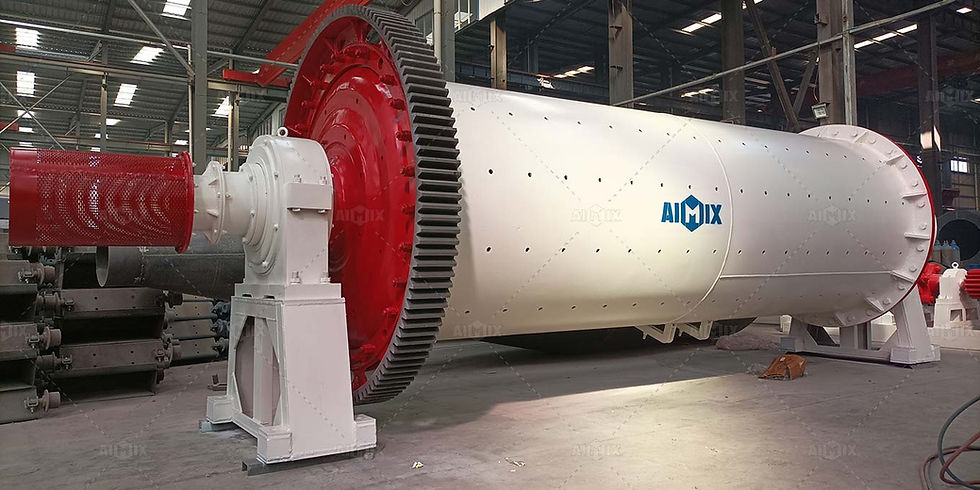
If you plan to buy ball mill equipment, the layout needs to consider not only the mill itself but also feeding, discharge, classification, material transfer, and auxiliary systems.
Ball mills can require substantial space and supporting infrastructure, depending on their size and configuration. The layout should provide adequate access around the mill for inspection, liner replacement, drive-system maintenance, and other service work.
The downstream classification and material handling system must also be sized to match the intended grinding capacity.
Choosing a ball mill simply because its purchase price appears attractive can create problems if the rest of the plant cannot handle its output or if the mill is poorly matched to the required product fineness.
Design Conveyors and Transfer Points Carefully
Material handling equipment connects different stages of the processing plant, but every transfer point can introduce additional complexity.
Conveyors should be positioned to maintain a practical material route while allowing operators and maintenance personnel to access critical components.
Long conveyor runs may increase capital and maintenance requirements. Excessive changes in direction can also require additional transfer points and supporting equipment.
Where practical, the layout should minimize unnecessary material movement while maintaining enough separation between machines for safe operation and maintenance.
Include Dust Collection in the Original Design
Fine powder can generate significant dust during crushing, grinding, classification, and transfer.
Dust collection should therefore be considered during the initial plant layout rather than added after the equipment has already been installed.
The dust collector, ducts, fans, and collection points need to work with the grinding process. Poorly arranged ducting can increase pressure losses and reduce system performance.
The layout should also identify enclosed transfer points and areas where dust generation is most likely to occur.
Leave Space for Maintenance
A common layout mistake is using every available square meter for equipment.
Grinding mills contain components that eventually require inspection, adjustment, or replacement. Operators may need access to bearings, drives, grinding components, classifiers, feeders, and dust collection equipment.
Maintenance space should therefore be included from the beginning.
The plant should also have practical access for lifting equipment or other tools needed to remove heavy components. A layout that works during installation may become inefficient if technicians cannot safely reach equipment during maintenance.
Plan for Future Expansion
A powder processing plant may not operate at the same production level forever. Market demand can increase, new products may be introduced, or additional grinding capacity may become necessary.
Leaving space for another mill, larger storage equipment, additional classifiers, or upgraded conveying systems can make future expansion easier.
This is especially valuable when the initial investment is based on a moderate production target but long-term demand is expected to grow.
Build the Layout Around the Entire Production System
The most efficient powder processing layouts are not simply arrangements of machines. They are designed around continuous material flow.
When evaluating a grinding mill for sale, consider how raw material reaches the mill, how finished powder leaves the grinding circuit, where oversized particles return, how dust is collected, and how the final product reaches storage or packaging.
The goal is to create a balanced system in which feeding, grinding, classification, collection, and material handling support one another.
Whether the project uses a conventional grinding mill or a ball mill, the equipment should be selected only after the material characteristics, production target, product fineness, and complete process flow have been established. A thoughtful layout can reduce unnecessary handling, simplify maintenance, improve operational visibility, and provide a stronger foundation for consistent powder production.

Comments