


How a Grinding Mill Manufacturer Designs Grinding Systems for Consistent Particle Size Distribution
Consistent particle size distribution is essential for producing industrial powders that meet customer specifications. A grinding mill manufacturer must consider more than mill capacity or target fineness when designing a grinding system. Feed characteristics, grinding technology, classifier performance, airflow, and material circulation all affect the final particle size distribution. When these factors are properly matched, a grinding plant can maintain stable product quality, reduce unnecessary grinding, and control operating costs.

1. Evaluate Feed Material Before Selecting the Grinding Mill
The properties of the feed material establish the starting point for grinding system design. Hardness, moisture content, initial particle size, and grindability determine how much energy is required to achieve the target fineness. Materials with different physical properties may require different grinding mechanisms, even when the desired final particle size is similar.
A grinding mill manufacturer typically evaluates the maximum feed size, expected feed size distribution, and required product specifications before recommending equipment. For example, limestone used in construction materials may require a different grinding configuration from quartz or other harder minerals. If the feed contains excessive moisture, additional drying capacity or adjustments to the material handling system may be necessary to prevent blockages and unstable feeding.
Feed consistency also matters. Sudden changes in material hardness or feed rate can alter grinding efficiency and cause fluctuations in the finished powder. A stable feeding system helps maintain consistent loading inside the mill, giving downstream classification equipment a more predictable material stream to process.
2. Match Grinding Technology to the Required Particle Size Distribution
Different grinding technologies produce different particle size distributions under comparable operating conditions. Selecting the right mill therefore requires an understanding of both the target fineness and the acceptable proportion of particles across the specified size range.
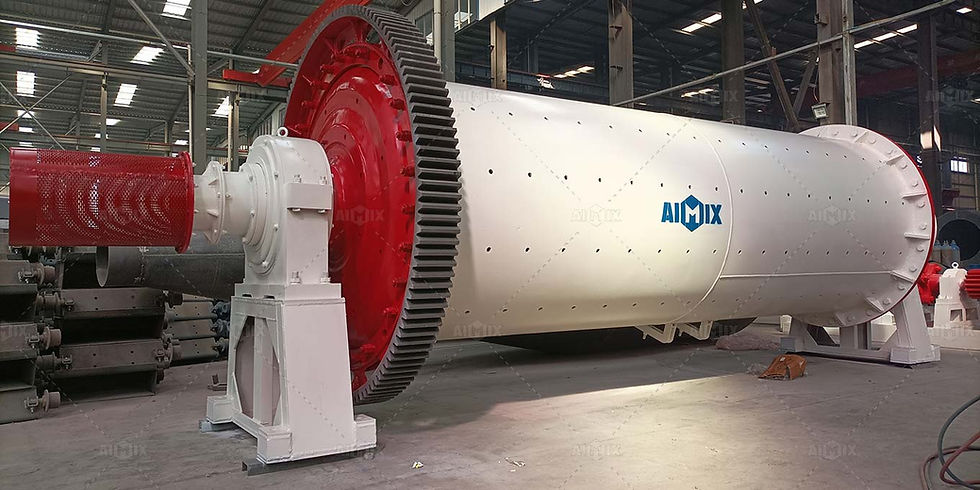
A Raymond mill is commonly used for producing fine powders from materials such as limestone, calcite, and other nonmetallic minerals. A ball mill may be suitable for applications requiring fine grinding, particularly where the process benefits from impact and attrition inside a rotating drum. Other grinding systems may be more appropriate for ultrafine products or specialized material requirements.
The key is to match the grinding mechanism to the material and product specification rather than selecting equipment based on fineness alone. Two systems may achieve the same average particle size but produce different proportions of coarse particles and ultrafines.
A grinding mill manufacturer should therefore clarify the customer's particle size requirements, including the target size, acceptable range, and any relevant specifications such as D50 or D97. D50 represents the particle size below which 50% of the measured sample falls, while D97 represents the size below which 97% falls. These values provide more useful information about the overall distribution than an average particle size alone.
3. Optimize Classification to Control Coarse and Fine Particles
In many grinding systems, the classifier plays a critical role in determining final product quality. Grinding reduces particle size, while classification separates particles according to their aerodynamic or mechanical behavior, depending on the equipment design.
In an air-classified grinding system, particles that meet the required fineness can leave with the airflow, while coarser particles return for further grinding. If the classifier is poorly matched to the mill, oversized particles may enter the finished product, or excessive fine material may be generated through unnecessary recirculation.
A grinding mill manufacturer should consider classifier capacity, rotor speed where applicable, airflow, and the required separation performance when designing the complete system. These parameters need to be adjusted together because changing one operating condition may affect both product fineness and throughput.
For example, increasing classifier speed may produce a finer product in a compatible system, but it can also reduce output or increase internal circulation. The appropriate setting depends on the material, equipment configuration, and required particle size distribution. Actual performance should be verified through product sampling rather than assumed from a single machine setting.

4. Control Airflow, Feed Rate, and Grinding Conditions
Stable particle size distribution depends on maintaining a balanced relationship between material feed, grinding intensity, and material transport. Even a correctly selected mill can produce inconsistent powder if operating conditions fluctuate significantly.
In air-swept grinding systems, airflow affects the movement of particles through the mill and classification section. Insufficient airflow may disrupt material transport, while excessive airflow can affect separation performance and increase the burden on dust collection equipment. The suitable operating range depends on the mill design and material properties.
Feed rate is another important variable. Feeding material faster than the grinding system can process it may increase coarse particles in the finished product or cause unstable operation. Conversely, feeding too slowly can reduce production efficiency and change the mill's operating conditions.
A well-designed system should include suitable feeding equipment, adjustable operating controls, and monitoring points for critical parameters. Operators can then identify changes in feed conditions or product quality before they lead to prolonged production problems.
5. Use Product Testing and Operating Data to Maintain Quality
Equipment design establishes the foundation for consistent particle size distribution, but routine testing is needed to verify actual performance. A grinding mill manufacturer should help define acceptance criteria and identify the operating conditions required to achieve the specified product.
Representative product samples can be analyzed using appropriate particle size measurement methods. Results should be compared with the target distribution, not just a single fineness value. If the coarse fraction increases, possible causes include inconsistent feeding, insufficient grinding, or ineffective classification. An increase in ultrafines may indicate excessive grinding or unsuitable operating settings.
Production records can help operators distinguish temporary variations from recurring problems. Useful data include feed rate, product fineness, mill power consumption, classifier settings, and material characteristics. Reviewing these measurements together makes troubleshooting more reliable than adjusting equipment based on output appearance alone.
The system should also allow for normal wear. Changes in grinding components or classifier condition can gradually affect performance, making periodic inspection and recalibration important for long-term product consistency.
6. Consider Particle Quality When Evaluating Grinding Mill Cost
When comparing equipment proposals, buyers should evaluate the cost of producing specification-compliant powder rather than focusing exclusively on the initial purchase price. Ball mill cost, for example, depends on more than the mill itself. The overall investment may include feeding equipment, classification, conveying, dust collection, electrical systems, installation, and other auxiliary equipment.
Operating expenses also influence long-term value. Electricity consumption, grinding media or wear parts, maintenance, and the proportion of material requiring additional processing all contribute to the cost per ton of finished product.
A system that produces inconsistent particle sizes may require repeated adjustment, reprocessing, or rejection of off-specification material. These issues can increase costs even when the equipment has a relatively low purchase price. Conversely, investing in a suitable classifier or more effective process controls may improve product consistency and reduce avoidable losses.
When requesting quotations, buyers should provide the material properties, target particle size distribution, required production capacity, and expected operating schedule. This allows the manufacturer to propose a configuration based on actual process requirements and compare alternatives using realistic production and cost assumptions.
Conclusion
Consistent particle size distribution results from coordinated system design rather than mill selection alone. A capable grinding mill manufacturer evaluates feed properties, matches grinding technology to product specifications, optimizes classification, and establishes stable operating conditions. Product testing and performance monitoring then help maintain these results over time. For buyers, comparing complete system performance alongside ball mill cost and other lifecycle expenses provides a more reliable basis for choosing grinding equipment that meets both quality and production targets.

Comments