


How Concrete Batch Plant Manufacturers Affect Equipment Price and Total Investment
Choosing a concrete batch plant manufacturer has a direct impact on both the initial equipment price and the total investment required to establish a concrete production operation. Two plants with similar capacities may have noticeably different quotations because manufacturers use different components, configurations, manufacturing standards, automation systems, and service models. For buyers, the most important question is therefore not simply which manufacturer offers the lowest price, but which supplier can provide the right balance of equipment quality, project suitability, operating efficiency, and long-term support.

Why Manufacturer Choice Affects Plant Price
The first reason prices vary between manufacturers is equipment configuration. A quotation for a 60 m³/h plant, for example, may include different mixer models, aggregate storage capacities, cement silos, weighing systems, conveyors, control systems, and electrical components. One manufacturer may provide a basic configuration, while another may include more advanced equipment as standard.
Manufacturing quality also influences cost. Higher-quality steel structures, reliable weighing components, durable mixer wear parts, and industrial-grade electrical systems can increase the initial price but may provide better reliability over the plant's service life. A low-cost plant can appear attractive initially, but frequent maintenance or component replacement may increase the total investment over time.
Automation is another factor. Basic plants may require more manual operation, while advanced systems can automate batching, weighing, mixing, data recording, and production monitoring. Although a highly automated plant may require greater upfront investment, it can reduce labor requirements and improve production consistency.
Equipment Quality and Long-Term Investment
The purchase price should always be considered alongside expected service life and operating performance. A concrete batching plant is a long-term production asset, so the cost of ownership can be more important than the initial quotation.
For example, an efficient mixer can reduce mixing time and energy consumption, while accurate weighing systems can minimize material waste. Reliable conveyors and electrical components can reduce unexpected downtime. Over several years, these operational benefits may compensate for a higher initial equipment price.
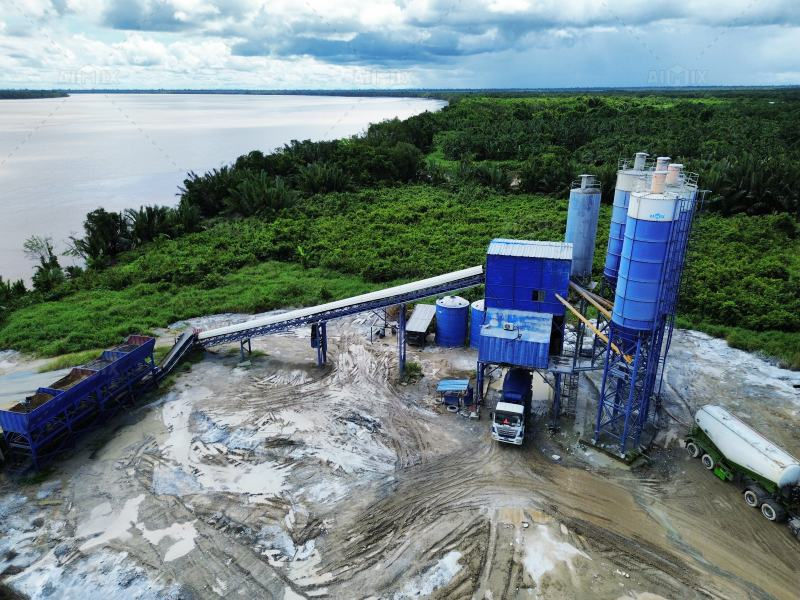
This is particularly relevant for buyers planning a concrete batching plant Indonesia project. Depending on the location, equipment may need to operate under high humidity, heavy rainfall, remote-site conditions, or demanding transportation environments. Choosing equipment suited to local operating conditions can reduce maintenance problems and protect the long-term value of the investment.
How Configuration Changes the Total Cost
The manufacturer also affects how flexibly the plant can be configured. A reliable supplier should be able to recommend a suitable combination of production capacity, storage, feeding, mixing, weighing, and control systems based on the customer's actual requirements.
Capacity is one of the most obvious factors. A small contractor may need a 25–50 m³/h plant, while a commercial ready-mix supplier or major infrastructure project may require 90 m³/h or more. Purchasing excessive capacity can unnecessarily increase investment, while insufficient capacity can create production bottlenecks.
The plant type also influences total cost. Stationary plants generally require a prepared foundation and are designed for long-term operation at one location. Mobile and compact plants can reduce relocation and installation requirements. Modular systems may further simplify transportation to remote sites. The right manufacturer should help buyers select the configuration according to project duration, site conditions, production demand, and future expansion plans.

Installation and Transportation Expenses
The quoted equipment price is not necessarily the final project cost. Transportation, foundation construction, installation, commissioning, electrical work, and local handling can all add to the total investment.
Experienced manufacturers can reduce uncertainty by providing detailed shipping dimensions, container requirements, installation instructions, foundation drawings, and commissioning support. This can be especially valuable for international buyers who need to transport equipment across borders.
For a concrete batching plant Malaysia project, for example, transportation planning may involve delivery from an overseas factory to a Malaysian port and then onward transportation to the construction site. Site accessibility, local transportation conditions, and installation requirements should be considered when comparing supplier quotations.
A manufacturer that provides clear logistics and installation support may offer better overall value even if its initial equipment price is not the lowest.
The Role of After-Sales Service
After-sales service is another factor that can significantly affect total investment. A batching plant may operate for many years, and components such as mixer wear parts, conveyor belts, sensors, electrical components, and valves eventually require inspection or replacement.
Manufacturers with established spare-parts systems and technical support can help reduce downtime. Remote troubleshooting, operator training, installation assistance, and regular maintenance guidance can also improve plant availability.
In contrast, a low-cost supplier with limited technical support may create additional expenses when equipment problems occur. For a concrete production business, even a short production interruption can result in delayed concrete deliveries, idle workers, and dissatisfied customers.
Comparing Manufacturers Beyond the Quotation
When comparing concrete batch plant manufacturers, buyers should request detailed quotations rather than comparing only the final numbers. Each quotation should identify the main mixer, aggregate bins, weighing systems, cement silos, conveyors, control system, electrical equipment, and included accessories.
Buyers should also confirm what is excluded. Foundation construction, transportation, installation, commissioning, taxes, local handling, and operator training may not always be included in the advertised price. Comparing complete project costs provides a much more accurate picture of the required investment.
It is also useful to evaluate the manufacturer's project experience, production capability, quality-control procedures, warranty terms, spare-parts availability, and overseas service experience. A supplier with experience in similar applications can often provide more practical recommendations for plant configuration and site preparation.
How to Optimize Total Investment
The best way to control investment is not necessarily to select the cheapest manufacturer. Instead, buyers should first establish realistic production requirements and then request comparable configurations from several suppliers.
A cost-effective plant should provide sufficient capacity without excessive unused production capability. It should also use reliable components in critical systems while avoiding unnecessary features that do not contribute meaningful value to the project.
Buyers should evaluate both initial and long-term costs, including equipment purchase, transportation, installation, energy, labor, maintenance, spare parts, and potential downtime. This lifecycle approach makes it easier to identify which quotation actually provides better economic value.

Conclusion
Concrete batch plant manufacturers influence total investment through equipment quality, configuration, automation, manufacturing standards, transportation arrangements, installation support, and after-sales service. The lowest quotation may reduce the initial purchase cost but does not necessarily result in the lowest long-term operating expense. For projects such as a concrete batching plant Indonesia or concrete batching plant Malaysia application, buyers should consider local site conditions, logistics, production requirements, maintenance, and technical support when selecting a supplier. Comparing complete project costs and lifecycle value rather than equipment price alone can help contractors and ready-mix producers choose a plant that delivers reliable production and stronger long-term returns.

Comments