


How to Confirm Size of Mini Size Concrete Trailer Pumps to Fit in Confined Space
- aimixglobal5
- Feb 21
- 11 min read
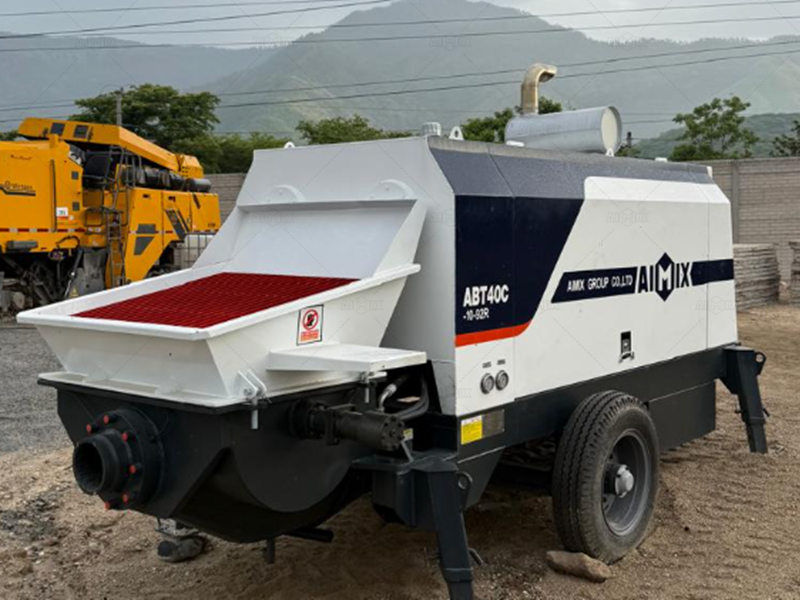
Confined spaces are common in many construction scenarios, such as urban renovation projects, basement construction, narrow alleyway renovations, and interior floor pouring of old buildings. In these scenarios, concrete trailer pumps, especially mini size concrete trailer pumps, have become the core equipment for concrete conveying due to their mobility and flexibility. As a popular choice among mini concrete pumps for sale, mini size concrete trailer pumps are designed to be compact and easy to maneuver, but their size still needs to be accurately confirmed to ensure they can smoothly enter, operate, and exit confined spaces. Improper size confirmation will not only lead to the equipment being unable to enter the construction site, delaying the construction period, but also may cause damage to the equipment, surrounding buildings, or even safety accidents. Therefore, mastering the scientific method to confirm the size of mini size concrete trailer pumps to fit in confined spaces is crucial for construction contractors, equipment purchasers, and operation personnel. This article will systematically elaborate on the key steps and considerations of size confirmation, providing practical guidance to ensure the efficient and safe application of mini size concrete trailer pumps in confined space construction.

Step 1: Clarify the Definition and Characteristics of Confined Spaces and Mini Size Concrete Trailer Pumps
Before confirming the size of mini size concrete trailer pumps, it is first necessary to clarify the definition and characteristics of confined spaces in construction, as well as the size-related parameters of mini size concrete trailer pumps, which is the basis for accurate size confirmation. Confined spaces in construction refer to spaces with limited entry and exit, narrow internal space, poor ventilation, and difficulty in equipment maneuvering, such as basement corridors, narrow alleyways between buildings (width less than 3 meters), interior spaces of old buildings, and construction gaps in urban dense areas. These spaces usually have strict restrictions on the width, height, and turning radius of equipment, and even small deviations in size may lead to the equipment being stuck.
Mini size concrete trailer pumps, as a type of concrete trailer pumps, are specially optimized for small and confined construction sites. Compared with standard concrete trailer pumps, they have the characteristics of small volume, light weight, and flexible movement, and are the most sought-after models among mini concrete pumps for sale. When it comes to size confirmation, the core parameters of mini size concrete trailer pumps that need to be focused on include overall length, overall width, overall height, turning radius (minimum turning radius when moving), ground clearance, and the size of key protruding parts (such as pumping boom, control panel, and supporting legs). These parameters directly determine whether the equipment can fit in confined spaces. For example, the overall width of most mini size concrete trailer pumps is between 1.2-1.8 meters, the overall height is between 1.5-2.2 meters, and the minimum turning radius is between 3-5 meters, but specific parameters vary by model. Therefore, it is necessary to clearly understand the size parameters of the selected mini size concrete trailer pump before confirmation.
It should be noted that the size parameters of mini size concrete trailer pumps provided by manufacturers usually refer to the basic size of the equipment in a non-operating state (such as the pumping boom folded, supporting legs retracted). However, in actual construction, the equipment needs to expand the supporting legs to maintain stability during operation, and the pumping boom needs to be extended to convey concrete. Therefore, when confirming the size, not only the non-operating size but also the operating size of the equipment must be considered to avoid the situation that the equipment can enter the confined space but cannot operate normally due to insufficient space for expanding the supporting legs or extending the boom.
Step 2: Conduct On-Site Measurement of Confined Spaces to Determine Size Limits
The second key step in confirming the size of mini size concrete trailer pumps is to conduct on-site measurement of the confined space to obtain accurate size limits, which is the core basis for matching the equipment size. Many construction failures caused by improper size confirmation are due to relying on subjective estimates rather than on-site actual measurements. Therefore, it is necessary to organize professional personnel to conduct on-site measurement with accurate measuring tools (such as tape measures, laser rangefinders, and spirit levels) before purchasing or using mini size concrete trailer pumps.
Firstly, measure the key size parameters of the confined space entry and exit. The entry and exit of confined spaces (such as doorways, alleyway entrances, and basement accesses) are the first obstacles for mini size concrete trailer pumps to enter, so their width and height must be measured accurately. When measuring, it is necessary to measure the minimum width and height of the entry and exit, because there may be protruding objects (such as door frames, wall corners, and pipelines) around the entry and exit, which will reduce the actual available space. For example, if the nominal width of a doorway is 2 meters, but there is a 0.2-meter protruding door frame on one side, the actual available width is only 1.8 meters. At the same time, measure the length of the entry and exit channel to ensure that the equipment can pass through smoothly without being blocked. In addition, if the entry and exit involve slopes or steps, it is also necessary to measure the slope angle and step height to confirm whether the ground clearance and climbing capacity of the mini size concrete trailer pump meet the requirements.
Secondly, measure the internal size of the confined space operation area. The operation area is where the mini size concrete trailer pump works, so its length, width, height, and spatial layout must be measured in detail. The width and length of the operation area must be sufficient to accommodate the equipment in the operating state (including the expanded supporting legs), and there must be a certain safety distance (at least 0.5 meters) between the equipment and the surrounding walls, pipelines, or other obstacles to ensure the safety of operation and the movement of personnel. The height of the operation area must be higher than the overall height of the equipment in the operating state (including the raised pumping boom) to avoid collision between the boom and the top of the confined space (such as the basement ceiling). In addition, if there are fixed obstacles (such as pillars, pipelines, and ventilation ducts) in the operation area, it is necessary to measure their position and size to confirm whether they will interfere with the placement and operation of the equipment.
Finally, record and sort out the measured data. After completing the on-site measurement, sort out all the measured data into a detailed table, clearly marking the minimum width, height, length, turning space, and obstacle distribution of the entry and exit and operation area. At the same time, take on-site photos or videos to record the actual situation of the confined space, which can be used for subsequent matching with the equipment size and communication with the equipment manufacturer. It should be emphasized that the measurement must be accurate to the centimeter level, because even a 10-centimeter deviation may lead to the equipment being unable to fit in the confined space.
Step 3: Match the Equipment Size Parameters with the Confined Space Limits
After obtaining the size parameters of the mini size concrete trailer pump and the size limits of the confined space, the next step is to conduct a scientific matching comparison to confirm whether the equipment size is suitable. This step requires strict comparison of each key size parameter to avoid omissions, and it is also an important link to select the most suitable model among mini concrete pumps for sale.
Firstly, match the entry and exit size of the confined space with the non-operating size of the equipment. The minimum width of the entry and exit must be at least 0.1-0.2 meters larger than the overall width of the mini size concrete trailer pump in the non-operating state to leave a certain safety margin for the equipment to pass through, avoiding collision with the entry and exit walls due to slight deviations in movement. The minimum height of the entry and exit must be at least 0.2-0.3 meters higher than the overall height of the equipment in the non-operating state to take into account the possible unevenness of the ground and the slight jitter of the equipment during movement. In addition, if the entry and exit channel has a turning section, the minimum turning radius of the channel must be larger than the minimum turning radius of the equipment to ensure that the equipment can turn smoothly without being stuck.
Secondly, match the internal size of the confined space operation area with the operating size of the equipment. The width of the operation area must be sufficient to accommodate the equipment with its supporting legs fully expanded. Generally, the width of the operation area must be at least 0.5 meters larger than the maximum width of the equipment when the supporting legs are expanded. The length of the operation area must be sufficient to accommodate the entire equipment and leave a certain space for the operation of personnel (at least 0.8 meters) and the movement of the pumping boom. The height of the operation area must be higher than the maximum height of the equipment when the pumping boom is raised to the required working angle to avoid collision between the boom and the top of the confined space. For example, if the pumping boom of the mini size concrete trailer pump needs to be raised to a height of 3 meters during operation, the height of the operation area must be at least 3.3 meters to leave a 0.3-meter safety margin.
Thirdly, check the interference between the equipment and the obstacles in the confined space. According to the measured position and size of the obstacles in the confined space, compare them with the size and spatial layout of the mini size concrete trailer pump (including the position of the protruding parts such as the control panel and boom) to confirm whether there is any interference. If there are obstacles that may interfere with the equipment, it is necessary to judge whether the obstacles can be temporarily removed or adjusted; if not, it is necessary to select a smaller model of mini size concrete trailer pump or adjust the equipment placement position to avoid interference. In addition, check the ground bearing capacity of the confined space operation area to ensure that it can bear the weight of the mini size concrete trailer pump in the operating state, which is also closely related to the equipment size (larger size usually means heavier weight).
Step 4: Conduct Simulation Verification to Ensure Size Compatibility
To further ensure that the size of the mini size concrete trailer pump is suitable for the confined space, it is necessary to conduct simulation verification after completing the size matching comparison. Simulation verification can effectively avoid the errors caused by theoretical matching and ensure that the equipment can actually enter, operate, and exit the confined space smoothly. This step is especially important for large-scale confined space construction projects or when purchasing high-value mini size concrete trailer pumps among mini concrete pumps for sale.
Firstly, conduct computer simulation verification. Use professional 3D modeling software to establish a 3D model of the confined space (based on on-site measurement data) and a 3D model of the selected mini size concrete trailer pump (based on the manufacturer’s size parameters). Import the two models into the same coordinate system to simulate the process of the equipment entering the confined space, placing it in the operation area, expanding the supporting legs, extending the boom, and exiting the space. Through simulation, check whether there is any collision between the equipment and the confined space walls, obstacles, or entry and exit during the entire process, and whether the equipment can operate normally in the operation area. If any collision or interference is found in the simulation, adjust the equipment model parameters or the placement position in time until the simulation process is smooth.
Secondly, conduct on-site physical simulation verification. If computer simulation verification is not convenient, or if the confined space structure is complex, on-site physical simulation verification can be carried out. Use materials such as wooden boards, steel pipes, or ropes to build a simulated model of the confined space according to the on-site measured size, and then use a model of the mini size concrete trailer pump (or the actual equipment if conditions permit) to simulate the entry, operation, and exit processes. During the simulation, pay attention to observing the movement of the equipment, the expansion of the supporting legs, and the extension of the boom, and check whether there is any obstruction or collision. For example, if the actual equipment is available, drive it to the entry and exit of the confined space first, check whether it can enter smoothly, then drive it to the operation area, expand the supporting legs to check whether there is sufficient space, and extend the boom to check whether it will collide with the surrounding environment.
Finally, adjust and optimize according to the simulation verification results. If the simulation verification finds that the size of the mini size concrete trailer pump is not suitable (such as being unable to enter, unable to expand the supporting legs, or colliding with obstacles), it is necessary to take corresponding adjustment measures. For example, select a smaller model of mini size concrete trailer pump, negotiate with the equipment manufacturer to customize the equipment size (if conditions permit), adjust the entry and exit path of the equipment, or temporarily remove or modify the obstacles in the confined space. Only after the simulation verification is passed can the mini size concrete trailer pump be formally used in the confined space construction to ensure the smooth progress of the project.
Step 5: Consider Additional Factors Affecting Size Compatibility
In addition to the basic size matching and simulation verification, there are also some additional factors that need to be considered when confirming the size of mini size concrete trailer pumps to fit in confined spaces. These factors may affect the actual application effect of the equipment and even lead to size incompatibility if ignored, so they cannot be overlooked when selecting and using mini concrete pumps for sale.
Firstly, consider the transportation and hoisting factors of the equipment. If the confined space is located in a high-rise building (such as the interior of a high-rise building under construction) or a place that is difficult to reach by road, the mini size concrete trailer pump needs to be transported by elevator or hoisted by crane. At this time, it is necessary to confirm the size and weight of the equipment (after disassembly if necessary) to ensure that it can fit in the elevator (width, height, and weight of the elevator) or be hoisted smoothly by the crane (hoisting space and weight capacity). For example, if the equipment needs to be transported by an elevator with a width of 1.6 meters and a height of 1.8 meters, the overall width and height of the equipment (after disassembly of protruding parts if necessary) must be less than the elevator size.
Secondly, consider the operation space required for equipment maintenance and fault handling. In confined spaces, the operation space for equipment maintenance and fault handling is limited, so the size of the mini size concrete trailer pump must also take this into account. The equipment should have a compact structure but also leave a certain space for maintenance personnel to disassemble and replace components (such as filters, seals, and mixing blades). If the equipment size is too large, it may be difficult for maintenance personnel to approach the faulty components, leading to prolonged maintenance time and affecting the construction progress. In addition, the position of the equipment’s maintenance ports and control panel should be reasonable to ensure that they are easy to access in confined spaces.
Thirdly, consider the future applicability of the equipment. When selecting mini size concrete trailer pumps among mini concrete pumps for sale, in addition to confirming that their size is suitable for the current confined space construction, it is also necessary to consider their applicability to other confined space projects in the future. If the equipment size is too customized (too small), it may not be suitable for larger confined space projects in the future, resulting in waste of equipment investment; if the equipment size is too large, it may not be suitable for smaller confined space projects. Therefore, it is necessary to select a model with moderate size and strong versatility on the premise of meeting the current size requirements.
Conclusion: Accurate Size Confirmation Ensures Efficient Application in Confined Spaces
Confirming the size of mini size concrete trailer pumps to fit in confined spaces is a systematic and rigorous work, which involves clarifying the characteristics of confined spaces and equipment, conducting on-site measurement, matching size parameters, conducting simulation verification, and considering additional influencing factors. As a flexible and efficient equipment among concrete trailer pumps, mini size concrete trailer pumps, especially the popular models in mini concrete pumps for sale, can greatly improve the construction efficiency of confined spaces only if their size is accurately confirmed. By following the steps and considerations elaborated in this article, construction personnel can effectively avoid the risks caused by improper size confirmation, ensure that the mini size concrete trailer pump can smoothly enter, operate, and exit confined spaces, and achieve safe, efficient, and high-quality construction. At the same time, accurate size confirmation can also help select the most suitable equipment, reduce equipment investment waste, and improve the economic benefits of construction projects.


Comments