


What Capacity Asphalt Plant Is Needed For 300 Tons/Day Asphalt Demand?
When a contractor plans a road construction project, one of the most important decisions is choosing the right asphalt plant capacity. If you misjudge the output, you either waste investment or fail to meet project deadlines. For many municipal road contractors, especially in developing regions, a common demand is around 300 tons per day of asphalt mixture. At first glance, this number looks simple. However, the real challenge is translating daily demand into the correct plant capacity.
So the real question is not just “how much asphalt do we need per day”, but rather “what asphalt plant output per hour can reliably support 300 tons/day under real construction conditions?” In this article, we will break down the calculation, explain real jobsite scenarios, and help you choose the most cost-effective asphalt plant capacity for your project.

Understanding 300 Tons/Day Asphalt Demand In Real Construction Conditions
To select the right asphalt plant, we must first convert daily demand into hourly production requirements. This is where many buyers make mistakes, because they only look at theoretical numbers instead of real working conditions.
In most road construction projects, asphalt production does not run 24 hours a day. Instead, it usually follows construction working shifts such as 8 hours, 10 hours, or sometimes 12 hours per day depending on project urgency and labor organization.
Let’s break it down clearly:
If 300 tons/day ÷ 8 hours = 37.5 tons/hour
If 300 tons/day ÷ 10 hours = 30 tons/hour
If 300 tons/day ÷ 12 hours = 25 tons/hour
However, real construction is never perfectly stable. Equipment maintenance, material feeding delays, truck waiting time, and weather conditions will all reduce efficiency. That is why you should never select a plant based only on theoretical minimum output.
Instead, you should always add a safety margin of 20%–30% to ensure stable production.
Key Factors That Affect Asphalt Plant Capacity Selection
Although 300 tons/day sounds fixed, the actual required plant capacity depends on several real-world factors. Understanding these factors will help you avoid under-sizing or over-investing in your equipment.
1. Working Hours Per Day
Working hours directly define how much load the plant must carry per hour. A shorter working shift means higher hourly capacity is required. For example, a night-shift-limited municipal project may need higher output than a flexible highway project.
2. Construction Efficiency And Logistics
Even if the plant produces asphalt continuously, trucks must transport the material efficiently. If truck dispatching is slow, production must pause, which reduces real output. Therefore, logistics coordination affects the effective capacity requirement.
3. Asphalt Mix Type And Temperature Requirements
Different asphalt mix designs require different heating times and mixing cycles. Dense-graded mix, modified asphalt, or high-temperature requirements may reduce output speed slightly. This means your theoretical capacity should always exceed your minimum requirement.
4. Equipment Downtime And Maintenance
No asphalt plant runs at 100% efficiency all day. Maintenance, cleaning cycles, and unexpected stoppages are normal in real projects. So your selected plant must include enough buffer capacity to handle downtime without affecting project deadlines.

Recommended Asphalt Plant Capacity For 300 Tons/Day Demand
Based on real construction practice and production efficiency, the ideal asphalt plant capacity for 300 tons/day is not a single fixed number. Instead, it falls into a recommended range depending on project conditions.
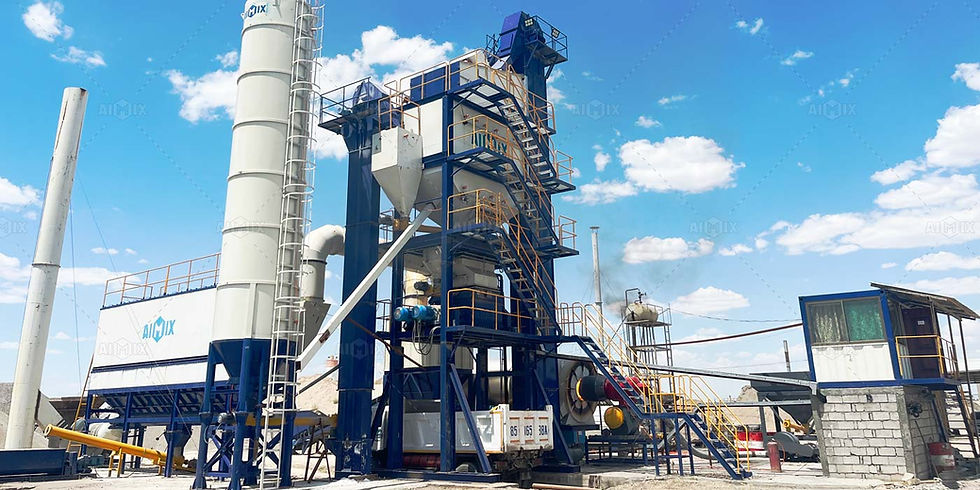
Generally, a 30–60 tons/hour small asphalt plant for sale is the most suitable choice. However, the most balanced and commonly used option is around 40–60 tons/hour, because it provides enough flexibility and safety margin.
Let’s break it down by real scenarios.
Scenario A: 8-Hour Working Day
If your project runs on an 8-hour working schedule, you need at least 37.5 tons/hour output. However, after adding a 20% safety margin, the recommended capacity becomes around 45–50 tons/hour.
This ensures stable production even if there are short delays or maintenance breaks. In this case, a 40–60 t/h asphalt plant is ideal.
Scenario B: 10-Hour Working Day
If your project operates for 10 hours per day, the theoretical requirement drops to 30 tons/hour. After adding buffer capacity, a 35–40 tons/hour plant can already meet demand comfortably.
This scenario is common in small municipal road projects where working hours are flexible but consistent.
Scenario C: 12-Hour Extended Operation
For urgent projects or night-shift operations, 12-hour production reduces hourly demand to around 25 tons/hour. However, contractors still choose a 30–40 tons/hour plant to ensure stability and future expansion capability.
This approach reduces risk and increases project flexibility, especially when demand suddenly increases.
Which Type Of Asphalt Plant Is Best For This Capacity Range?
After identifying the capacity range, the next step is choosing the right plant type. Both drum mix plants and batch mix plants can handle 300 tons/day demand, but they serve different construction needs.
Batch Type Asphalt Plant
Batch mix asphalt plants offer higher precision and better mix quality control. They are widely used in municipal roads, highways, and airport projects. If your project requires strict quality standards, a batch plant is the better choice.
For 300 tons/day demand, a small to medium batch plant (around 40–60 t/h) is usually sufficient.
Drum Mix Asphalt Plant
Drum mix plants focus more on continuous production and lower operating cost. They are suitable for projects where speed and cost efficiency matter more than mix flexibility.
If your project is simple road maintenance or rural road construction, a drum plant can be a cost-effective solution.
Mobile Vs Stationary Option
If your project site changes frequently, a mobile asphalt plant improves flexibility and reduces relocation costs. However, if your project is long-term and fixed, a stationary plant offers better stability and lower maintenance cost.
Therefore, the choice depends on your project timeline, location changes, and construction strategy.
Cost And Investment Considerations
Choosing the correct capacity is not only a technical decision but also a financial one. A larger plant increases investment cost, but a smaller plant may cause delays and indirect losses.
For a 40–60 t/h asphalt plant, investment is generally in a mid-range level compared to larger highway-grade plants. However, the return on investment is often faster because it matches real project demand without overcapacity waste.
In addition, operating costs such as fuel consumption, labor, and maintenance should also be considered. A properly sized plant reduces idle time and improves overall cost efficiency.
Common Mistakes When Selecting Asphalt Plant Capacity
Many contractors make similar mistakes when selecting asphalt plant capacity for 300 tons/day demand. Avoiding these mistakes can save both time and money.
First, some buyers only calculate theoretical output without considering downtime. Second, some choose the smallest possible plant to reduce investment cost, but later face production bottlenecks. Third, some ignore future expansion needs and end up needing additional investment too soon.
A better approach is to always plan slightly above your current requirement instead of matching it exactly.

Practical Checklist Before Buying An Asphalt Plant
Before making a final decision, contractors should evaluate several key points to ensure long-term success.
Confirm real daily asphalt demand and peak demand periods
Define working hours per day realistically, not theoretically
Check site logistics and truck transportation efficiency
Consider future project expansion potential
Evaluate fuel efficiency and maintenance cost
When these factors are clearly defined, selecting the right asphalt plant becomes much easier and more accurate.
Conclusion: The Smart Capacity Choice For 300 Tons/Day Projects
In real construction practice, a 300 tons/day asphalt demand does not require a fixed machine size. Instead, it requires a balanced decision between production efficiency, working hours, and project flexibility.
In most cases, a 40–60 tons/hour asphalt plant is the most practical and reliable solution. It provides enough buffer for downtime, supports stable production, and adapts to different construction conditions.
If you choose the right capacity from the beginning, you reduce project risk, improve efficiency, and control long-term costs more effectively.
If you are planning a road construction project and want a tailored asphalt plant solution for your 300 tons/day demand, contact us to get a professional configuration plan based on your site conditions, budget, and project timeline. A well-matched plant is not just equipment—it is the foundation of your project success.


Comments