


How to Start a Concrete Business by Understanding Local Construction Demand
Starting a concrete business can be a profitable opportunity as construction activities continue to grow worldwide. However, success depends on more than purchasing equipment and producing concrete. Before investing in facilities, entrepreneurs need to understand local construction demand, customer requirements, market competition, and regional development trends. A clear understanding of the local market helps business owners choose the right production capacity, equipment type, and business model. For example, companies planning to establish a concrete batching plant in Singapore or a concrete batching plant in Malaysia need to consider different construction environments, project scales, and customer expectations before making investment decisions.

Analyze Local Construction Market Opportunities
The first step in starting a concrete business is researching the local construction market. Concrete demand is closely connected with infrastructure development, residential construction, commercial projects, industrial facilities, and government investment programs.
Areas experiencing rapid urban expansion often provide strong opportunities for concrete suppliers. New housing developments, transportation networks, industrial parks, and public infrastructure projects require a continuous supply of ready-mix concrete. By identifying regions with increasing construction activities, entrepreneurs can determine whether there is enough market potential to support a new concrete production business.
Market research should include analyzing existing concrete suppliers, average project sizes, customer purchasing patterns, and future development plans. Understanding these factors helps investors avoid entering oversaturated markets and identify areas where additional concrete supply is needed.
Understand Customer Needs and Concrete Applications
Different construction projects require different types and quantities of concrete. A successful concrete business should understand what local customers need rather than producing a standard product without market research.
Large infrastructure projects such as highways, bridges, and airports usually require high-volume concrete supply and strict quality control. These projects may require a high-capacity stationary batching plant with advanced automation systems. On the other hand, smaller residential projects may prefer suppliers who can provide flexible delivery schedules and customized concrete solutions.
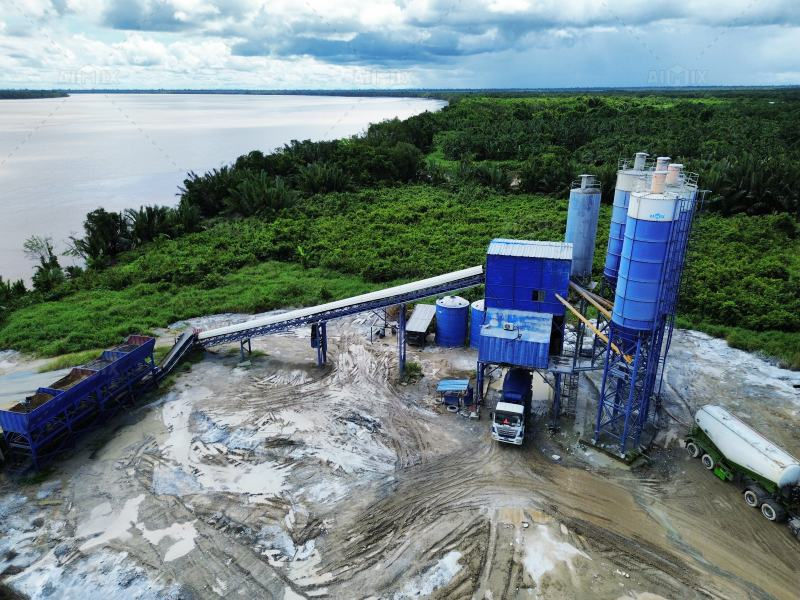
When planning a concrete batching plant in Malaysia, businesses should consider the needs of residential developments, industrial projects, plantation infrastructure, and urban construction activities. Malaysia’s diverse construction market creates demand for both stationary and mobile concrete production solutions depending on project location and scale.
Similarly, companies investing in a concrete batching plant in Singapore need to focus on efficiency, space utilization, and environmental compliance due to the country’s limited land availability and highly regulated construction environment.
Choose the Right Business Model Based on Demand
Understanding local demand also helps determine the most suitable concrete business model. Entrepreneurs can choose between supplying ready-mix concrete, producing concrete for their own construction projects, or providing concrete solutions for specialized industries.
A ready-mix concrete business requires reliable production capacity, transportation planning, and strong relationships with contractors and developers. The location of the plant is especially important because delivery distance affects transportation costs and concrete quality.
For markets with concentrated construction activities, a stationary concrete batching plant may provide better long-term benefits because it offers higher productivity and stable production. For businesses serving multiple temporary projects or remote areas, mobile or modular batching plants may provide greater flexibility.
Choosing the right equipment configuration based on actual demand prevents unnecessary investment and improves profitability.

Evaluate Production Capacity Before Investment
One common mistake when starting a concrete business is selecting equipment based only on price. Production capacity should match the expected market demand and future growth potential.
Small businesses may begin with compact batching plants suitable for local projects, while companies targeting major infrastructure contracts may require larger systems capable of continuous production.
A properly sized concrete batching plant helps balance investment costs and production efficiency. An oversized plant may increase initial expenses and create unused capacity, while an undersized plant may limit business growth and prevent the company from accepting larger orders.
Before purchasing equipment, investors should estimate expected concrete volume, customer demand, seasonal changes, and future expansion plans.
Consider Local Regulations and Operating Conditions
Construction markets differ significantly between countries and regions. Local regulations, environmental requirements, land availability, and transportation conditions all influence concrete business operations.
For example, a concrete batching plant in Singapore must meet strict environmental standards related to dust control, noise reduction, and wastewater management. Efficient plant design, automated systems, and compact layouts are important factors for operating successfully in a densely developed market.
In Malaysia, businesses may need to consider factors such as regional transportation conditions, climate challenges, and different project locations. A concrete batching plant in Malaysia should be configured to handle local working conditions while maintaining reliable production efficiency.
Understanding these requirements before investment helps companies avoid unexpected costs and operational challenges.
Build Competitive Advantages Through Quality and Service
Local demand analysis should not only focus on market size but also on how a new concrete business can compete effectively. Quality, delivery reliability, technical support, and customer service are important factors that influence customer loyalty.
A modern concrete batching plant with accurate weighing systems, automated controls, and efficient mixing technology can help businesses provide consistent concrete quality. Reliable delivery and professional service can further differentiate a company from competitors.
Long-term success comes from building strong relationships with contractors, developers, and construction companies. Understanding customer expectations allows businesses to create better solutions and maintain stable revenue streams.

Conclusion
Understanding local construction demand is the foundation of a successful concrete business. Market research helps entrepreneurs identify opportunities, select suitable equipment, determine production capacity, and develop effective business strategies. Whether establishing a concrete batching plant in Singapore or a concrete batching plant in Malaysia, investors should carefully evaluate local construction trends, regulations, customer needs, and operational conditions. By combining market knowledge with the right production equipment and service strategy, a concrete business can achieve sustainable growth and remain competitive in the expanding construction industry.

Comments