


Mobile Concrete Plant for Sale: How Many Cubic Meters Per Hour Do You Actually Need?
Choosing the right mobile concrete plant for sale is about much more than selecting the biggest production capacity. A batching plant that is too small may delay your construction schedule, while an oversized plant can increase equipment costs, fuel consumption, and maintenance expenses without delivering additional value. To make a cost-effective investment, contractors should evaluate their actual concrete demand, project type, production schedule, and future business plans. If your projects require frequent relocation, a portable concrete plant for sale can provide the flexibility to produce concrete efficiently across multiple construction sites while reducing transportation costs and setup time.

Why Production Capacity Matters
The production capacity of a mobile concrete batching plant indicates how much fresh concrete it can produce in one hour under normal operating conditions. Common capacities range from 25 m³/h to 90 m³/h, with different models designed for different project sizes. Although larger plants can produce more concrete, they also require greater investment, more operators, and higher material consumption.
Selecting the correct capacity ensures that concrete production matches your construction schedule. A properly sized batching plant helps avoid delays caused by insufficient concrete supply while preventing unnecessary operating costs associated with oversized equipment. Instead of focusing only on the maximum output, contractors should consider how efficiently the plant can meet daily production requirements.
Another important consideration is future project planning. If your company regularly undertakes projects of varying sizes, choosing a capacity with moderate production reserves may provide better long-term value than selecting the minimum required capacity.
Calculate Your Actual Concrete Demand
Before purchasing a mobile concrete plant for sale, start by estimating the total amount of concrete your project requires each day. Divide the daily concrete volume by the planned working hours to determine the minimum hourly production capacity needed. This simple calculation provides a practical starting point for equipment selection.
For example, if a project requires 240 cubic meters of concrete over an eight-hour working day, the required production capacity is approximately 30 m³/h. In this situation, selecting a 35 m³/h plant provides enough capacity to maintain smooth production while leaving room for temporary increases in demand.
Besides daily production, contractors should also evaluate factors such as overtime work, weather interruptions, concrete delivery schedules, and the possibility of future project expansion. These variables often influence the actual capacity required more than theoretical production calculations.
Match Capacity with Your Project Type
Different construction projects have significantly different concrete consumption patterns. Residential buildings, warehouses, municipal roads, commercial developments, and infrastructure projects all require different batching capacities to maintain efficient operations.
Small residential and light commercial projects generally require 25–35 m³/h of concrete production. Medium-sized industrial buildings, municipal roads, and bridge construction often perform more efficiently with capacities between 50 and 60 m³/h. For highways, airports, hydropower projects, and commercial concrete production, contractors typically select plants capable of producing 60–90 m³/h or more.
Rather than choosing equipment based solely on project size, contractors should evaluate concrete pouring schedules, construction phases, and expected production peaks. This approach ensures that the batching plant remains productive throughout the project lifecycle.

Plan for Peak Production Instead of Average Demand
Many buyers calculate production requirements using average daily concrete consumption, but construction rarely follows an average production pattern. During foundation pouring, bridge deck construction, or continuous pavement placement, concrete demand can increase dramatically for several hours or even several days.
Selecting equipment based only on average demand may result in production bottlenecks during these critical construction stages. If your average requirement is 40 m³/h but peak demand reaches 55 m³/h, choosing a 60 m³/h mobile concrete plant for sale is generally a more reliable solution.
Having additional production capacity also provides flexibility when unexpected delays occur. Weather interruptions, equipment maintenance, or changes to the construction schedule can often be compensated for by temporarily increasing production output.
Consider Mobility and Future Projects
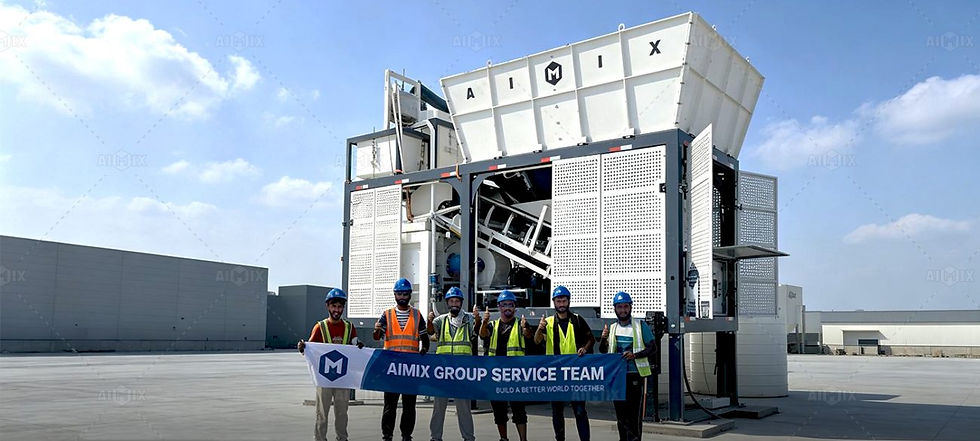
Many contractors manage several projects each year, making equipment mobility an important factor in purchasing decisions. In these situations, a portable concrete plant for sale offers significant advantages because it can be transported and installed much faster than a stationary batching plant.
Portable plants reduce foundation work, shorten installation time, and simplify relocation between construction sites. These advantages help contractors begin production more quickly while reducing labor and transportation costs associated with moving equipment.
When evaluating future investments, it is also worth considering your company's long-term business strategy. If your workload frequently shifts between different regions, investing in a portable batching plant may provide greater operational flexibility and higher equipment utilization throughout the year.
Don't Overlook Material Supply and Transportation
Even the highest-capacity batching plant cannot achieve its rated output without a reliable supply of aggregates, cement, water, and transportation equipment. Material shortages or delayed deliveries can significantly reduce actual production efficiency regardless of plant capacity.
Concrete transportation should also be considered during equipment selection. The number of transit mixers, hauling distance, traffic conditions, and concrete pump capacity all influence whether the batching plant can operate continuously. A large batching plant paired with insufficient transportation equipment often spends valuable time waiting instead of producing concrete.
By balancing plant capacity with material logistics and transportation resources, contractors can maximize production efficiency while reducing idle time and unnecessary operating costs.

Conclusion
Choosing the right mobile concrete plant for sale requires more than comparing production capacities on a specification sheet. Contractors should evaluate daily concrete demand, project type, peak production requirements, material supply, transportation capacity, and future business plans before making a purchasing decision. A properly matched batching plant improves productivity, controls operating costs, and helps maintain a reliable concrete supply throughout every stage of construction. For businesses that frequently work across multiple locations, investing in a portable concrete plant for sale can further increase flexibility, reduce relocation time, and deliver better long-term returns by adapting to changing project requirements.

Comments