


Rock Crusher Machine: Why Cone Crushers Are Common in Hard Rock Secondary Crushing
A rock crusher machine can use different crushing mechanisms depending on the material, feed size, required reduction ratio, and final product specifications. For hard and abrasive rocks, cone crushers are widely used in secondary crushing because they can handle demanding feed conditions while producing a controlled product. Their compression-based crushing action, robust construction, and suitability for continuous operation make them an important part of many hard rock crushing circuits.

Why Secondary Crushing Is Different From Primary Crushing
Primary crushing and secondary crushing perform different roles in a complete crushing plant. The primary crusher receives large blasted rocks directly from the quarry and reduces them to a size that can be processed by downstream equipment.
A secondary crusher takes this already-reduced material and brings it closer to the final product size. Because the feed is smaller, the secondary stage can focus more precisely on reduction ratio, product gradation, particle shape, and overall circuit efficiency.
This is where cone crushers become particularly useful. Instead of receiving extremely large quarry rocks, the cone crusher processes a more consistent feed from the primary crushing stage, allowing it to operate efficiently within a defined size range.
Compression Crushing Works Well With Hard Rock
Cone crushers use compression to break rock between a moving mantle and a fixed concave. Material enters the crushing chamber and is gradually reduced as the mantle moves toward and away from the concave.
This mechanism is well suited to hard and abrasive materials such as granite, basalt, and other competent rocks. Rather than relying primarily on high-speed impact, the crusher applies controlled compressive forces repeatedly to the material.
For hard rock applications, this can provide a practical combination of reduction and durability. The exact performance still depends on rock characteristics, feed gradation, crusher settings, and the design of the complete crushing circuit.
Granite Shows Why Cone Crushers Are Valuable
Granite is hard, dense, and often abrasive, creating demanding conditions for crushing equipment. A crushing circuit processing granite needs to withstand high mechanical loads while maintaining stable production.
This is why a cone crusher is frequently considered for secondary granite crushing. After a jaw crusher reduces the large feed, the cone crusher can further reduce the material to produce aggregate sizes suitable for construction applications.
For buyers researching a granite crusher for sale, the cone crusher should not be evaluated only by its maximum capacity. Important considerations include the required feed size, reduction ratio, final product sizes, expected abrasiveness, liner life, and whether the machine will operate in an open or closed circuit.
Cone Crushers Can Produce Consistent Gradation
Secondary crushing is not simply about making rocks smaller. Aggregate producers also need consistent product sizes.
Cone crushers can produce a relatively controlled discharge when operating with appropriate settings and a properly matched screening system. The closed-side setting is particularly important because it influences the size of the crushed material and the amount of recirculation within the circuit.
A screen can separate finished products from oversize material, while the oversize fraction can return to the cone crusher for additional crushing. This closed-circuit arrangement allows operators to maintain a more consistent product specification.
Why Cone Crushers Are Common in Multi-Stage Plants
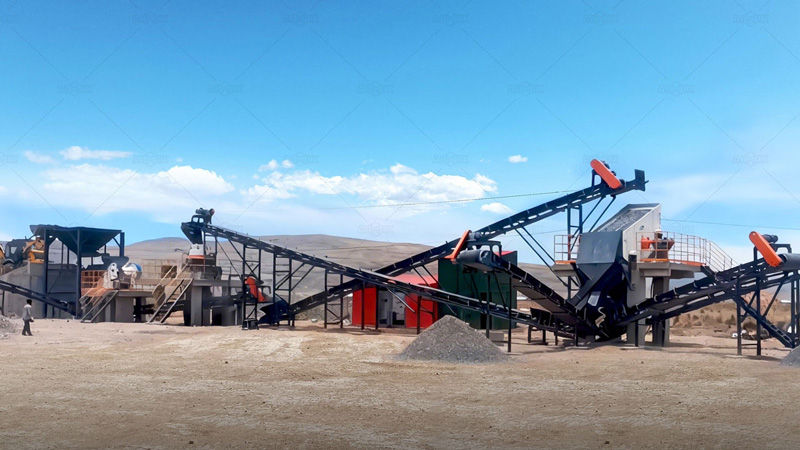
Large aggregate operations often use several crushing stages because trying to achieve a large reduction ratio in a single machine can create unnecessary stress, excessive fines, or inefficient operation.
A typical hard rock circuit may begin with a jaw crusher for primary reduction, followed by a cone crusher for secondary crushing. Depending on the required aggregate specification, another crushing or shaping stage may be added afterward.
The advantage of this approach is that each crusher performs a specific role. The primary crusher handles large feed, while the secondary cone crusher focuses on controlled reduction and production of intermediate aggregate sizes.
This staged approach can also make it easier to balance capacity across the plant.
Cone Crusher vs. Impact Crusher for Hard Rock
Impact crushers can provide excellent particle shape and are widely used for many aggregate applications. However, hard and highly abrasive rock can increase impact crusher wear and operating requirements.
Cone crushers are often preferred when the main requirement is efficient reduction of hard rock through compression. This does not mean cone crushers are always the better choice. The final decision depends on the desired particle shape, material characteristics, production capacity, and downstream specifications.
For less abrasive materials, an impact crusher may provide advantages in shaping and reduction. For highly abrasive hard rock, a cone crusher can often provide a more practical solution for secondary crushing.
What About Limestone?
Limestone behaves differently from granite and other hard rocks. Many limestone deposits are softer and less abrasive, meaning they can often be processed using impact crushers or other crushing technologies.
A lime stone crusher may therefore have a different configuration from a granite crushing plant. Depending on the limestone characteristics and required product, jaw crushers, impact crushers, hammer crushers, or cone crushers may all have a role.
For example, a relatively soft limestone application may benefit from impact crushing because of its ability to achieve significant reduction and favorable particle shape. Harder and more abrasive limestone, however, may require a different approach.
The important lesson is that crusher selection should follow material characteristics rather than assuming that one machine is suitable for every rock.
Feed Preparation and Screening Still Matter
Even a well-selected cone crusher cannot compensate for poor feed preparation. The primary crusher should provide a reasonably consistent feed within the secondary crusher's acceptable size range.
The feeder should also maintain a stable flow of material. Irregular feeding can reduce crushing efficiency and make it difficult to maintain consistent product quality.
Screening is equally important. An undersized screen can become a bottleneck, while poor screening efficiency can send excessive material back through the cone crusher and increase circulating load.
Therefore, the cone crusher should always be selected as part of the complete rock crushing system.
How to Evaluate a Cone Crusher for Hard Rock
When selecting a cone crusher for secondary hard rock crushing, operators should consider:
Feed size and expected feed variation
Rock hardness and abrasiveness
Required production capacity
Desired reduction ratio
Final aggregate specifications
Open- or closed-circuit operation
Liner and wear-part requirements
Screening capacity
Power availability
Maintenance and service requirements
These factors provide a better basis for equipment selection than capacity alone.
Conclusion
Cone crushers are common in hard rock secondary crushing because their compression-based crushing action is well suited to demanding materials such as granite and other abrasive rocks. They can provide controlled reduction and stable product gradation when correctly matched with the primary crusher and screening system. However, cone crushers are not universally appropriate. Materials such as limestone may require different crushing approaches depending on their hardness and abrasiveness. The best rock crusher machine is ultimately the one that matches the material, production target, and final aggregate requirements of the complete crushing circuit.


Comments