


What Asphalt Mixing Plant Is Suitable for 60 km Road Construction in Kazakhstan?
Kazakhstan is investing heavily in road infrastructure. From national highways to regional transport corridors, long-distance road construction has become a priority. For contractors and project owners, one key question always comes first: what asphalt mixing plant for sale is suitable for a 60 km road construction project in Kazakhstan?
This is not a simple equipment selection problem. It involves climate conditions, project duration, material supply, construction rhythm, budget control, and long-term operation. Therefore, choosing the right asphalt mixing plant directly affects project quality, cost, and delivery time. In this article, we will analyze the issue step by step from a practical and engineering-focused perspective.

Understanding the Real Demand of a 60 km Road Project
Before discussing equipment models, it is important to clarify the real construction demand behind a 60 km road project. Many buyers focus only on distance, but distance alone does not determine plant capacity.
In Kazakhstan, a 60 km asphalt road usually includes multiple layers, such as base course, binder course, and surface course. In addition, construction often takes place within a limited seasonal window due to cold winters. As a result, asphalt production must be continuous, stable, and efficient.
Therefore, the actual demand depends on daily paving volume, layer thickness, working hours, and project schedule. Once these factors are clear, selecting the right asphalt mixing plant becomes much easier.
How Climate and Geography in Kazakhstan Affect Plant Selection
After understanding project scale, the next step is to consider local conditions. Kazakhstan has a continental climate with large temperature differences. Winters are long and cold, while summers are short but busy for road construction.
Because of this, asphalt mixing plants in Kazakhstan must start quickly, run reliably, and maintain stable output. Equipment downtime during the peak season can cause serious losses. Moreover, plants often work in remote areas, far from urban service centers.
For this reason, simple structure, strong components, and easy maintenance matter more than complex automation. This reality strongly influences the choice between different plant types.
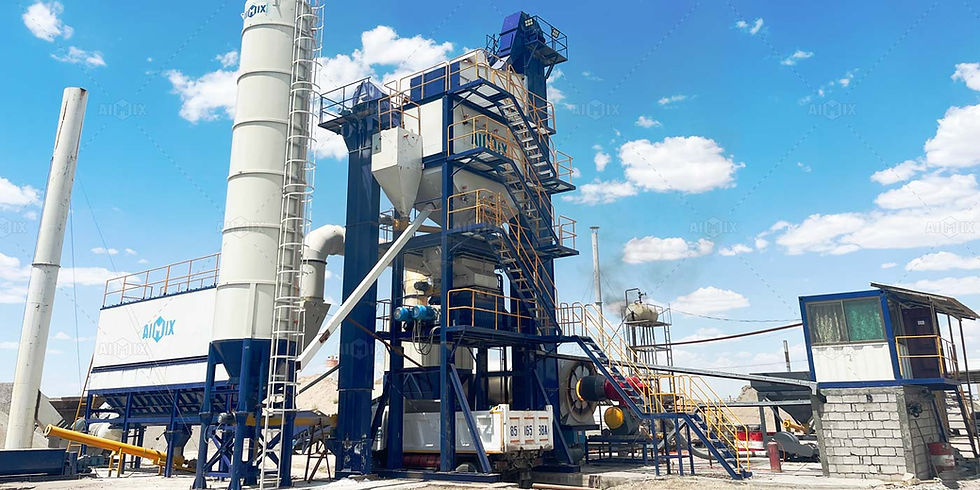
Batch Type vs Drum Type Asphalt Mixing Plant
At this stage, many customers ask a common question: should we choose a batch type asphalt mixing plant or a drum type plant? To answer this, we must link equipment features to actual construction needs.
Batch Type Asphalt Mixing Plant: Better Control and Higher Quality
Batch type asphalt plant can produce asphalt in batches. Each batch allows precise control of aggregate proportion, bitumen content, and temperature. This makes batch plants ideal for highways and long-distance roads with strict quality standards.
For a 60 km road project, especially a government-funded or international-standard project in Kazakhstan, quality consistency is critical. Batch plants also support multiple asphalt recipes, which helps when different pavement layers require different mixes.
Therefore, if the project emphasizes durability, performance, and inspection standards, a batch type asphalt mixing plant is often the safer choice.

Drum Type Asphalt Mixing Plant: Simpler and More Cost-Efficient
On the other hand, drum type plants combine drying and mixing in one drum. They offer continuous production and simpler operation. Initial investment is usually lower, and fuel efficiency can be higher.
However, drum mix asphalt plants offer less flexibility in mix adjustment. For long road projects with frequent recipe changes, this can become a limitation.
As a result, drum type asphalt plants suit projects with stable mix requirements and tighter budgets, but they are less common for large-scale highway construction in Kazakhstan.
Recommended Capacity for a 60 km Road Construction Project
Once plant type is clear, capacity becomes the next key decision. Many buyers worry about choosing a plant that is either too small or too large. Both situations cause problems.
Based on real project experience, a 60 km asphalt road in Kazakhstan typically requires a plant capacity between 120 t/h and 200 t/h. This range allows stable daily output while leaving room for unexpected delays or peak production needs.
More specifically, a 160 t/h batch type asphalt mixing plant often provides the best balance. It supports continuous paving, reduces idle time for pavers, and helps contractors meet deadlines within the short construction season.

Key Configuration Features to Pay Attention To
Capacity alone does not guarantee performance. Transitioning from capacity to configuration, we must examine core components that affect reliability and operating cost.
Cold Aggregate Feeding System
Kazakhstan uses a wide variety of aggregates. Therefore, cold bins should be strong, corrosion-resistant, and easy to adjust. Independent variable-speed control helps maintain accurate proportioning.
Drying Drum and Burner System
Fuel efficiency matters greatly due to rising energy costs. A high-efficiency burner supports diesel, heavy oil, or gas, depending on local availability. Stable flame control also improves drying quality in cold environments.
Dust Collection and Environmental Compliance
Environmental standards in Kazakhstan are becoming stricter. A multi-stage dust collection system, such as cyclone plus bag filter, reduces emissions and protects the working environment.
Control System and Operation Interface
A user-friendly control system reduces operator errors and training time. Clear data display and fault alarms help teams respond quickly on site.
Installation, Transport, and Local Support Considerations
After selecting the plant itself, logistics and support deserve equal attention. Kazakhstan has vast territory, and transport distances can be long.
Modular design simplifies transport and speeds up installation. In addition, local or regional service support reduces risk during commissioning and operation.
Choosing a supplier with experience in Central Asia can significantly improve project execution. This practical factor often makes the difference between smooth operation and constant delays.

Total Cost of Ownership Matters More Than Initial Price
Many buyers focus heavily on purchase price. However, for a 60 km road project, total cost of ownership matters more.
Fuel consumption, spare parts availability, maintenance frequency, and resale value all affect long-term cost. A slightly higher initial investment can lead to lower overall expense and higher project profit.
Therefore, experienced contractors evaluate asphalt mixing plants from a lifecycle perspective rather than a short-term budget view.
Why the Right Asphalt Mixing Plant Brings Competitive Advantage
A suitable asphalt mixing plant does more than produce asphalt. It stabilizes construction rhythm, improves pavement quality, and enhances contractor reputation.
In competitive markets like Kazakhstan, completing projects on time and meeting quality standards increases the chance of winning future tenders. Equipment selection plays a silent but powerful role in this success.
Our Practical Solution for Kazakhstan Road Projects
Based on our experience supplying asphalt mixing plants to Central Asia, we recommend medium-to-large batch type plants with proven performance in cold climates. Our designs focus on reliability, fuel efficiency, and easy maintenance.
We support customers from project planning to installation and operation. More importantly, we adapt configurations to real site conditions rather than offering standard templates.
If you are planning a 60 km road construction project in Kazakhstan, choosing the right asphalt mixing plant is your first step toward success. Contact us to discuss your project details and receive a practical, customized solution that works in real conditions.


Comments