


Can Owning An Asphalt Plant Reduce Asphalt Purchasing Costs In Mexico?
In Mexico’s road construction market, contractors face a constant challenge: asphalt prices keep changing while project deadlines stay tight. Whether it is a highway expansion, urban road maintenance, or municipal paving work, asphalt supply costs can significantly affect overall project profitability. Because of this, many contractors begin to ask a critical question: Can owning an asphalt plant equipment reduce asphalt purchasing costs in Mexico?
The short answer is yes, but the real value depends on project scale, logistics, fuel prices, and production efficiency. In this article, we will break down the real cost structure behind asphalt production and explain how owning a plant can change your financial outcome in a practical, data-driven way. More importantly, we will look at this from a contractor’s perspective in Mexico’s real construction environment.

Understanding Asphalt Costs In Mexico’s Construction Market
To understand savings, we first need to understand where the cost comes from. In Mexico, asphalt mixture prices are influenced by several key factors: bitumen cost, aggregate transportation, fuel prices, plant availability, and supplier profit margins. Together, these elements create a price structure that can fluctuate frequently.
For contractors who rely on third-party suppliers, asphalt is usually purchased per ton. This model is convenient, but it also includes hidden costs. For example, transportation distance alone can increase the price significantly. In remote or mountainous regions, delivery delays and logistics fees further raise the cost per ton.
As a result, contractors often face two major problems: unpredictable pricing and limited control over supply timing. This is where owning an asphalt hot mix plant begins to change the situation.
How Owning An Asphalt Plant Changes The Cost Structure
When a contractor owns an asphalt plant, the cost structure shifts from “buying finished material” to “producing material internally.” This change is not just financial; it also affects scheduling, logistics, and production flexibility.
Instead of paying supplier margins, contractors only pay for raw materials, fuel, labor, and maintenance. While these costs still exist, they are more controllable and transparent. In addition, bulk purchasing of bitumen and aggregates often reduces unit cost significantly.
To better understand this shift, let’s break it down into operational advantages that directly influence cost reduction.
1. Eliminating Supplier Markups
One of the most immediate savings comes from removing supplier profit margins. Asphalt suppliers typically include overhead, transportation, and profit in their pricing. When you produce asphalt yourself, these extra layers disappear.
In many cases, contractor-owned production can reduce per-ton asphalt cost by 10% to 30%, depending on local conditions and fuel efficiency. However, this saving becomes more significant as production volume increases.
2. Reducing Transportation Costs
Transportation is a major hidden cost in asphalt procurement. In Mexico, long-distance hauling from fixed suppliers can add substantial cost per kilometer. When projects are far from urban centers, this cost grows quickly.
By setting up an asphalt plant closer to the project site, contractors reduce haul distance dramatically. This not only lowers fuel costs but also reduces truck usage and driver time. As a result, the overall logistics chain becomes more efficient.
Moreover, shorter transportation time helps maintain asphalt temperature, which improves paving quality and reduces material waste.
3. Improving Project Scheduling Efficiency
Cost reduction is not only about money. Time efficiency also plays a major role. When contractors rely on external suppliers, delays can occur due to production queues or transport issues.
However, with an in-house plant, production schedules align directly with project demand. This means no waiting time, no stock shortages, and better control over paving operations. In large-scale projects, this efficiency directly reduces labor idle time and equipment standby costs.

When Does Owning An Asphalt Plant Become Cost-Effective?
Although owning a plant offers clear advantages, it is not always the right choice for every contractor. Therefore, understanding break-even conditions is essential before making an investment decision.
Generally, asphalt plant ownership becomes cost-effective when project volume is consistent and large enough to justify capital investment. For example, contractors working on highway networks, industrial zones, or long-term municipal projects in Mexico often benefit the most.
On the other hand, small contractors with irregular project flow may not fully utilize plant capacity. In such cases, the return on investment takes longer.
To move deeper, let’s look at key decision factors that influence profitability.
1. Annual Production Volume
The higher the asphalt demand, the faster the cost recovery. A plant producing tens of thousands of tons per year spreads fixed costs more efficiently. This reduces cost per ton significantly over time.
2. Project Distance And Logistics
If your projects are located far from existing suppliers, transportation savings alone can justify owning a plant. In regions with weak infrastructure, this factor becomes even more important.
3. Fuel And Energy Efficiency
Modern asphalt plants offer improved energy efficiency. Lower fuel consumption directly reduces production cost per ton. Over time, this adds up to significant savings, especially in fuel-sensitive markets like Mexico.
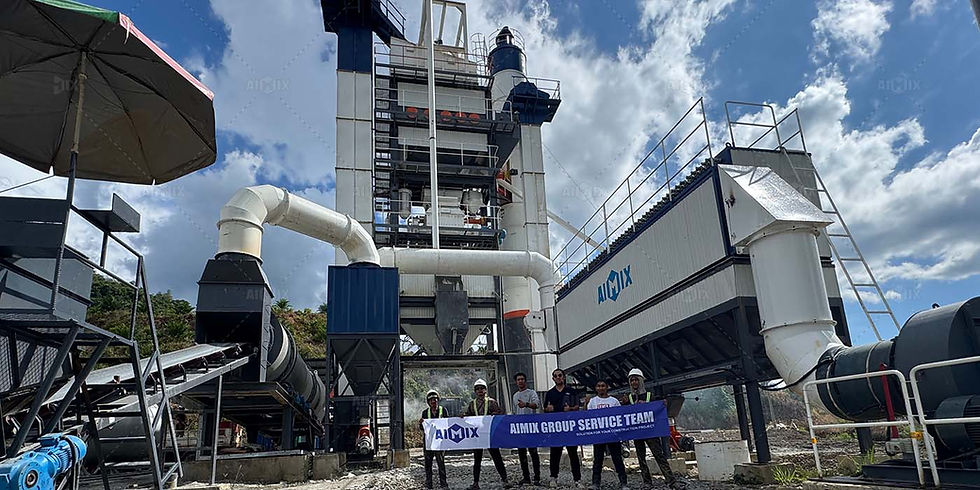
Hidden Benefits Beyond Direct Cost Savings
While cost reduction is the main focus, owning an asphalt plant also brings additional strategic advantages that many contractors overlook at first.
First, it increases project independence. Contractors no longer rely on supplier schedules or market price fluctuations. This stability allows better bidding strategies and more competitive project pricing.
Second, it improves quality control. Contractors can adjust mix design based on project requirements. This leads to better pavement performance and longer road lifespan, which reduces future maintenance costs.
Third, it strengthens business scalability. Once a plant is established, contractors can take on multiple projects at the same time without worrying about material shortages.
Realistic Cost Comparison: Buying Vs Owning
To make the decision clearer, let’s compare both models in a simplified way.
When buying asphalt from suppliers, the contractor pays a fixed market price per ton. This price includes production, transport, and supplier margin. Costs fluctuate based on fuel prices and demand.
When owning a plant, the contractor pays for: raw materials + fuel + labor + maintenance + equipment investment.
At first, the investment is high. However, once production stabilizes, the per-ton cost becomes lower and more predictable. Over a medium to long-term project cycle, this difference becomes financially significant.

Risks And Considerations Before Investing
Even though owning an asphalt plant offers strong advantages, contractors should also consider risks. Investment cost is high, and proper planning is essential.
For example, poor utilization of plant capacity can increase cost per ton instead of reducing it. Maintenance planning is also critical because downtime directly affects project schedules.
Therefore, successful contractors usually combine market analysis with project forecasting before investing in a plant. This ensures the equipment matches real demand.
Conclusion: Is It Worth Owning An Asphalt Plant In Mexico?
So, can owning an asphalt plant reduce asphalt purchasing costs in Mexico? The answer is yes, especially for contractors with consistent and large-scale project demand. It reduces dependency on suppliers, stabilizes pricing, and improves operational efficiency.
However, the key is planning. When production volume, logistics conditions, and project pipeline are well aligned, the cost savings become substantial and long-term. On the other hand, without stable demand, the benefits may not fully offset the investment.
Ultimately, owning an asphalt plant is not just a cost-saving decision. It is a strategic move that strengthens control, improves competitiveness, and increases long-term profitability in Mexico’s growing infrastructure market.
If you are evaluating whether to invest in an asphalt plant for your projects, the best next step is to analyze your annual production needs and project pipeline. A well-matched solution can significantly improve your cost structure and give your business a stronger position in competitive bidding.
Ready to explore a more cost-efficient asphalt production strategy for your projects in Mexico? Contact us to discuss a tailored solution that fits your production needs and project scale. Learn about the overall asphalt mix plant price at right!


Comments